

Download Revolutio CHECKWIND 8.4.2 – Specialized Wind Load Calculation & Facade Design Software
Revolutio CHECKWIND 8.4.2 is a specialized structural engineering software designed for advanced wind load analysis and façade design. Developed for structural engineers and building envelope consultants, it automates the complex process of calculating wind pressures on buildings, ensuring compliance with major international design codes. This tool is crucial for professionals involved in the structural verification of building envelopes, cladding systems, glazing, and associated fixings.
Overview of Revolutio CHECKWIND in Structural Engineering
In structural engineering, accurately determining wind loads is fundamental to ensuring the safety, stability, and resilience of buildings. Revolutio CHECKWIND focuses on this critical aspect, particularly for building envelopes and façade designs, which are directly exposed to wind forces. The software facilitates adherence to stringent international standards by automating complex wind pressure calculations, enabling engineers to perform precise structural verifications for façade elements and connections.
Advanced Wind Load Calculation and 3D Pressure Mapping
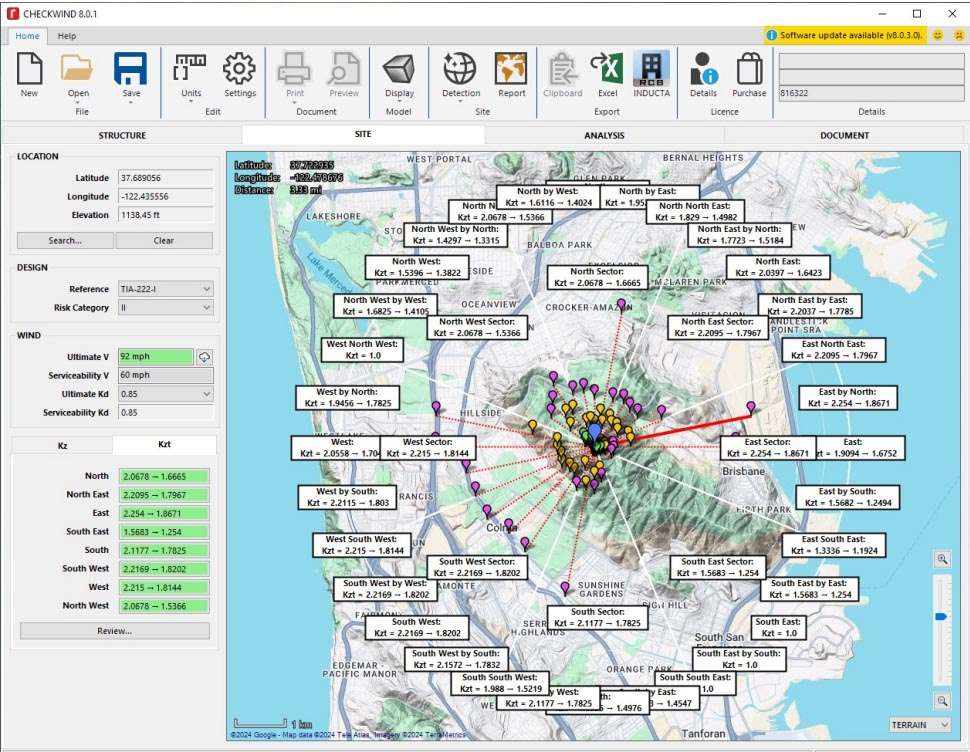
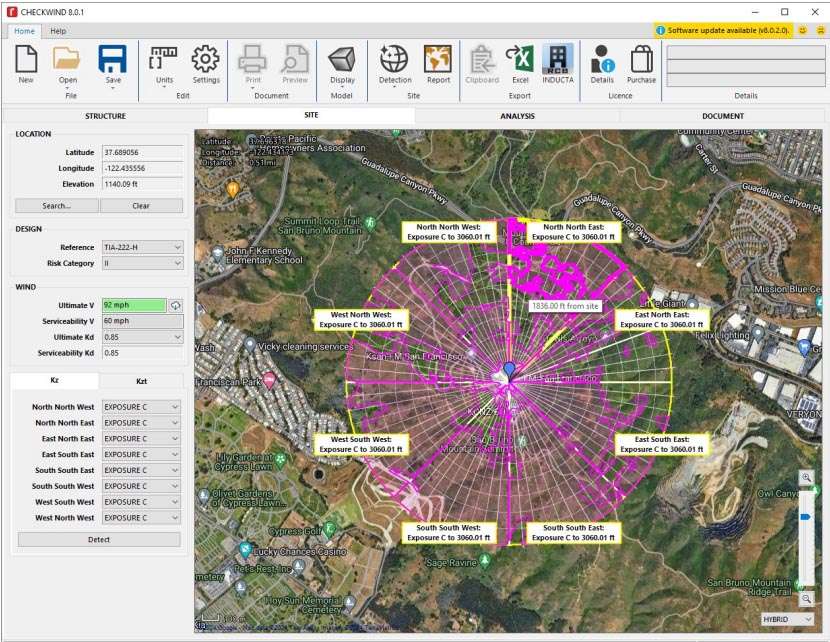
The software automates wind pressure calculations according to leading codes such as Eurocode 1, ASCE 7-22, and AS/NZS 1170.2. It utilizes a 3D model of the building geometry to define zones on surfaces and apply relevant pressure coefficients. Key factors influencing these calculations include the specific terrain category surrounding the building, its overall topography, and its importance classification, all of which are considered by the advanced solver.
Design and Verification of Cladding, Glazing, Mullions, and Connections
Revolutio CHECKWIND supports detailed design and stress checking for façade components. Users can accurately size cladding panels and glazing systems to withstand the determined wind loads. The software also performs structural analysis on mullions and transoms, evaluating them for bending, shear, and buckling under pressure. Furthermore, it provides analysis of connection brackets and anchor fixings to confirm the overall structural integrity of the building envelope.
Integration with Structural Analysis Programs and Reporting Features
To streamline engineering workflows, Revolutio CHECKWIND offers robust export functionalities. It allows users to transfer calculated wind load data to prevalent structural analysis programs such as SAP2000, ETABS, and ROBOT. The software generates comprehensive, step-by-step reports detailing load diagrams and pressure zoning plots, which are essential for design verification and project documentation.
Enhancements and New Capabilities in Version 8.4.2
Version 8.4.2 of Revolutio CHECKWIND introduces significant improvements and new features. These include an expanded library of supported wind codes, featuring updated Eurocode national annexes and ASCE 7-22 compliance. The release incorporates new modules specifically for unitized curtain walls and rainscreen cladding systems. Additionally, it offers an enhanced user interface for managing load combinations and an improved solver adept at handling complex building geometries and detailed topography modeling.
Frequently Asked Questions
How does Revolutio CHECKWIND comply with international wind load codes?
Revolutio CHECKWIND incorporates major international wind load standards including Eurocode 1, ASCE 7-22, AS/NZS 1170.2, and the National Building Code of Canada. The latest version 8.4.2 includes updated national annexes ensuring compliance with the most recent regulations.
Can Revolutio CHECKWIND handle complex building shapes for wind load calculations?
Yes, the software’s improved solver in version 8.4.2 can accurately calculate wind loads for non-rectangular buildings such as L-shapes, T-shapes, curved facades, and domes, accommodating complex architectural designs.
Is it possible to export wind load data from Revolutio CHECKWIND to other structural analysis software?
Revolutio CHECKWIND offers export options to structural analysis programs like SAP2000, ETABS, and ROBOT, allowing users to integrate wind load data seamlessly into global structural design workflows.






Reviews
There are no reviews yet.