

Download Stair Designer 7.18 h – Advanced Stairway Design Software for Civil and Construction Applications
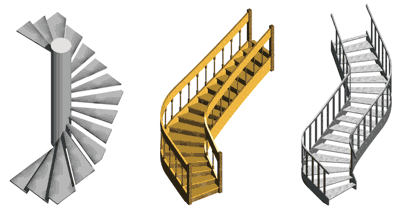
Stair Designer 7.18 h is a specialized computer-aided design (CAD) application engineered for the intricate demands of stair construction. Developed with a focus on precision and compliance, it serves professionals in the woodworking, marble, stone, and metal industries, as well as civil construction sectors. This software assists in creating detailed designs for a wide array of stair configurations, from simple straight flights to complex helicoidal and custom-shaped stairs, ensuring both aesthetic appeal and structural integrity for manufacturing.
Engineering Applications of Stair Designer in Construction
Stair Designer plays a crucial role in modern construction and manufacturing workflows by providing specialized tools for the detailed design of stair systems. Its application extends across diverse industries including woodworking, marble and stone fabrication, metalworking, and broader civil construction projects. The software facilitates the integration of intricate stair designs into architectural plans, offering precise calculations and outputs necessary for creating custom staircases that meet specific project requirements and aesthetic goals.
Within architectural and construction workflows, Stair Designer bridges the gap between conceptual design and physical fabrication. It allows architects and engineers to model complex stair geometries accurately and ensures that these designs are manufacturable by generating detailed component plans. This capability is vital for projects requiring unique staircases that are not only structurally sound but also visually striking, supporting workflows from initial proposal to final on-site installation.
Precision Stair Geometry and Balancing Functions
The core functionality of Stair Designer revolves around precise geometric input and advanced calculation capabilities, enabling users to define stairs with specific parameters. Users can input critical dimensions such as desired riser height and tread length, which the software then uses to derive optimal stair dimensions. This detailed input forms the foundation for generating accurate designs that adhere to ergonomic and safety standards.
A standout feature of Stair Designer is its Global Balancing Function, which uniquely integrates multiple theories for balancing stair components. This function is capable of handling complex stair shapes, including S-shaped configurations and stairs with cut-off corners, ensuring that treads maintain a consistent slope and user-friendly angle across the entire flight. This sophisticated balancing capability distinguishes Stair Designer from more generic design tools.
Furthermore, the software incorporates compliance checking based on established building standards, notably Blondel’s law. This feature allows users to verify that their designs meet the fundamental rules for safe and comfortable stair construction, ensuring that parameters like the sum of two risers and a tread fall within acceptable ranges. This intrinsic checking mechanism is invaluable for minimizing design errors and ensuring adherence to regulations.
Comprehensive Component Generation and Manufacturing Outputs
Stair Designer excels in calculating and generating all necessary components for stair construction. This includes detailed plans for individual steps, risers, stringboards, racks, poles, handrails, and banisters. The software ensures that each component is precisely dimensioned and ready for fabrication, streamlining the manufacturing process for carpenters, metal fabricators, and stonemasons.
For direct use in workshops, Stair Designer provides the capability for printing components at a 1:1 scale. This full-scale plotting is essential for creating templates and jigs, which significantly enhance accuracy during on-site cutting and assembly. This output method ensures that the physical construction precisely matches the digital design.
To support automated manufacturing, Stair Designer offers comprehensive DXF export functionality. This feature allows the transfer of all generated stair components into a format compatible with CNC (Computer Numerical Control) machines and other automated fabrication equipment. The DXF export capability integrates the software seamlessly into modern manufacturing environments, enabling efficient and precise production of stair parts.
Integrated 3D Visualization and Customization Features
Stair Designer incorporates robust 3D rendering capabilities that allow users to visualize their stair designs in a three-dimensional space. The software supports the application of various colors and textures, enabling realistic representation of different materials like wood, metal, or stone. Users can also adjust transparency levels for elements like glass panels, further enhancing the visualization fidelity.
The practical benefits of these integrated 3D views are substantial. They are instrumental in design validation, allowing designers and engineers to inspect the geometry and aesthetics of the staircase from all angles, identifying potential clashes or ergonomic issues early in the process. Moreover, these detailed 3D models serve as powerful tools for client presentations, providing a clear and compelling visualization of the final product before construction begins.
Use Cases Across Industries and Project Types
Stair Designer finds application in a wide array of real-world stair design projects, accommodating diverse architectural styles and material requirements. Its versatility makes it an indispensable tool for professionals seeking to create both standard and bespoke staircases.
The software adeptly handles various stair types, including straight stairs, complex helicoidal (spiral) stairs, balanced stairs, and custom configurations such as S-shaped stairs and those with cut-off corners. It also supports designs for English-style stairs and rounded staircases, demonstrating its capacity for intricate geometric challenges. This broad support ensures that Stair Designer can meet the demands of virtually any stair construction project.
In custom stair manufacturing, the software’s precision is paramount. It enables unique designs to be specified with exact measurements for all parts, facilitating the creation of one-of-a-kind staircases that are both functional and a focal point of a building’s design. For standard stair manufacturing, its efficient component generation and DXF export capabilities streamline production, reducing lead times and manufacturing costs while maintaining high quality.
Frequently Asked Questions
How does Stair Designer ensure my stair designs comply with building standards?
Stair Designer incorporates the Control Function, which rigorously verifies key stair parameters like riser height and tread length according to Blondel’s law. This systematic check helps ensure that your stair designs adhere to standard building codes and ergonomic rules, significantly reducing the likelihood of design errors relative to regulatory requirements.
Can I export my stair designs for CNC machining?
Yes, Stair Designer is equipped to export all calculated stair components in the DXF file format. DXF is a widely adopted standard for CAD data exchange, making it compatible with most CNC machines and automated manufacturing tools, thereby facilitating precise and efficient fabrication of your stair designs.
What types of stairs can Stair Designer create, and does it support custom shapes?
Stair Designer is capable of designing a comprehensive range of stair types, including straight, helicoidal, balanced, S-shaped, and stairs with cut-off corners, as well as English-style and rounded stairs. This extensive support provides considerable flexibility for handling both standard architectural requirements and highly complex, custom project specifications.




Reviews
There are no reviews yet.