
Download Stonefish 2.1 – Advanced Geomechanics Software
Stonefish 2.1 is a specialized 1D Geomechanics application designed for the oil and gas industry, focusing on the creation of Mechanical Earth Models (MEM) and the analysis of wellbore stability. Developed by a company specialized in geomechanical software, it serves geomechanics and reservoir engineers by providing crucial insights into subsurface conditions. This software plays a vital role in optimizing drilling operations and ensuring reservoir integrity by leveraging advanced modeling techniques within a familiar geoscientific environment.
Overview of Stonefish
Introduction to Geomechanics Applications
Geomechanics software is essential in the oil and gas sector for understanding the mechanical behavior of rock formations. It enables engineers to predict how subsurface conditions will respond to drilling and production activities, thereby mitigating risks and optimizing resource recovery. By providing a robust framework for analyzing rock properties and in-situ stresses, geomechanics applications are fundamental to safe and efficient exploration and production operations.
Key Features of Stonefish 2.1
1D-MEM Construction and Calibration
Stonefish excels in the construction and calibration of 1D Mechanical Earth Models (1D-MEMs). These models integrate various data inputs, including sonic, density, and well logs, along with seismic and core data, to create a comprehensive, one-dimensional representation of the geomechanical properties along a wellbore. The software facilitates the estimation of key parameters such as Young’s modulus, Poisson’s ratio, and rock strength, which are vital for subsequent stability analyses.
Wellbore Stability Analysis Tools
The application provides advanced tools for analyzing wellbore stability, a critical aspect of drilling operations. Stonefish allows engineers to identify potential risks such as wellbore collapse or breakout by calculating stress states around the wellbore. The software supports various criteria and methodologies for stability assessment, enabling detailed sensitivity analyses to understand how changes in drilling parameters or rock properties impact wellbore integrity.
New Features in Stonefish 2.1
Horizontal Stress Estimation with SRVP
Stonefish 2.1 introduces enhanced capabilities for estimating horizontal stresses, a complex but crucial aspect of geomechanical modeling. The software incorporates the Stress Regime Vertical Profile (SRVP) method, offering advanced models like the 3-Point and N-Point estimations. These tools provide a more accurate determination of maximum (SHmax) and minimum (Shmin) horizontal stresses, which are vital for predicting failure mechanisms and optimizing wellbore trajectories.
Enhanced 2D to 3D Export Capabilities
The latest version of Stonefish features improved export capabilities, specifically regarding 2D borehole failure information. This allows users to export detailed data related to predicted wellbore failures. This exported data can then be utilized in other geomechanics applications or integrated into broader 3D reservoir models, facilitating more comprehensive validation and analysis of geomechanical models across different software platforms.
Integration with Ocean/Petrel
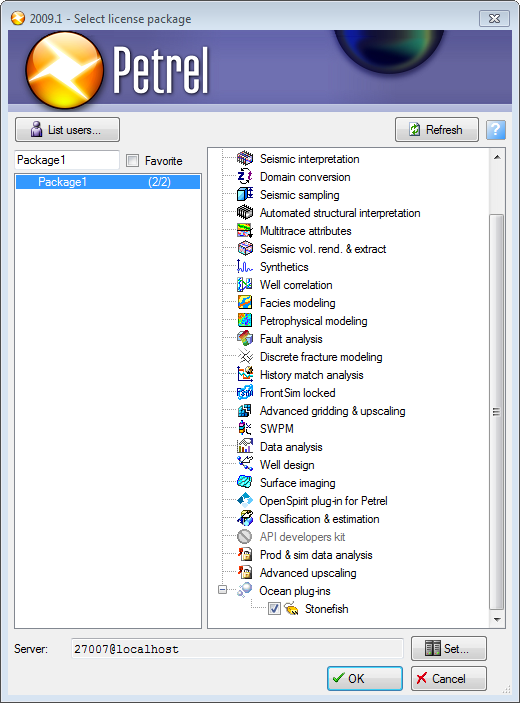
Stonefish is designed to integrate seamlessly with geoscientific applications like Ocean and Petrel. This integration allows geoscientists and engineers to incorporate 1D-MEMs and wellbore stability analyses directly into their existing reservoir modeling workflows. By leveraging these integrated environments, users can ensure that geomechanical considerations are consistently applied, leading to more reliable and informed exploration and production decisions.
Real-World Applications and Use Cases
In the oil and gas industry, Stonefish is applied in numerous scenarios to enhance operational success. Engineers utilize it for planning optimal well trajectories in complex geological settings, minimizing drilling risks in overpressured or underpressured zones, and selecting appropriate casing designs. Case studies often highlight how accurate 1D-MEMs constructed with Stonefish have led to reduced non-productive time (NPT) and improved drilling efficiency, particularly in deepwater or challenging formations.
Conclusion
Stonefish 2.1 offers a powerful and integrated solution for geomechanical analysis in the oil and gas sector. Its robust features for 1D-MEM construction, wellbore stability assessment, and advanced stress estimation, combined with its integration capabilities, make it an invaluable tool for reservoir engineers and geoscientists. Exploring its functionalities further can lead to enhanced drilling performance and a deeper understanding of subsurface mechanical behavior.
Frequently Asked Questions
What is Stonefish used for?
Stonefish is a geomechanics software used to construct 1D Mechanical Earth Models and perform wellbore stability analysis, critical for oil and gas exploration and production. It helps engineers understand subsurface rock mechanics to plan drilling operations and ensure reservoir integrity.
How does Stonefish estimate horizontal stresses?
Stonefish 2.1 utilizes the SRVP method, offering different models like 3-Point and N-Point estimations to accurately calculate maximum and minimum horizontal stresses. This detailed stress analysis is crucial for predicting wellbore stability.
Can Stonefish integrate with other geomechanics tools?
Yes, Stonefish can export 1D-MEMs to various geomechanics applications, facilitating enhanced analyses and integrating with broader geoscience workflows. This interoperability allows for comprehensive geomechanical insights within larger reservoir engineering projects.



Reviews
There are no reviews yet.