
Download Synopsys CODE V 2025.03 – Advanced Optical System Design Software
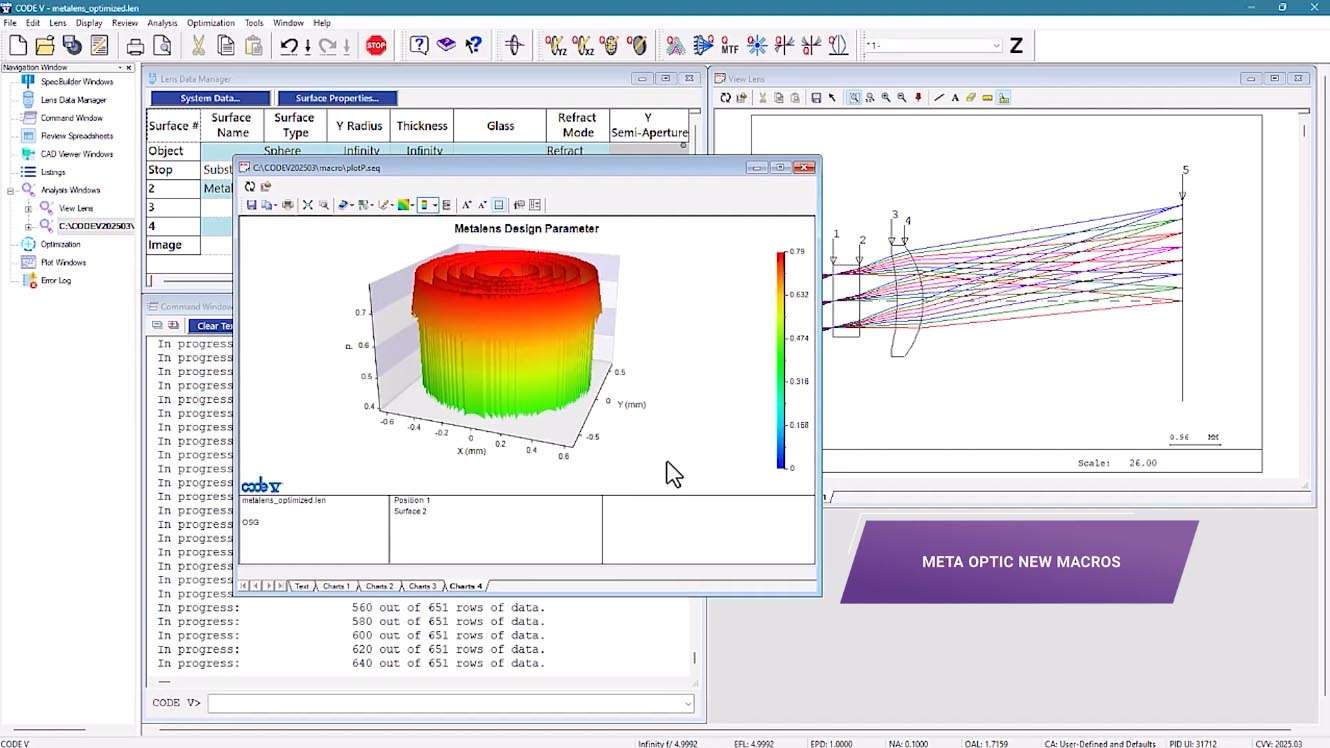
Synopsys CODE V 2025.03 is a specialized optical engineering design software developed by Synopsys, Inc. It is engineered for the design, optimization, and analysis of high-performance imaging optical systems. This advanced tool is crucial for professionals in optical engineering, lens design, and related fields across industries such as aerospace, defense, automotive camera systems, medical imaging, and consumer electronics.
Overview of Synopsys CODE V and Its Role in Optical Engineering
Synopsys CODE V has established itself as an industry-leading solution for optical system design, enabling engineers to create and refine complex optical assemblies. Its core function lies in applying sophisticated algorithms for ray tracing and global optical synthesis to achieve optimal performance. The software plays a vital role across numerous engineering disciplines that depend on precise optical components and systems, serving as a benchmark for advanced optical design challenges.
Innovative Design and Optimization Capabilities of CODE V 2025.03
Global Synthesis and Adaptive Optimization Algorithms
CODE V 2025.03 incorporates advanced global optimization methods, including proprietary Adaptive Synthesis algorithms. These tools allow engineers to explore vast design spaces and discover novel lens configurations that might not be intuitively apparent through traditional design approaches, pushing the boundaries of optical performance.
Multi-configuration and Zoom Lens Design Support
The software provides robust support for designing complex optical systems that feature multiple configurations, such as zoom lenses and systems with moving optical groups. This capability is essential for applications requiring variable field-of-view, focus adjustment, or illumination control in a single optical assembly.
Diffraction-Limited and Physical Optics Propagation Analysis
Beyond geometric ray tracing, CODE V offers advanced physical optics propagation (POP) features. This enables detailed analysis of coherent imaging systems, laser beam propagation, and other phenomena where wave optics effects, such as diffraction and interference, are critical for system performance, particularly for diffraction-limited systems.
Comprehensive Tolerancing, Environmental, and Manufacturing Analysis
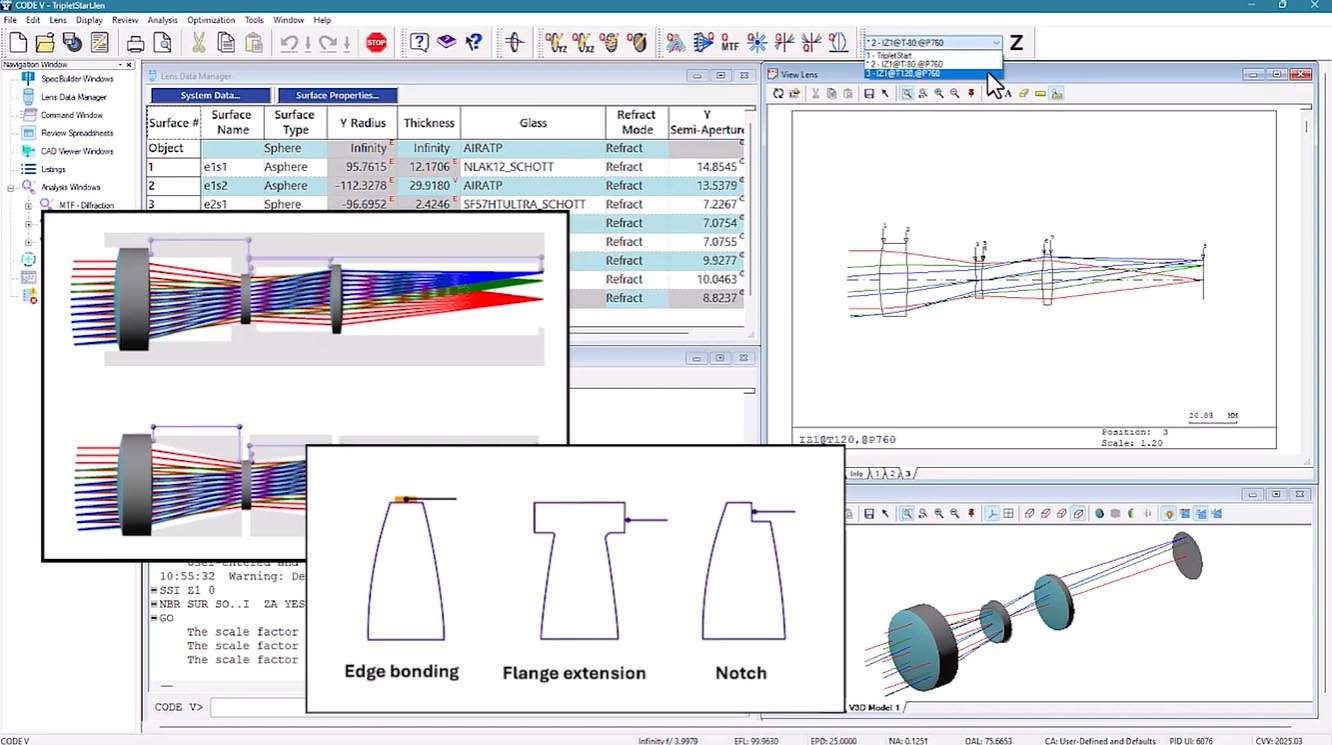
CODE V 2025.03 provides extensive tools for optical tolerancing, allowing engineers to predict how manufacturing variations in component shape, position, and material properties will affect system performance and yield. The software also simulates thermal and environmental effects, such as temperature fluctuations and mechanical stress, to ensure optical systems maintain their performance in real-world operating conditions.
Latest Enhancements in CODE V 2025.03 for Optical Engineers
Freeform Surface Design and AI-Assisted Optimization
The 2025.03 release introduces significantly enhanced freeform surface design capabilities, offering tailored optimization constraints and analysis tools for these complex optical shapes. Furthermore, it integrates AI-assisted optimization guidance, leveraging machine learning to help engineers efficiently navigate design choices and accelerate the achievement of optimal performance.
Expanded Material Libraries and Software Interoperability
CODE V 2025.03 features updated and expanded material catalogs, including a wider range of glass and infrared (IR) materials, providing engineers with more options for diverse applications. Enhanced interoperability with other Synopsys photonic tools, such as LightTools and RSoft, facilitates more integrated opto-mechanical and photonic design workflows.
Typical Use Cases and Industry Applications
Aerospace and Defense Optical System Development
In aerospace and defense, CODE V is utilized for designing critical optical systems such as reconnaissance cameras, targeting systems, advanced surveillance optics, and infrared (IR) imaging sensors, where precision and reliability are paramount.
Automotive Advanced Driver Assistance Systems (ADAS)
The software supports the development of optical components for automotive ADAS applications, including lenses for LiDAR systems, forward-facing cameras, and in-cabin monitoring systems, contributing to enhanced vehicle safety and autonomous driving capabilities.
Medical Imaging and Consumer Electronics
CODE V finds applications in designing sophisticated optical systems for medical devices like endoscopes and diagnostic imaging equipment. In consumer electronics, it is instrumental in developing optics for smartphone cameras, augmented reality (AR) and virtual reality (VR) headsets, and other imaging devices.
Frequently Asked Questions
What types of optical systems can I design using Synopsys CODE V 2025.03?
Synopsys CODE V supports a wide range of optical system designs including zoom lenses, multi-configuration lenses with moving groups, laser systems, and diffraction-limited imaging systems used in cameras, medical devices, aerospace, and automotive applications.
How does AI-assisted optimization in CODE V 2025.03 improve lens design workflows?
The AI-assisted optimization feature in CODE V 2025.03 uses machine learning algorithms to suggest optimization pathways and variable selections, helping engineers efficiently explore design spaces and achieve better optical performance faster.
Can CODE V 2025.03 handle manufacturing tolerances and environmental effects in its analysis?
Yes, CODE V includes comprehensive tolerancing and yield analysis tools to predict the impact of manufacturing variations, as well as thermal and environmental simulations to assess optical performance changes across temperature ranges and mechanical stresses.






Reviews
There are no reviews yet.