

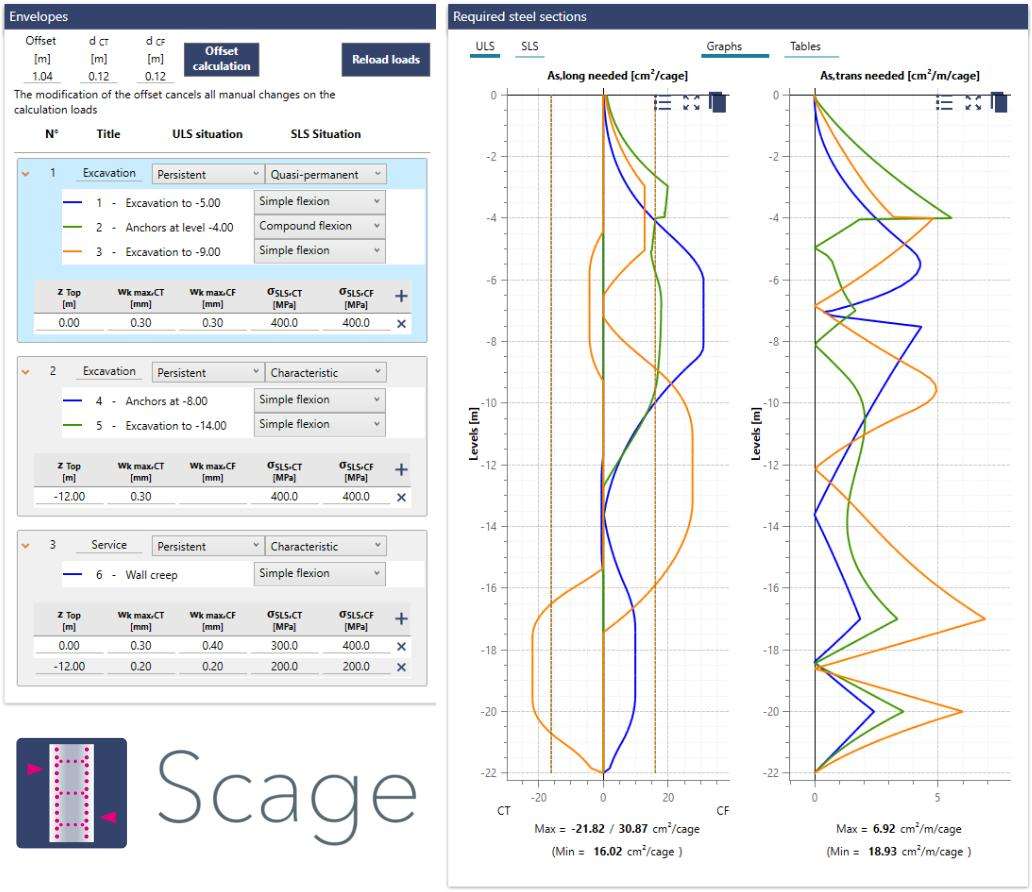
Download TERRASOL Scage 2.1.4 – Geotechnical Structural Analysis Software
TERRASOL Scage 2.1.4 is specialized structural analysis and design verification software developed by TERRASOL, a French engineering consultancy firm focused on geotechnical and structural engineering. This application is designed for civil engineers, geotechnical engineers, and structural engineers, providing robust tools for the analysis of geotechnical structures, particularly piles and diaphragm walls, within reinforced concrete frameworks. Its core functionality is centered on providing compliance with critical European design standards, including Eurocode 2 and Eurocode 7, making it a targeted solution for specialized engineering tasks.
Overview of TERRASOL Scage in Geotechnical Engineering
TERRASOL Scage provides essential functionalities for the structural analysis and design of common geotechnical structures. Developed by TERRASOL, a company with deep expertise in geotechnical and structural engineering consultation, the software is built upon real-world engineering challenges. Its primary focus is on reinforced concrete structures such as piles and diaphragm walls, which are fundamental elements in many civil engineering projects. The software aids engineers in verifying the internal force balance and structural integrity of these underground elements, ensuring they meet stringent safety requirements.
A key aspect of TERRASOL Scage is its adherence to European design norms. This includes comprehensive implementation of Eurocode 2, which governs the design of concrete structures, and Eurocode 7, which deals with geotechnical design. This focus on standardized compliance ensures that users can confidently apply the software to projects requiring adherence to these internationally recognized building codes.
Structural Analysis Capabilities for Piles and Diaphragm Walls
TERRASOL Scage offers specialized tools for the structural verification of piles and diaphragm walls, which are critical components in subterranean construction and foundation design. The software performs detailed checks on the internal forces acting on these structural elements. This includes assessing bending moments, shear forces, and axial loads to ensure the reinforced concrete design can withstand the anticipated soil pressures and other environmental factors.
The software’s capabilities extend to the comprehensive structural analysis of diaphragm walls, a common retaining structure. It aids in determining the adequacy of the concrete cross-section and the required reinforcement detailing according to the design loads. Similarly, for pile foundations, Scage facilitates the analysis of structural capacity, ensuring that individual piles or groups of piles are correctly designed to support vertical and lateral loads transmitted from the superstructure.
Compliance with Eurocode 2 and Eurocode 7 Standards
Adherence to standardized design practices is crucial in geotechnical and structural engineering. TERRASOL Scage places significant emphasis on compliance with Eurocode 2 and Eurocode 7. Eurocode 2 provides the framework for designing safe and durable concrete structures, specifying material properties, load combinations, and structural analysis methods. Eurocode 7, on the other hand, addresses the geotechnical aspects of structural design, including the stability and bearing capacity of the ground itself.
TERRASOL Scage integrates these codes directly into its structural analysis workflows. The software’s compliance extends to the specific national annexes for France and Belgium, offering engineers working within these regions a tool that aligns with local regulations and design preferences. This targeted approach to Eurocode compliance, particularly for geotechnical structures, differentiates Scage from more general structural analysis packages.
Application Scenarios and Target Users
TERRASOL Scage is employed in a variety of civil engineering projects that involve extensive underground structures. Typical application scenarios include the design of deep basements requiring diaphragm walls as excavation support, foundation design for bridges and high-rise buildings using piles, and infrastructure projects such as tunnels or retaining walls where these elements are paramount. The software is instrumental in performing the structural safety checks required for these demanding environments.
The primary users of TERRASOL Scage are geotechnical engineers responsible for soil-structure interaction and foundation design, structural engineers tasked with verifying the load-bearing capacity and reinforcement of these structures, and civil engineers overseeing complex construction projects. A foundational understanding of geotechnical principles and reinforced concrete design, along with familiarity with European design standards, is typically expected for effective use of the software.
Integration and Compatibility with Other Engineering Workflows
TERRASOL Scage is designed to function within the broader context of engineering design processes. While specific details on interoperability with all other software platforms may require direct consultation with TERRASOL, its output is intended to be usable in comprehensive project documentation. Engineers often use such specialized tools to perform critical design calculations, with results being incorporated into overall project plans, CAD drawings, and structural reports.
The software’s specialized nature means it complements, rather than replaces, general CAD or BIM (Building Information Modeling) software. Its focus on detailed structural analysis according to specific Eurocodes allows engineers to generate the precise verification data needed for regulatory approval and construction. Users may export results or use the calculated forces and stresses in conjunction with other design and modeling tools to complete their project deliverables.
Comparison with Other Geotechnical Design Tools
Compared to general-purpose structural analysis software, TERRASOL Scage offers a distinct advantage through its specialization in geotechnical structural elements. While broader applications might handle a wide array of structural types, Scage is finely tuned for the unique demands of analyzing piles and diaphragm walls under geotechnical loads. Its strength lies in its integrated compliance with Eurocode 2 and Eurocode 7, including specific national annexes, providing a streamlined verification process for these particular structures.
Many other geotechnical design tools might focus solely on soil mechanics and slope stability, or general foundation bearing capacity. TERRASOL Scage bridges the gap by focusing on the structural integrity and reinforced concrete design of the geotechnical elements themselves. This targeted approach ensures that engineers can accurately assess the structural performance of critical components like diaphragm walls and pile foundations according to precise European standards.
Frequently Asked Questions
How does TERRASOL Scage support Eurocode 2 and Eurocode 7 compliance in geotechnical design?
TERRASOL Scage is specifically designed to perform structural analysis and design verification of piles and diaphragm walls in accordance with Eurocode 2 for reinforced concrete structures and Eurocode 7 for geotechnical design. It integrates the relevant French and Belgian national annexes to ensure local standards compliance, providing engineers with a tool that meets both European and national regulatory requirements for critical geotechnical projects.
Who should use TERRASOL Scage software?
TERRASOL Scage is ideal for geotechnical, structural, and civil engineering design engineers who need to size and verify the structural integrity of reinforced concrete geotechnical structures such as piles and diaphragm walls according to European standards. Its specialized functions make it particularly valuable for professionals engaged in deep foundation design and excavation support systems.
Can TERRASOL Scage handle the design of diaphragm wall reinforcement?
Yes, TERRASOL Scage enables detailed design and verification of reinforced cages for diaphragm walls, ensuring the structural elements meet the required safety and stability criteria according to Eurocodes. It allows engineers to accurately calculate reinforcement needs based on the structural analysis of forces acting on the wall.





Reviews
There are no reviews yet.