

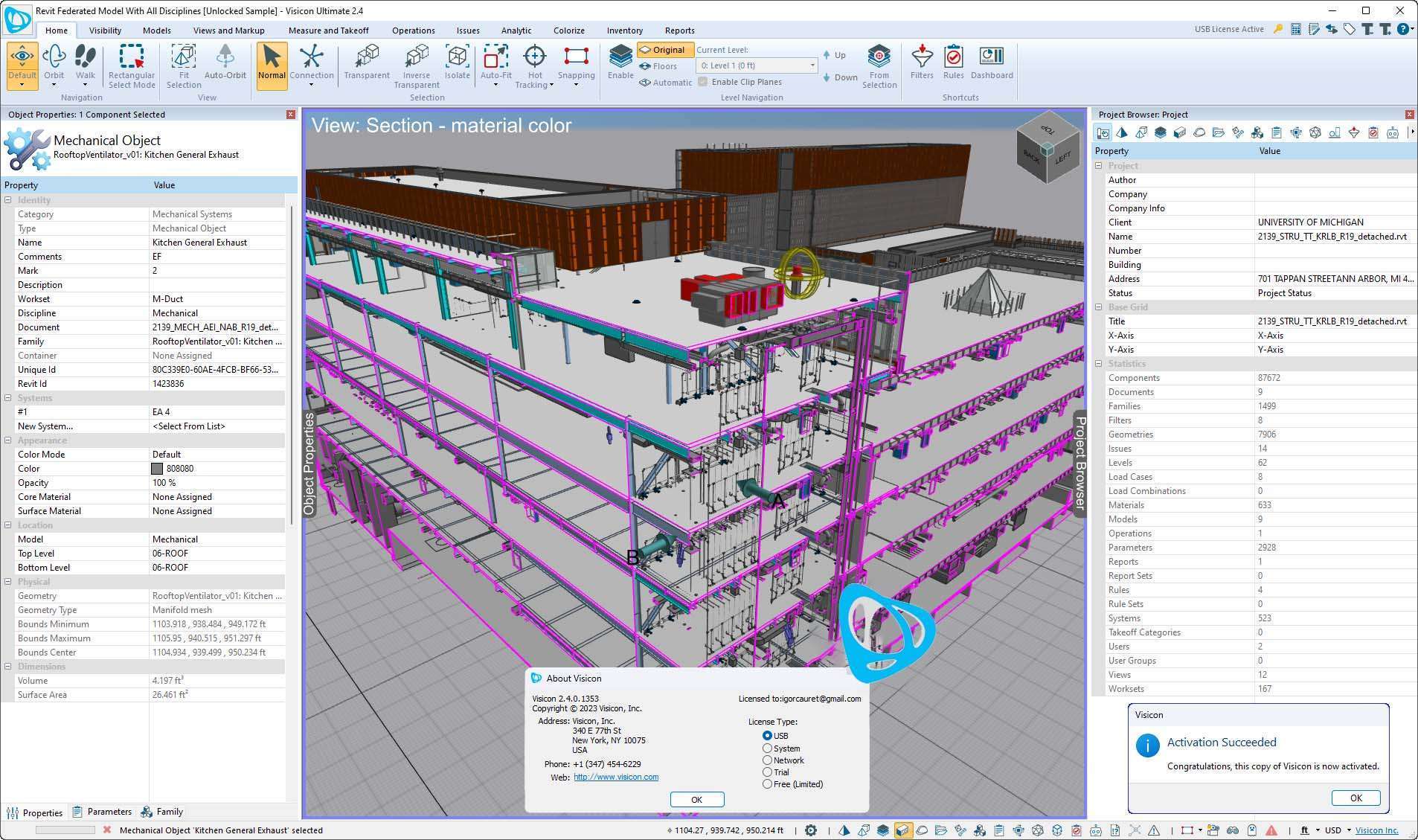
Download Visicon 2.4 – A Comprehensive Solution for BIM Model Review
Visicon 2.4 is a specialized BIM software designed to enhance the 3D model review and checking process for structural engineers. Developed to facilitate effective Building Information Modeling interactions, this application empowers users to validate project models and streamline coordination by integrating diverse model data formats. Visicon is crucial for professionals in structural engineering and the broader architecture, engineering, and construction (AEC) industries who rely on comprehensive data management for their projects.
Exploring Visicon 2.4 and Its Role in Structural Engineering
Visicon 2.4 serves as a pivotal tool for structural engineers, offering a robust platform for 3D model review and validation within Building Information Modeling (BIM) workflows. Its primary function is to consolidate and analyze project models, ensuring accuracy and facilitating efficient project management. By providing a centralized environment for checking, Visicon aims to reduce errors and improve project outcomes.
Overview of Visicon’s Features and Capabilities
As a BIM software solution, Visicon 2.4 is engineered to support the intricate demands of structural engineering projects. It provides a consolidated view of 3D models, enabling engineers to perform detailed checks and verifications. The software’s design prioritizes efficiency in handling complex structural data, making it an indispensable asset for modern engineering practices.
Integration with Common Engineering Tools
A key strength of Visicon 2.4 lies in its ability to seamlessly integrate with a variety of widely used engineering software and data formats. This interoperability significantly simplifies technical workflows by allowing users to consolidate information from different sources into a single, cohesive project environment. Such integration reduces the need for complex data conversions and ensures that all project stakeholders are working with the most up-to-date model data.
Visicon supports:
- Direct integration with outputs from software like Revit, a leading architectural design tool.
- Compatibility with structural analysis software such as ETABS.
- Support for the Industry Foundation Classes (IFC) format, a crucial BIM standard for data exchange.
- Import capabilities for point-cloud data, enabling comprehensive project context.
Markup and Collaboration in Visicon
Visicon 2.4 enhances project communication and coordination through integrated markup and collaboration features. This functionality allows engineers and project teams to annotate models directly, share feedback efficiently, and track revisions, fostering a more cohesive and informed project development process. The ability to create and share marked-up models simplifies the resolution of discrepancies and ensures that all parties are aligned.
Key collaboration features include:
- Intuitive markup tools for adding annotations, comments, and markups directly onto 3D models.
- Efficient model sharing capabilities to distribute reviewed models and feedback to team members.
- Support for real-time collaboration, enabling simultaneous review sessions.
- Features that streamline the process of information exchange within the project team.
Advanced Analysis Capabilities
Visicon 2.4 offers robust analytical functions that are critical for ensuring model accuracy and structural integrity. These capabilities go beyond basic visualization, providing tools for automated checking and complex verification processes. By leveraging these advanced features, engineers can identify potential issues early in the design phase, preventing costly errors later in the construction process.
The software includes:
- Automatic clash detection to identify spatial conflicts between different structural elements or systems.
- Clearance verification to ensure adequate space for maintenance and installation.
- Smart rule operations designed to automatically check models against predefined project standards and specifications.
- Tools for extracting specific information from models, aiding in data validation and reporting.
Real-World Applications of Visicon in Structural Projects
The practical application of Visicon 2.4 in structural engineering projects delivers tangible benefits, improving project outcomes through enhanced model validation and coordination. Its utility is particularly evident in complex construction scenarios where precise integration and communication are paramount. By utilizing Visicon, engineering teams can mitigate risks and ensure the integrity of their structural designs from conception through to completion.
Specific use cases include:
- Resolving discrepancies identified during detailed model reviews before construction begins.
- Validating structural components against design specifications and building codes.
- Coordinating structural elements with MEP (Mechanical, Electrical, Plumbing) systems to prevent clashes.
- Improving communication between design teams and construction personnel through shared, marked-up models.
- Ensuring compliance with BIM standards throughout the project lifecycle.
Frequently Asked Questions
What is Visicon and how does it benefit structural engineering projects?
Visicon is a 3D model review and checking software designed for structural engineers, enhancing collaboration through model markup and validation. It significantly streamlines workflows by integrating various project model data formats, ensuring effective management and communication throughout the project cycle.
Can Visicon integrate with other software used in engineering?
Yes, Visicon is capable of integrating with major software solutions such as Revit, ETABS, and IFC, enabling users to work seamlessly across different platforms without having to manage multiple licenses.
What types of analysis and validation can I perform with Visicon?
Users can perform a variety of analyses with Visicon, including clash detection, 3D Boolean operations, and clearance verification to identify deficiencies in their models efficiently.




Reviews
There are no reviews yet.