

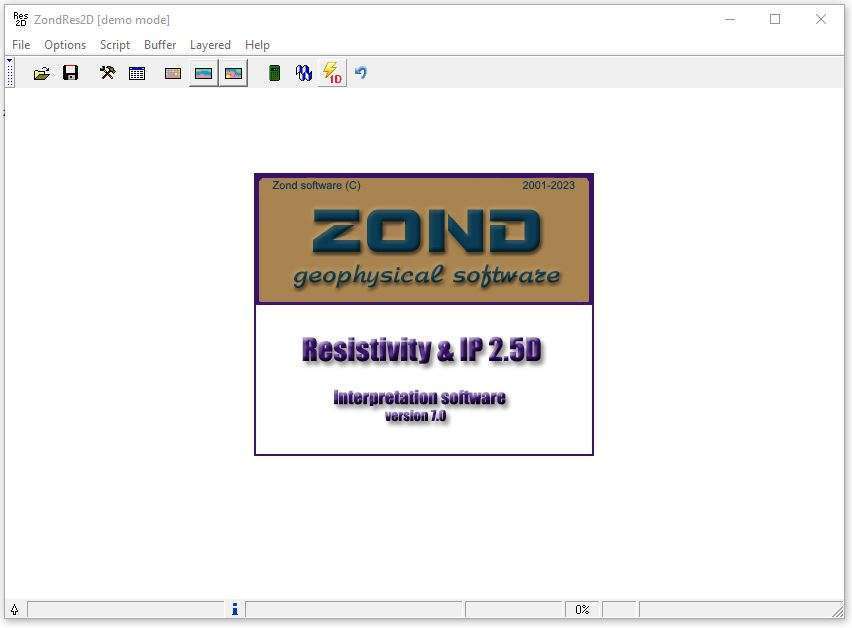
Download ZondRes 2D 8.0 – Advanced Geophysical Data Interpretation Software
ZondRes 2D 8.0 is a specialized geophysical software application developed by Zond Software, designed for the two-dimensional interpretation of electrical resistivity and induced polarization survey data. This tool is extensively utilized in geophysical engineering, environmental surveying, and geological exploration, providing professionals with advanced capabilities for processing and analyzing complex subsurface data. Its focus on electrical tomography makes it a critical component in understanding geological structures and environmental conditions.
Overview of ZondRes 2D
What is ZondRes 2D?
ZondRes 2D 8.0 is a powerful geoelectric inversion tool engineered for the comprehensive interpretation of geophysical data. It specializes in two-dimensional modeling and inversion techniques, primarily derived from resistivity and induced polarization surveys. The software facilitates detailed analysis of subsurface electrical properties, making it invaluable for applications ranging from environmental assessments to mineral exploration.
Applications in Geophysics
Key Use Cases in Various Industries
ZondRes 2D plays a critical role across multiple sectors requiring detailed subsurface understanding. Its versatile application supports geoelectric inversion tools for a wide array of projects:
- Environmental Surveying: Used to map groundwater contamination plumes, assess landfill integrity, and delineate geological structures influencing environmental conditions.
- Geological Exploration: Facilitates the identification and mapping of mineral deposits, including metallic ores, by analyzing variations in resistivity and induced polarization signatures.
- Geophysical Engineering: Supports civil engineering projects by investigating soil and rock properties, identifying buried utilities, and assessing foundation stability through subsurface imaging.
- Hydrogeology: Aids in modeling and understanding aquifer geometry, water saturation levels, and the presence of freshwater or saline intrusion.
Core Features and Capabilities
Unique functionalities of ZondRes 2D
ZondRes 2D 8.0 distinguishes itself through a suite of advanced features tailored for precise geophysical data interpretation:
- Advanced Modeling: Supports both direct current (DC) and induced polarization (IP) modeling, enabling users to simulate complex subsurface scenarios and analyze electrical field responses.
- Flexible Electrode Configurations: Accommodates a wide range of electrode arrays, including two-electrode, three-electrode, and four-electrode systems, as well as poles and dipoles, providing adaptability to diverse field survey designs.
- Robust Inversion Algorithms: Employs sophisticated geophysical inversion techniques to process vast amounts of resistivity modeling data, generating accurate 2D geoelectrical models of the subsurface.
- Data Visualization: Offers comprehensive visualization tools to display 2D resistivity and IP models, allowing for intuitive interpretation of geological features and anomalies.
- Complex Geological Adaptability: Designed to handle challenging geological conditions and varied electrode arrangements encountered in field surveys for more reliable data interpretation.
Comparison with Other Geophysical Software
While numerous geophysical data interpretation software packages exist, ZondRes 2D 8.0 offers a specialized focus on 2D electrical tomography. It provides strong capabilities in direct current and induced polarization analysis, often distinguishing itself through its support for a broad spectrum of electrode arrays and its robust inversion algorithms for complex geological settings. Competitors may offer broader geophysical method support or 3D capabilities, but ZondRes 2D excels in detailed 2D resistivity and IP modeling for dedicated geoelectric surveys.
User Interface and Experience
ZondRes 2D 8.0 is designed with a focus on professional users, providing an intuitive interface that streamlines the workflow for geophysical data interpretation. Customization options allow users to tailor the software environment to their specific project needs, enhancing efficiency in processing and analyzing resistivity and induced polarization data. The logical layout and clear visualization tools contribute to a productive user experience, facilitating faster and more accurate geological assessments.
Real-World Applications and Case Studies
Professionals in geophysical engineering and environmental sciences leverage ZondRes 2D 8.0 for critical project analyses. For instance, its application in mapping subsurface structures for infrastructure development helps engineers identify potential geological hazards before construction. In environmental surveys, the software has been used to delineate contaminated groundwater plumes, providing essential data for remediation planning. Furthermore, its capabilities in induced polarization analysis aid in exploring for disseminated sulfide ore bodies, a crucial step in mineral resource exploration.
Getting Started with ZondRes 2D
Installation and Setup Tips
To begin utilizing ZondRes 2D 8.0 for your geophysical data interpretation needs, ensure that the software is properly installed on your workstation. Familiarizing yourself with the interface and core functionalities is key to optimizing its use. Pay attention to data import settings to accurately load your resistivity and induced polarization survey results. Experimenting with different modeling parameters and inversion settings in a test environment can provide valuable insights into the software’s capabilities for your specific project requirements.
Frequently Asked Questions
What type of data can ZondRes 2D interpret?
ZondRes 2D specializes in interpreting electrical tomography data through resistivity and induced polarization methods, applicable in various environments such as land, cross-borehole, and water sites. This allows it to assess subsurface electrical properties effectively for a range of geological and environmental studies.
Can ZondRes 2D work with different types of electrode configurations?
Yes, ZondRes 2D supports various electrode arrays, including two-electrode, three-electrode, and four-electrode configurations, allowing for extensive flexibility in geophysical surveys. It also accommodates pole-pole, pole-bipole, and dipole-dipole setups, ensuring compatibility with diverse data acquisition strategies.
What modeling tools does ZondRes 2D provide?
The software offers a comprehensive range of modeling tools for analyzing direct current and induced polarization fields, enabling users to conduct detailed sensitivity analyses and quality assessments. These tools facilitate the generation of synthetic data and the refinement of inversion models for improved interpretive accuracy.





Reviews
There are no reviews yet.