

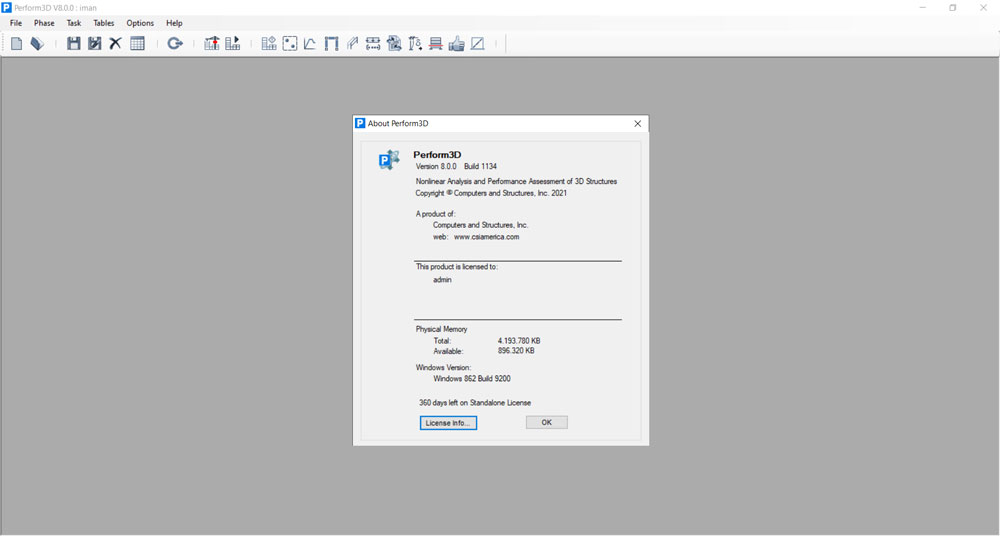
Download CSI Perform3D 11.0 – Advanced Nonlinear Analysis Software for Earthquake-Resistant Structures
CSI Perform3D 11.0 is a specialized nonlinear analysis software developed by Computers and Structures, Inc. (CSI), focusing on the seismic performance of building structures. It is designed for structural and earthquake engineers, providing advanced tools to evaluate how structures respond to significant seismic events. The software’s displacement-based design approach, informed by decades of research and practice by CSI, supports engineers in creating more resilient and safer buildings in seismically active regions.
Overview of CSI Perform3D
CSI Perform3D offers sophisticated nonlinear analysis capabilities essential for modern structural design, particularly in earthquake-prone areas. Developed by Computers and Structures, Inc., a company with a long history in structural and earthquake engineering software, Perform3D addresses the critical need to understand and predict a structure’s behavior beyond its elastic limits. This nonlinear earthquake analysis is paramount for ensuring structural integrity and occupant safety during seismic incidents, aligning with advanced engineering practices.
Core Features and Capabilities
Nonlinear Analysis Tools
The software is built around powerful nonlinear analysis tools that allow engineers to accurately model the complex behavior of structures under extreme loading conditions. This includes simulating the inelastic behavior of materials, which is crucial for understanding how a building will deform and potentially sustain damage during a significant earthquake. By focusing on these detailed inelastic responses, CSI Perform3D enables a more realistic assessment of seismic resilience.
Displacement-Based Design Approach
CSI Perform3D champions a displacement-based design approach, a methodology that prioritizes controlling structural displacement rather than just internal forces. This technique acknowledges that the inelastic deformation of structural elements is a key factor in seismic performance. By focusing on achievable displacement targets, engineers can achieve a desired level of performance and seismic resilience, making the design process more intuitive and aligned with observed structural behavior during earthquakes.
Performance Evaluation and Result Processing
With its emphasis on seismic resilience, CSI Perform3D provides comprehensive tools for performance evaluation. Engineers can meticulously analyze various performance levels, from serviceability to ultimate collapse prevention, by processing the detailed results generated during nonlinear analysis. The software facilitates the interpretation of complex data, enabling engineers to pinpoint areas of concern and optimize structural designs for enhanced safety and reliability.
Supported Applications in Structural Engineering
CSI Perform3D is particularly well-suited for analyzing and designing earthquake-resistant structures across various applications. It is ideal for complex building projects in seismically active zones, including high-rise residential buildings, commercial structures, and critical facilities such as hospitals and emergency response centers where performance during seismic events is paramount. The software’s ability to model nonlinear behavior makes it a valuable tool for ensuring these structures meet stringent seismic design codes and performance objectives.
Integration with Other CSI Products
A significant advantage of CSI Perform3D is its seamless integration with other leading structural analysis software from Computers and Structures, Inc., such as SAP2000 and ETABS. This interoperability allows for a more holistic structural analysis workflow. Engineers can leverage the extensive modeling capabilities of SAP2000 or ETABS for initial analysis and then transfer models to CSI Perform3D for detailed nonlinear earthquake analysis and performance evaluation, enriching the data and insights available.
Real-World Application Case Studies
While specific named case studies for CSI Perform3D are not detailed here, Computers and Structures, Inc. has a long history of its software being instrumental in the design of numerous iconic and critical structures worldwide. Projects that have undergone rigorous seismic analysis and performance evaluation leveraging CSI’s technology often include complex high-rise buildings and infrastructure designed to withstand extreme seismic forces. The development of earthquake-resistant designs with CSI products reflects a commitment to advancing engineering practices in seismically challenging environments.
Conclusion and Next Steps
CSI Perform3D 11.0 stands as a robust solution for structural engineers focused on seismic design and performance evaluation. Its advanced nonlinear analysis capabilities, combined with a displacement-based design methodology, offer a sophisticated approach to understanding and enhancing structural resilience against earthquakes. For engineers working on projects where seismic performance is a critical consideration, CSI Perform3D provides the specialized tools necessary to achieve robust and reliable designs.
Frequently Asked Questions
What types of structures can I analyze with CSI Perform3D?
CSI Perform3D is primarily designed for the nonlinear analysis of earthquake-resistant structures, accommodating various building types including residential and commercial projects that prioritize seismic performance. Its capabilities extend to critical facilities requiring high levels of seismic resilience.
How does the displacement-based design approach in Perform3D differ from traditional methods?
The displacement-based design approach emphasizes the importance of inelastic deformation during seismic events, contrasting with traditional force-based methods that may not adequately account for material behavior under extreme conditions. Perform3D focuses on target displacements to ensure predictable performance and safety under seismic loads.
Can Perform3D integrate with other structural analysis software?
Yes, CSI Perform3D can import and export data to and from other CSI products such as SAP2000 and ETABS, facilitating a comprehensive analysis framework for engineers. This integration allows for a more complete and detailed structural analysis workflow, from initial modeling to advanced nonlinear evaluation.




Reviews
There are no reviews yet.