
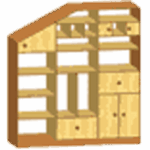
Download Poly Board 8.11 – Advanced Cabinet Design and Manufacturing Software
Poly Board 8.11 is specialized cabinet design and manufacturing software developed by Boole & Partners, focusing on the precise needs of the cabinet and furniture production industry. This interactive tool allows users to create complex cabinet designs by leveraging detailed manufacturing methodologies, ensuring a direct link between the design and the production floor. It is engineered for professionals in woodworking and furniture design who require robust parametric capabilities and seamless integration with manufacturing processes.
Overview of Poly Board in Cabinet Design and Production
Poly Board is engineered to streamline the design and manufacturing workflow for cabinetry and furniture. It employs proprietary methodological concepts from Boole & Partners, enabling users to define and manage intricate design parameters specific to the woodworking industry. The software’s architecture supports the creation of arborescent cabinet structures, which are dynamically linked to material and manufacturing method lists. This approach ensures that any changes made to the design are immediately reflected across all related aspects of the project.
Interactive and Parametric Design Capabilities
The core of Poly Board’s functionality lies in its advanced interactive and parametric design engine. It supports the creation of arborescent cabinet structures, allowing for complex, multi-level designs. Key features include:
- Dynamic material and manufacturing method lists that can be customized and updated.
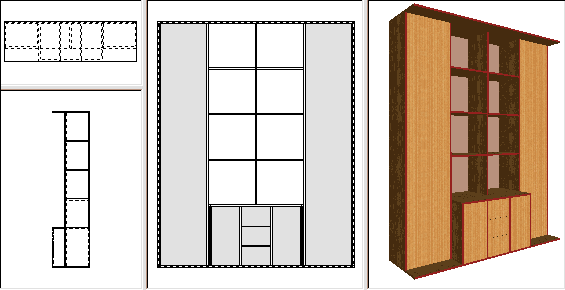
- Real-time recalculations that instantly reflect any design modifications in both 2D and 3D views.
- Parametric fittings that ensure accuracy and consistency throughout the design process.
- Automated generation of hardware summaries, detailing all necessary components for assembly.
This dynamic recalculation capability ensures that designers and manufacturers are always working with up-to-date information, minimizing errors and optimizing production efficiency.
Manufacturing Methods and Customization Options
Poly Board offers extensive customization for manufacturing processes, directly integrating detailed woodworking techniques into the design phase. Users can specify a range of manufacturing methods and structural elements, including:
- Various cabinet construction types such as side master, top master, and mitre joints.
- Options for back panel integration, including rabetted or slotted backs, recesses, and overlaps.
- Support for standard hardware drilling patterns, such as the type 32 system, ensuring compatibility with industry-standard fittings.
- Detailed customization of materials and edge treatments to match specific project requirements.
This level of control allows for highly specific project tailoring, from material selection to joint types and hardware placement.
Integration with CNC Machines and Post-Processing Features
A significant advantage of Poly Board is its robust integration with computer numerical control (CNC) manufacturing equipment. The software includes advanced post-processing features designed to export designs in formats compatible with most CNC tooling machines. This capability extends to:
- Generation of tooling maps that precisely define cutting paths and operations for CNC machines.
- Export of comprehensive hardware summaries, aiding in efficient inventory management and assembly preparation.
- Seamless transition from the design environment to automated manufacturing execution, reducing manual data input and potential for errors.
This direct link to CNC machinery significantly enhances productivity and precision in the manufacturing of custom cabinets and furniture.
Practical Use Cases in Woodworking and Cabinet Making
Poly Board serves a critical role in various professional settings within the woodworking and cabinet making industries. Its specialized features are utilized in:
- Bespoke Cabinetry: Creating unique, custom-designed cabinets for residential and commercial spaces where standard solutions are insufficient.
- Furniture Manufacturers: Designing and producing consistent, high-quality furniture pieces with complex jointing and detailed finishes.
- Industrial Production: Streamlining the manufacturing process for larger-scale furniture or cabinetry projects requiring precise CNC integration.
- Woodworking Shops: Enabling small to medium-sized shops to adopt advanced parametric design and automated manufacturing techniques.
The software’s ability to handle detailed manufacturing specifications makes it ideal for professionals requiring accuracy and efficiency in their projects.
Compatibility and File Format Considerations
Poly Board is designed to facilitate interoperability within the design and manufacturing ecosystem. While specific file format details beyond CNC compatibility require consultation of detailed documentation, the software’s emphasis on outputting data for CNC machines suggests compatibility with widespread CAM software and machine controllers. This focus ensures that designs created in Poly Board can be readily translated into machine instructions for automated production lines, bridging the gap between conceptualization and fabrication.
Frequently Asked Questions
What types of cabinet joints and manufacturing methods does Poly Board support?
Poly Board supports various manufacturing techniques including side master, top master, and mitre joints. It includes configurations for rabetted or slotted backs, recesses, overlaps, and regular drilling groups like type 32 hardware fittings, providing comprehensive options for custom fabrication.
Can Poly Board export files compatible with CNC machines?
Yes, Poly Board features a Post_Processing export function that is compatible with most CNC tooling machines, enabling seamless transition from design to manufacturing and ensuring direct machine readability of design data.
How does Poly Board handle design updates and recalculations?
The software dynamically recalculates cabinets in real time as users modify dimensions, structures, materials, or manufacturing methods, simultaneously updating both 2D and 3D cabinet representations to maintain design integrity.





Reviews
There are no reviews yet.