

Download DS SIMULIA Simpack 2026 – Advanced Multibody Dynamics Simulation Software
DS SIMULIA Simpack 2026 is a specialized multibody simulation (MBS) software developed by Dassault Systèmes, designed for the dynamic behavior analysis of complex mechanical systems. As a key component of the SIMULIA suite on the 3DEXPERIENCE platform, Simpack is essential for engineers in automotive, aerospace, rail, and industrial machinery sectors who require high-fidelity mechanical system dynamics analysis. Its primary function is to solve equations of motion in three-dimensional mechanical systems, accurately predicting forces, accelerations, velocities, and displacements.
Overview and Industrial Relevance of Simpack
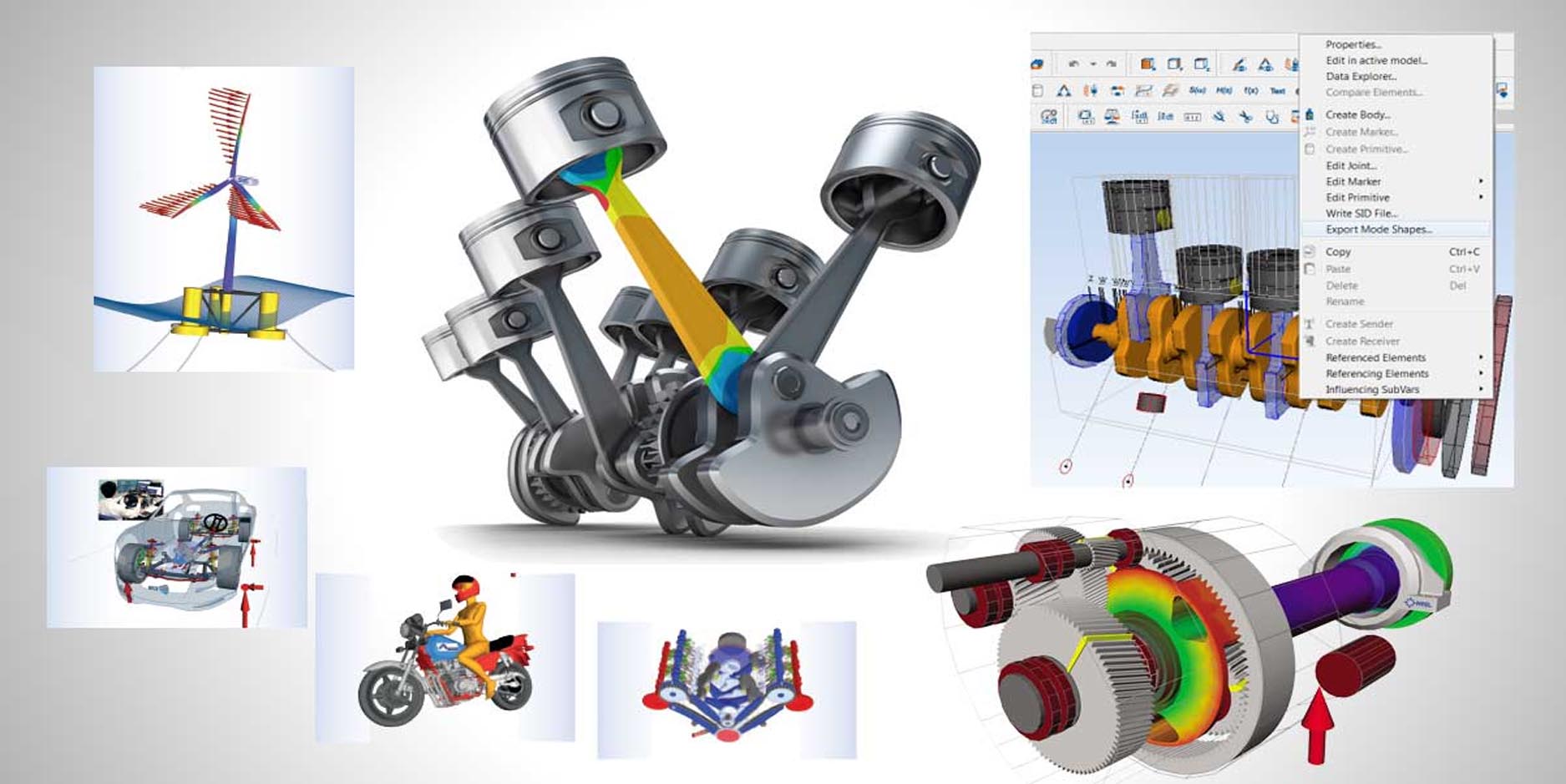
DS SIMULIA Simpack 2026 stands as a leader in multibody simulation (MBS) software, offering advanced capabilities for analyzing the dynamic behavior of mechanical systems. It is integral to Dassault Systèmes’ SIMULIA brand, working within the broader 3DEXPERIENCE platform to provide a connected engineering environment. The software is distinguished by its robust application across critical engineering fields, including automotive engineering for vehicle dynamics and drivetrain analysis, aerospace for complex systems like landing gear and flight controls, rail engineering for simulating train-track interactions and bogie dynamics, and for industrial machinery such as robotics and wind turbines. Its relevance lies in delivering precise predictions for highly dynamic scenarios.
Core Simulation Capabilities and Solver Technologies
At its core, DS SIMULIA Simpack 2026 employs sophisticated solver technologies to handle the complexities of mechanical system dynamics. The software excels in solving large systems of differential-algebraic equations that describe the motion of interconnected rigid and flexible bodies. Its solver architecture, often utilizing recursive approaches, ensures high speed and accuracy, even for intricate problems. A critical capability is its advanced contact modeling, which is crucial for realistically simulating interactions such as the critical wheel-rail contact in railway dynamics or the complex meshing of gears in drivetrains. The explicit consideration of flexible body deformation under dynamic loads allows for more accurate force and motion predictions than rigid-body-only simulations.
Industry-Specific Modules and Application Workflows
DS SIMULIA Simpack 2026 is enhanced by a suite of specialized modules tailored for specific industries, enabling focused application workflows. The Simpack Automotive module is pivotal for detailed vehicle dynamics simulation, covering aspects from suspension design to full vehicle stability. For the rail sector, Simpack Rail provides dedicated tools for train-track interaction analysis and bogie dynamics simulation, crucial for safety and performance. The Simpack Wind module addresses the complex dynamics of wind turbine systems, while the Simpack Engine & Drivetrain module is designed for high-fidelity analysis of engines, transmissions, and other driveline components. These modules streamline the setup and simulation process for common challenges within their respective fields.
Integration with CAD and Co-Simulation Tools
DS SIMULIA Simpack 2026 offers extensive interoperability, ensuring seamless integration into existing engineering workflows. It connects effectively with leading computer-aided design (CAD) software, including CATIA, SOLIDWORKS, NX, and Creo, allowing for the direct import and use of CAD geometry. The software also supports standard data exchange formats like STEP and IGES. Furthermore, Simpack supports co-simulation capabilities with essential tools such as MATLAB/Simulink and LabVIEW, as well as adherence to the Functional Mock-Up Interface (FMI) standard. This integration is vital for mechatronic system analysis, enabling the simulation of integrated mechanical and control system behaviors.
Real-World Engineering Applications and Case Studies
The application of DS SIMULIA Simpack 2026 in real-world engineering projects demonstrates its significant impact on product development and research. In automotive engineering, it is employed for optimizing suspension systems and evaluating vehicle handling characteristics. Aerospace engineers utilize Simpack to analyze the dynamics of landing gear deployment and retraction, ensuring structural integrity and performance under various conditions. For the rail industry, its simulation capabilities are essential for modeling the complex dynamic interaction between trains and tracks, contributing to track design and vehicle safety. In industrial machinery, Simpack aids in the design and optimization of robotic arms for precise motion control and the simulation of complex linkages in manufacturing equipment.
Frequently Asked Questions
What industries benefit most from using DS SIMULIA Simpack 2026?
DS SIMULIA Simpack 2026 is widely used in automotive, aerospace, rail, and industrial machinery industries, providing advanced multibody dynamic simulation crucial for vehicle dynamics, landing gear analysis, railway track interactions, and wind turbine mechanics. Its specialized modules and high-fidelity analysis capabilities make it indispensable for engineers addressing complex dynamic challenges in these sectors.
Can SIMULIA Simpack integrate with other engineering software tools?
Yes, Simpack integrates seamlessly with CAD platforms like CATIA, SOLIDWORKS, NX, and Creo, and supports co-simulation with MATLAB/Simulink, LabVIEW, and Dymola, enabling complex mechatronic system analysis. This interoperability allows engineers to incorporate Simpack simulations into broader product development workflows, combining mechanical dynamics with control system behavior.
How does Simpack handle flexible body dynamics differently from rigid body simulations?
Simpack uses finite element-based flexible body modeling to analyze component deformation under dynamic loads, providing more realistic simulations compared to rigid body-only models, essential for high-fidelity mechanical system analysis. This capability is crucial when component elasticity significantly influences system dynamics, such as in long drive shafts or large aircraft components.






Reviews
There are no reviews yet.