
Download ARTeMIS Modal Pro 8.0.0.3 – Advanced Operational Modal Analysis Software
ARTeMIS Modal Pro 8.0.0.3, developed by DEWESoft, is a specialized mechanical engineering software designed for advanced structural dynamics analysis. It is primarily utilized by professionals in the construction, mechanical systems, and vehicle testing industries who need to understand the dynamic behavior of structures and machinery while operational. This software facilitates the estimation of crucial modal parameters through operational modal analysis (OMA), offering a powerful tool for assessing structural integrity under real-world conditions.
Understanding Operational Modal Analysis
What is OMA?
Operational Modal Analysis (OMA) is an output-only methodology used to determine the dynamic characteristics of a structure. Unlike Experimental Modal Analysis (EMA), OMA does not require the application of known external forces. Instead, it estimates modal parameters such as mode shapes, natural frequencies, and damping ratios by analyzing the ambient response signals captured from the structure during its normal operation. This approach simplifies testing procedures and is particularly beneficial for structures that are difficult to excite artificially or when analyzing systems in their working environment.
Significance in Engineering
The significance of OMA in engineering lies in its ability to provide critical insights into a structure’s dynamic behavior without disrupting its operation. This makes it an invaluable technique for structural health monitoring, enabling engineers to detect potential issues or changes in a structure’s dynamic properties over time. By accurately estimating modal parameters, engineers can ensure the operational integrity and safety of various structures and mechanical systems, from bridges and buildings to vehicles and complex machinery.
Key Features of ARTeMIS Modal Pro
Advanced Modal Parameter Estimation
ARTeMIS Modal Pro offers sophisticated algorithms for modal parameter estimation, enabling users to accurately identify and quantify the dynamic characteristics of structures. The software excels in calculating:
- Mode Shapes: Visualizing the different patterns of vibration for each natural frequency.
- Natural Frequencies: Determining the inherent frequencies at which a structure tends to vibrate.
- Damping Ratios: Quantifying the rate at which vibrations decay over time.
These estimations are derived from ambient response analysis, providing a realistic representation of the structure’s dynamic behavior under operational loads.
File Formats and Data Compatibility
To ensure seamless integration with existing data acquisition systems and workflows, ARTeMIS Modal Pro supports various industry-standard file formats for input data. It is compatible with:
- UNV Geometry Files: Facilitating the import of structural geometry data for visualization and analysis.
- .dxd Time-Domain Data: Enabling the direct import of time-history measurements from DEWESoft’s data acquisition systems and other compatible sources.
This broad compatibility allows engineers to utilize data collected from a wide range of sensors and testing setups.
Applications in Various Industries
ARTeMIS Modal Pro finds extensive application across multiple engineering sectors, providing essential tools for dynamic analysis. Its capabilities are leveraged in:
- Construction: Assessing the dynamic response of bridges, buildings, and other civil infrastructure to environmental conditions like wind and seismic activity.
- Mechanical Systems: Analyzing the vibrational behavior of rotating machinery, power plants, and industrial equipment to prevent failures and optimize performance.
- Vehicles: Evaluating the structural dynamics of cars, trains, and aircraft during operational testing to improve ride comfort and structural integrity.
Case Studies and Real-World Applications
Engineers commonly employ ARTeMIS Modal Pro for practical applications such as monitoring the long-term health of critical infrastructure, where subtle changes in modal parameters can indicate damage or degradation. For instance, analyzing the ambient response of a bridge allows engineers to detect structural anomalies without needing to close the structure for testing. Similarly, in the automotive industry, the software is used to identify resonance frequencies that might cause noise and vibration issues, leading to design modifications for enhanced user experience and component longevity.
Comparison with Other Modal Analysis Tools
While other modal analysis tools exist, ARTeMIS Modal Pro distinguishes itself through its robust implementation of operational modal analysis techniques. Unlike software that primarily relies on experimental modal analysis (EMA) requiring controlled excitations, ARTeMIS Modal Pro excels in scenarios where only output data is available. This focus on output-only methods makes it particularly suitable for analyzing large, complex structures or systems that operate continuously under ambient conditions, often offering a more practical and cost-effective solution for structural health monitoring and in-situ dynamic characterization.
Getting Started with ARTeMIS Modal Pro
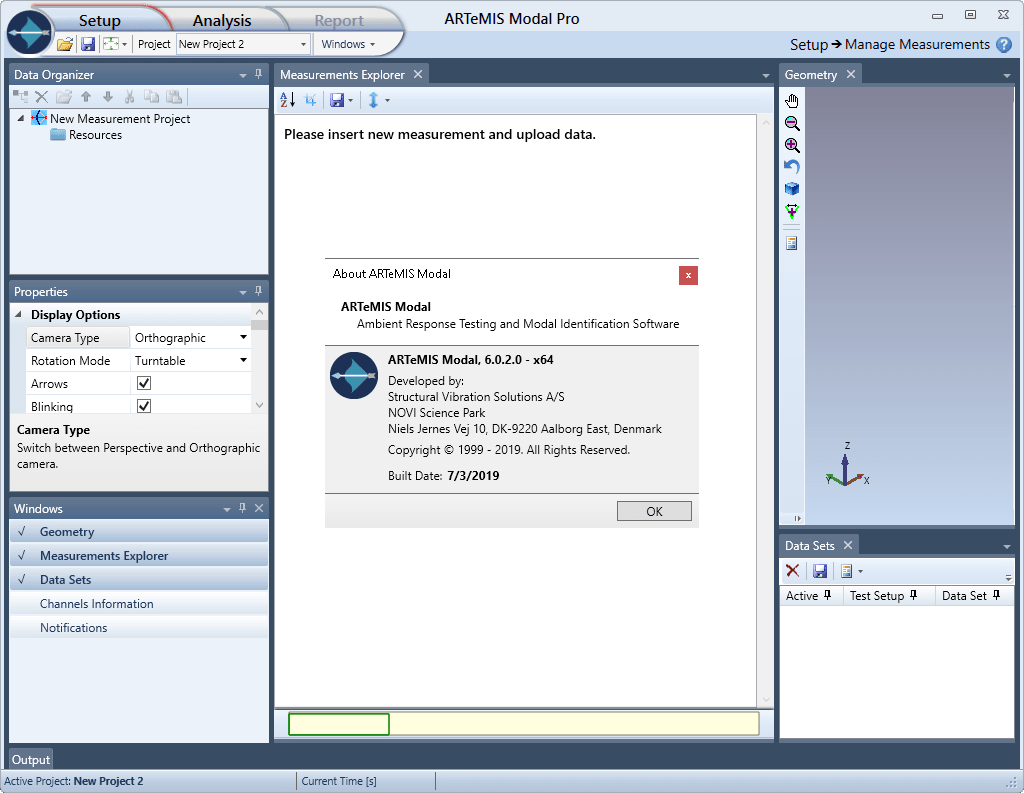
Beginning an analysis with ARTeMIS Modal Pro involves importing your recorded operational data, often in .dxd or compatible formats, and defining the geometry of the structure. The software then guides users through the process of applying OMA techniques to extract modal parameters. The visual feedback provided by the software, especially for mode shape animation, is crucial for verifying the analysis results and understanding how the structure vibrates.
Expert Tips for Effective Modal Analysis
To maximize the effectiveness of ARTeMIS Modal Pro for structural dynamics analysis, consider these expert tips:
- Ensure sufficient data quality by using synchronized sensors and appropriate sampling rates.
- Carefully select the modal estimation method within the software that best suits your data and desired outcome.
- Always validate the estimated mode shapes against known physical characteristics or expected deformation patterns of the structure.
- Correlate frequency domain results with time domain behavior to gain a comprehensive understanding of dynamic responses.
- Leverage the software’s visualization tools to interpret complex vibration modes accurately.
Future Development and Innovations
DEWESoft continuously invests in enhancing its software solutions, and ARTeMIS Modal Pro benefits from ongoing advancements in signal processing and computational methods. While specific details for version 8.0.0.3 are not publicly detailed, the general direction for such software involves improving algorithm efficiency, expanding compatibility with emerging data acquisition hardware, and incorporating more sophisticated techniques for automated damage detection and predictive maintenance based on dynamic signatures. Future developments are likely to focus on machine learning integration for advanced pattern recognition in vibration data.
Frequently Asked Questions
What is the difference between operational modal analysis (OMA) and experimental modal analysis (EMA)?
OMA estimates modal parameters using only output measurements from structures during operation, without requiring known input excitations such as shakers. EMA requires controlled input forces and is typically more intrusive, often requiring the structure to be instrumented with external excitation sources. OMA is thus ideal for situations where applying external forces is impractical or impossible.
Can ARTeMIS Modal Pro analyze real-time data from dynamic systems?
Yes, ARTeMIS Modal Pro is designed to analyze dynamic behavior from data acquired during system operation. While it processes recorded data, its output-only methodology is inherently suited for assessing modal parameters as they manifest during real-time functioning, allowing for continuous monitoring and assessment of system integrity.
What file formats does ARTeMIS Modal Pro support for data input?
The software supports UNV geometry files for importing structural descriptions and .dxd format for time-domain data analysis. This ensures compatibility with DEWESoft’s data acquisition systems and allows for integration with data from other sources that can export in these widely recognized formats.





Reviews
There are no reviews yet.