

Download ARTM View 1.4.2 – Atmospheric Radionuclide Dispersion and Radiation Safety Analysis Software
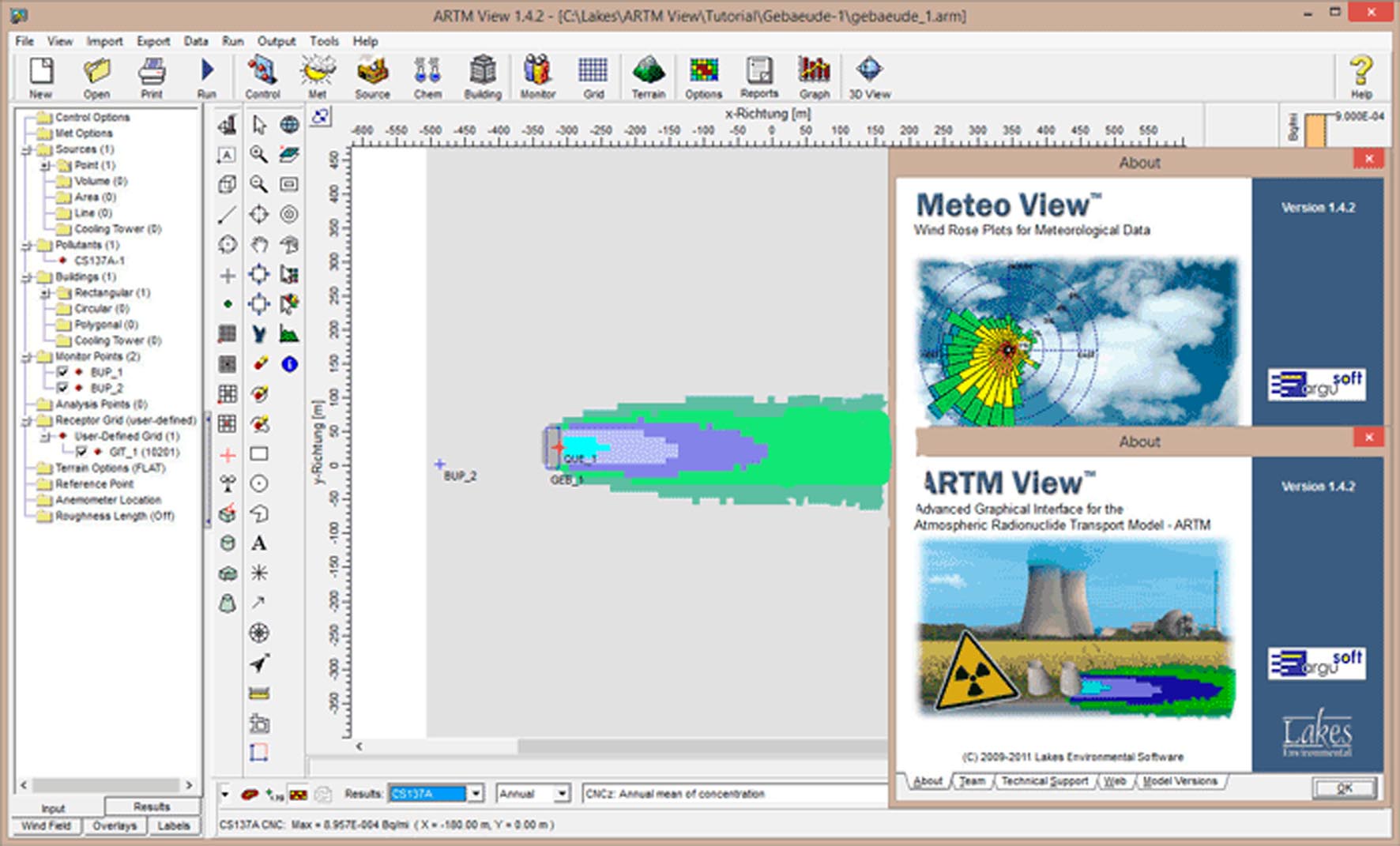
ARTM View 1.4.2 is a specialized module within the Atmospheric Radionuclide Transport Model (ARTM) suite, designed for the intricate analysis and visualization of radionuclide transport in the atmosphere. This software is crucial for professionals in nuclear safety, radiological emergency planning, environmental engineering, and regulatory compliance, providing sophisticated tools to model the atmospheric dispersion of radionuclides. It employs advanced physical modeling techniques to simulate plume movement, deposition, and radioactive decay, supporting critical safety assessments and emergency preparedness efforts in the nuclear industry.
Overview of ARTM View and Its Applications in Radiological Safety
ARTM View serves as a critical component for understanding and predicting the atmospheric behavior of radioactive materials. It is engineered for health physicists, nuclear emergency planners, and environmental engineers who require precise modeling capabilities for safety analysis and regulatory adherence. The software’s primary function is to simulate the complex processes involved in the atmospheric transport and deposition of radionuclides, thereby enabling robust radiological consequence assessments.
Advanced Atmospheric Dispersion and Radionuclide Transport Modeling
The core of ARTM View’s simulation capabilities lies in its advanced physical models. It utilizes Lagrangian particle and Gaussian puff dispersion models to accurately represent the movement and spread of radionuclides. These models account for the entire lifecycle of atmospheric radionuclides, including their transport from the source, dispersion under varying atmospheric conditions, deposition onto surfaces (dry and wet deposition), and their eventual decay according to established radioactive half-lives. This comprehensive approach ensures a realistic depiction of potential radiological impacts.
Integration of Meteorological Data for Accurate Simulation
Accurate simulation of radionuclide dispersion is heavily reliant on precise meteorological input. ARTM View excels in processing complex, three-dimensional meteorological data derived from weather prediction models or local monitoring stations. It integrates essential variables such as wind speed and direction, atmospheric temperature, stability classes, and precipitation patterns to dynamically drive the simulation of radionuclide plume trajectories and deposition zones. This detailed integration of meteorological fields is fundamental to achieving reliable predictive outcomes.
Radiological Dose Assessment and Consequence Analysis
Beyond dispersion modeling, ARTM View provides comprehensive tools for radiological dose assessment and consequence analysis. The software calculates various critical dose types, including inhalation doses from airborne radionuclides, external exposure doses from plume gamma radiation and ground contamination (groundshine), and other relevant exposure pathways. These calculations are vital for evaluating potential health impacts on exposed populations, forming the basis for emergency response planning, protective action recommendations, and long-term safety evaluations.
GIS-Based Visualization and Scenario Management
ARTM View features an intuitive Geographic Information System (GIS)-based interface that significantly enhances the understanding of simulation results. Users can visualize radionuclide plumes, deposition patterns, and calculated exclusion zones directly overlaid onto topographic maps, satellite imagery, and population distribution data. The software also supports the definition and comparison of multiple scenarios, allowing for robust analysis of different potential release events, mitigation strategies, and their associated environmental and safety consequences.
Compliance Reporting and Regulatory Standards
A key aspect of ARTM View’s functionality is its ability to generate outputs and reports that align with stringent regulatory requirements. The software is designed to produce documentation conforming to the guidelines and standards established by leading nuclear regulatory bodies, such as the U.S. Nuclear Regulatory Commission (NRC) and the International Atomic Energy Agency (IAEA). This capability is essential for nuclear facility licensing, environmental impact assessments, and the preparation of emergency response documentation.
Latest Enhancements in ARTM View 1.4.2
Version 1.4.2 of ARTM View introduces several significant enhancements aimed at improving user experience and analytical capabilities. These include an upgraded meteorological data processing engine for broader compatibility and accuracy, an enhanced 3D visualization system for more intuitive plume and deposition representation, and an expanded library of radionuclides to support a wider range of potential release scenarios. Additionally, new tools for efficient scenario comparison and critical performance optimizations have been implemented to streamline complex analyses and reporting processes.
Frequently Asked Questions
How does ARTM View simulate the transport and dispersion of radionuclides in the atmosphere?
ARTM View employs sophisticated physical models, including Lagrangian particle and Gaussian puff techniques, to realistically simulate how radionuclides move, disperse, and deposit in the atmosphere. These simulations incorporate critical environmental factors such as wind patterns, temperature gradients, precipitation levels, and the natural decay rates of the radionuclides to provide accurate predictions of plume behavior.
What types of radiological dose assessments can ARTM View perform?
The software is capable of performing comprehensive radiological dose assessments by calculating multiple dose types. This includes inhalation doses absorbed by individuals from breathing contaminated air, external exposure doses from direct radiation and contaminated ground surfaces (groundshine), and assessment of population-wide exposure for emergency planning and safety evaluations.
How does ARTM View support compliance with nuclear regulatory requirements?
ARTM View facilitates regulatory compliance by generating detailed reports and structured data outputs that are aligned with the guidelines set by major nuclear regulatory bodies like the NRC and IAEA. This adherence to standards ensures that the software’s analysis and documentation are suitable for licensing applications, safety analyses, and formal emergency response planning.





Reviews
There are no reviews yet.