

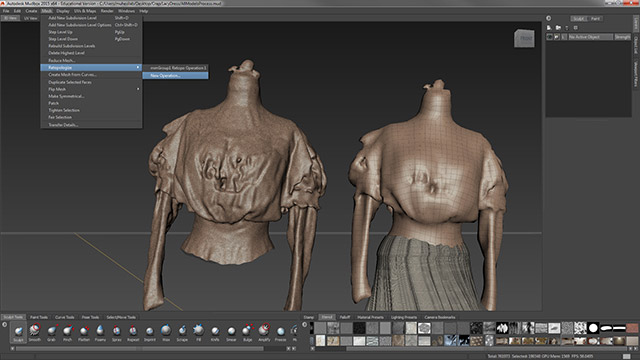
Download Autodesk Mudbox 2025 – Professional 3D Sculpting and Painting Tool
Autodesk Mudbox 2025 is a proprietary 3D sculpting and texture painting software developed by Autodesk. Originally created by Skymatter, it is designed for professional artists and designers in the media and entertainment, game development, and industrial design sectors. Mudbox offers powerful tools for manipulating polygon meshes and creating detailed digital assets, making it a significant application in modern digital content creation pipelines.
Introduction to Autodesk Mudbox 2025
The Evolution of Mudbox
Autodesk Mudbox has a rich history, dating back to its initial development as a specialized tool for high-resolution digital sculpting and texture painting. Its capabilities were famously employed early in its development, contributing to the modeling for the 2005 film “King Kong.” This origin underscores its foundation in demanding visual effects and entertainment production workflows, establishing it as a reliable option for complex digital artistry.
Core Features and Capabilities
Sculpting and Painting Tools
Mudbox provides an extensive suite of specialized tools designed to facilitate intricate digital sculpting and texture painting. Artists can leverage a wide array of brushes, each offering unique behaviors and customization options. These tools enable precise manipulation of polygon meshes, allowing for the creation of detailed surfaces, organic forms, and complex characters with a high degree of artistic control.
- A diverse brush library with customizable properties for detailed sculpting.
- Tools for manipulating polygon meshes with precision.
- Support for high-resolution sculpting demands in professional projects.
Layer Functionality in Mudbox
A key feature of Autodesk Mudbox is its robust 3D layer system. This functionality allows artists to work destructively, meaning changes can be made to models without permanently altering the underlying geometry. Artists can paint textures, sculpt details, and apply effects on separate layers, offering significant flexibility. This non-destructive workflow enables easier iteration, experimentation, and management of complex projects by preserving the base model and allowing adjustments at any stage.
File Compatibility and Workflow Integration
Autodesk Mudbox is designed to integrate smoothly into existing digital content creation pipelines. It supports a variety of industry-standard file formats, including .obj, .fbx, and its native .mud format. This broad compatibility ensures seamless data exchange with other popular 3D software, such as Autodesk Maya and 3ds Max, as well as third-party applications. Such integration is crucial for optimizing workflows and facilitating collaboration among design teams.
- Support for .obj, .fbx, and .mud file formats.
- Seamless integration with Autodesk Maya and 3ds Max.
- Facilitates efficient data exchange between different software packages.
Applications in Media and Entertainment
Use Cases in Game Development
In game development, Autodesk Mudbox is instrumental in creating detailed character models, props, and environmental assets. Its high-resolution sculpting capabilities allow artists to craft intricate details on characters, armor, and game environments that contribute to visual fidelity. The texture painting tools further enhance these assets, enabling the application of realistic materials and surface details essential for immersive gameplay experiences.
Visualization in Film and Animation
The film and animation industry relies on Mudbox for its advanced sculpting and texture painting features, particularly for creating realistic digital characters, creatures, and complex visual effects. The software’s ability to handle high polygon counts and detailed texturing makes it suitable for producing assets that meet the demanding visual standards of feature films and animated productions. Its non-destructive workflow, powered by 3D layers, is invaluable for the iterative processes common in visual effects pipelines.
Comparison with Other 3D Tools
When compared to other 3D sculpting applications, Autodesk Mudbox distinguishes itself through its emphasis on a streamlined, artist-centric workflow, particularly its advanced 3D layer system for non-destructive editing. While tools like ZBrush are renowned for extreme polygon counts and a vast array of sculpting tools, and Blender offers a comprehensive open-source suite, Mudbox provides a focused and intuitive environment for high-resolution sculpting and texture painting. Its tight integration with other Autodesk products also presents a key advantage for studios already invested in the Autodesk ecosystem.
Conclusion: The Importance of Autodesk Mudbox in Digital Design
Autodesk Mudbox 2025 remains a vital tool in the digital design landscape, particularly for professionals in media, entertainment, and game development. Its specialized focus on high-resolution sculpting and texture painting, combined with a flexible layer-based workflow, empowers artists to create detailed and visually compelling digital assets. While recent releases have prioritized stability and usability over new feature introductions, Mudbox continues to serve as a powerful application for complex modeling and texturing tasks, seamlessly integrating into broader animation and design pipelines.
Frequently Asked Questions
What is Autodesk Mudbox used for?
Autodesk Mudbox is primarily used for 3D sculpting and texture painting, allowing artists to create detailed models and visual effects for games and films. Its intuitive interface and powerful tools facilitate the design of both high and low-resolution models with precision and artistic control.
How does Mudbox ensure non-destructive editing?
Mudbox employs a 3D layers system that allows users to make changes without permanently altering the original model. This feature enables designers to experiment with different effects, sculpting details, and texture applications while preserving the base geometry, enhancing workflow flexibility.
Can Mudbox integrate with other 3D software?
Yes, Autodesk Mudbox supports various file formats such as .obj and .fbx, facilitating seamless integration with other 3D software like Autodesk Maya and 3ds Max, optimizing workflows across different applications and production pipelines.





Reviews
There are no reviews yet.