
CAMRELT 21 – Mechanical Calculation Software for Electrical Distribution Line Structures
CAMRELT 21 is a specialized electrical engineering software developed by ABS Ingenieros, designed for comprehensive mechanical calculations related to overhead electrical distribution line structures. It caters to professionals in electrical distribution engineering, utility companies, and civil/structural engineering firms focused on power infrastructure, offering precise analysis for low and medium voltage (LV & MV) networks. The software is engineered to ensure the integrity and safety of power line designs under various operating conditions.
Overview of CAMRELT 21 in Electrical Distribution Design
CAMRELT 21 by ABS Ingenieros is a dedicated tool for performing critical mechanical load analyses on overhead electrical distribution lines. It addresses the complex requirements of designing robust and compliant power infrastructure. The software supports detailed structural assessments, ensuring that designed power line systems can withstand environmental stresses and operational loads, thereby contributing to reliable and safe electricity distribution.
Engineering Capabilities for Overhead Power Line Structures
This software provides robust capabilities for analyzing diverse overhead line configurations. It accommodates a wide array of structural components, enabling detailed mechanical assessments specific to different infrastructure types and materials:
- Pole and Tower Material Support: Analyzes structures constructed from wood, concrete, fiberglass, and steel poles, as well as lattice towers.
- Conductor and Wire Analysis: Supports calculations involving various conductor types and guy wire materials.
- Span Limit Calculations: Determines the maximum permissible span lengths based on mechanical loads and safety factors.
- Pole Deflection Analysis: Assesses how much poles will bend under specified load conditions.
- Rupture Analysis: Evaluates the structural integrity and potential failure points of line components.
- Foundation Calculations: Computes requirements for stable and load-bearing foundations for poles and towers.
Configurable Databases and User-Defined Parameters
CAMRELT 21 is engineered for adaptability, allowing users to tailor its calculations to specific project needs and regional requirements. Its database and parameter customization features are central to its functionality:
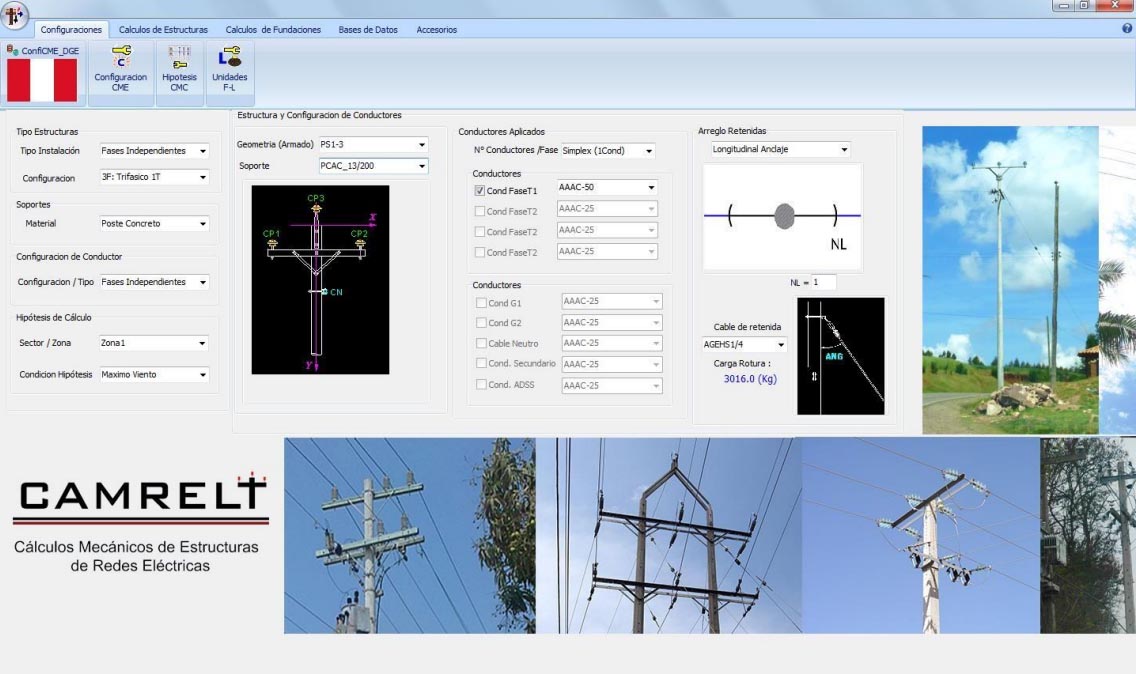
- Editable Pole Assembly Databases: Users can modify and manage databases according to various national or utility-specific standards, ensuring compliance with local regulations and best practices.
- Customizable Environmental Hypotheses: The software permits the definition of specific environmental conditions, including wind speeds, ice loads, and temperature variations, crucial for accurate mechanical load analysis.
- Selectable Units: Users can choose preferred units of measurement, facilitating integration into diverse project workflows and international standards.
Export and Licensing Flexibility for Engineering Environments
To enhance workflow efficiency and accommodate different operational models, CAMRELT 21 offers flexible export capabilities and licensing options.
- Excel Export Functionality: Calculation results, including detailed analyses of pole deflection, rupture limits, and foundation requirements, can be exported directly to Microsoft Excel. This feature aids in further review, report generation, and data integration into broader project documentation.
- Flexible Licensing Models: The software is available through a USB hardware key, providing a portable license, and a network license, allowing multiple users within an organization to access the tool concurrently. These options cater to varied usage needs and IT infrastructure setups.
Applications in Electrical and Renewable Energy Sectors
CAMRELT 21 serves a critical role for professionals involved in the design, construction, and maintenance of overhead electrical distribution infrastructure. Its specialized mechanical analysis capabilities are applied across several key areas:
- Electrical Distribution Engineers: Used for designing new LV and MV power lines and verifying the mechanical integrity of existing networks against current standards.
- Utility Companies: Employed to ensure the safety, reliability, and compliance of their overhead power line assets, especially in response to changing environmental loads or regulatory requirements.
- Structural Engineers: Applied in the civil and structural design of power line supports, including foundation design and pole strength verification.
- Renewable Energy Developers: Utilized for the structural assessment of power evacuation lines connecting renewable energy generation sites (e.g., solar or wind farms) to the grid.
- Construction and Infrastructure Contractors: Employed to validate designs and ensure construction adherence to mechanical specifications for power line projects.
Frequently Asked Questions
What types of pole materials does CAMRELT 21 support for mechanical calculations?
CAMRELT 21 supports a variety of pole materials including wood, concrete, fiberglass, steel poles, and lattice towers. This allows accurate mechanical analysis tailored to different infrastructure types and loads.
How does CAMRELT 21 allow customization for different regional standards?
The software includes editable databases and configurable standard templates that users can adapt based on country or utility company-specific engineering standards and environmental conditions. This ensures compliance and relevance for diverse project locations.
Can CAMRELT 21 export its calculation results for further analysis?
Yes, CAMRELT 21 offers export options to Excel, facilitating detailed review, reporting, and integration with other data processing or project documentation tools. This capability streamlines the workflow for engineers and project managers.





Reviews
There are no reviews yet.