

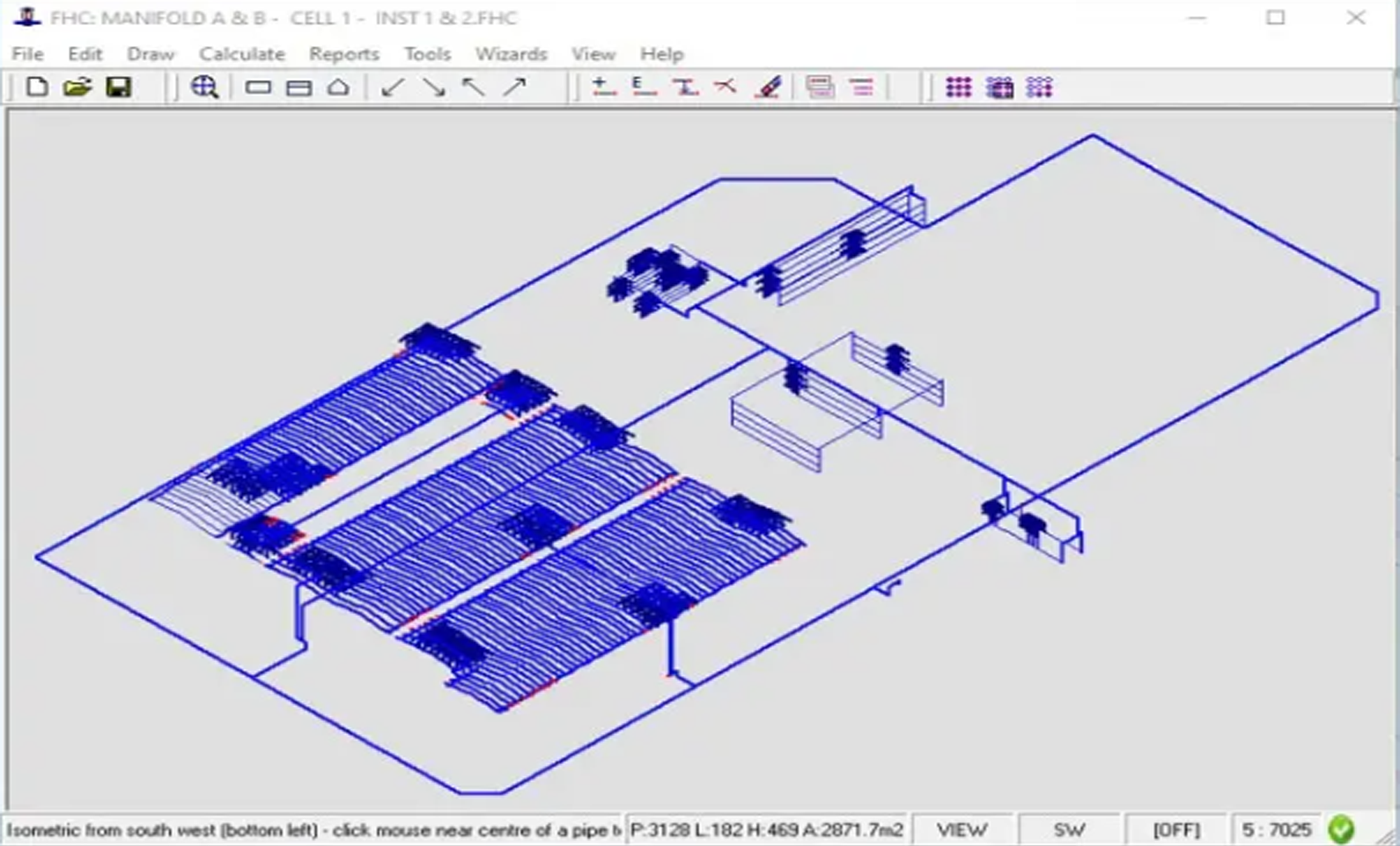
Download Canute FHCPro v1.8.6 – Advanced Hydraulic Analysis Software for Fire Sprinkler Systems
Canute FHCPro v1.8.6 is a specialized hydraulic analysis software designed for the precise design and evaluation of water-based fire sprinkler systems. It serves critical roles within fire protection engineering, MEP design, safety consulting, and the broader construction industry, providing engineers with robust tools for complex calculations and system modeling essential for building safety and regulatory compliance.
Precision Hydraulic Modeling for Fire Protection Systems
Canute FHCPro is engineered specifically for fire protection engineers and MEP designers, offering advanced capabilities in hydraulic modeling of fire sprinkler systems. The software’s core function is to facilitate the accurate design, analysis, and documentation of these vital safety systems, ensuring adherence to rigorous industry standards. Professionals in fire protection engineering, mechanical and electrical design, building services, and safety consulting rely on this application to develop compliant and effective fire suppression strategies for commercial, industrial, and residential structures.
Comprehensive Network Design and Standards Compliance
The software empowers users with sophisticated tools for creating and analyzing intricate fire sprinkler networks, ensuring strict adherence to relevant safety regulations. Key functionalities include:
- Graphical Network Modeling: Users can visually construct sprinkler piping systems through a drag-and-drop interface, accurately placing components such as pipes, elbows, tees, and sprinkler heads, each definable with specific K-factors and characteristics.
- Adherence to NFPA 13, NFPA 20, and other global standards: Canute FHCPro is built to align with major international fire protection codes, including NFPA 13 for sprinkler system installation and NFPA 20 for fire pump systems, simplifying the process of achieving code compliance and passing regulatory reviews.
Hydraulic Calculations Engine and System Analysis
At its core, Canute FHCPro utilizes the widely accepted Hazen-Williams equation to perform detailed hydraulic analyses across various pipe network configurations. The software meticulously calculates pressure losses, flow rates, and demand balancing for tree, loop, and more complex grid piping layouts. This precise evaluation ensures that the system is hydraulically sound, capable of delivering the required water volume and pressure to all sprinkler heads under fire conditions, optimizing both safety and resource efficiency.
Pump Selection and Sizing
Integral to any fire sprinkler system is the fire pump, and Canute FHCPro facilitates its accurate selection and sizing. The software allows engineers to input specific fire pump curves and compare them against the calculated hydraulic demand of the sprinkler network. This ensures that the chosen pump, whether electric, diesel, or jockey pump, is capable of meeting the system’s operational requirements consistently and reliably, a critical step in validating the overall system design for performance and safety.
Workflow Enhancements and BIM Integration in Version 1.8.6
Canute FHCPro v1.8.6 introduces significant updates aimed at modernizing design workflows and enhancing collaboration. These advancements include:
- Updated NFPA standards library with the latest amendments.
- Improved BIM data exchange capabilities with Revit, allowing for more seamless integration into multi-disciplinary design projects.
- A streamlined User Interface (UI) and an enhanced project management dashboard for better organization and efficiency.
- Optional cloud backup and team collaboration features are now available, facilitating remote work and synchronized project development.
Comprehensive Reporting and Documentation for Authorities
Effective documentation is crucial for gaining approval from authorities having jurisdiction. Canute FHCPro addresses this by generating comprehensive reports that detail system design and hydraulic performance. These reports typically include hydraulic gradients, material schedules, system capacities, and other vital documentation required to support regulatory submissions, ensuring that design integrity and compliance are clearly presented to approving bodies.
Real-World Applications and Use Cases
Canute FHCPro finds application across a spectrum of fire protection engineering tasks. Common uses include:
- Fire sprinkler design in commercial and industrial buildings, ensuring protection against fire hazards.
- Hydraulic verification for retrofit and upgrade projects, assessing the adequacy of existing systems or new modifications.
- Pump selection for municipal buildings and high-rise structures, where significant water pressure and flow are critical.
- Collaboration with multidisciplinary teams leveraging BIM integration for coordinated building design.
Frequently Asked Questions
How does Canute FHCPro ensure compliance with fire sprinkler standards like NFPA 13?
Canute FHCPro incorporates the latest versions of NFPA 13 and NFPA 20 standards, providing design tools and calculations aligned with these codes to ensure sprinkler network safety and regulatory compliance. The software guides users through compliance requirements, facilitating the creation of compliant designs that meet stringent safety regulations.
What types of hydraulic calculations can Canute FHCPro perform on fire sprinkler systems?
The software uses Hazen-Williams equations for hydraulic analysis covering various piping layouts such as tree, loop, and grid systems, calculating pressure losses, flow distributions, and demand balancing to optimize designs. It provides detailed insights into system performance under various conditions.
Can Canute FHCPro integrate with BIM software for fire sprinkler design?
Yes, the latest version 1.8.6 improves BIM integration with tools like Revit, enabling smoother import/export of piping layouts to streamline design workflows across engineering disciplines. This enhances collaboration and accuracy in coordinated building information modeling environments.





Reviews
There are no reviews yet.