

DIRED-CAD 2025
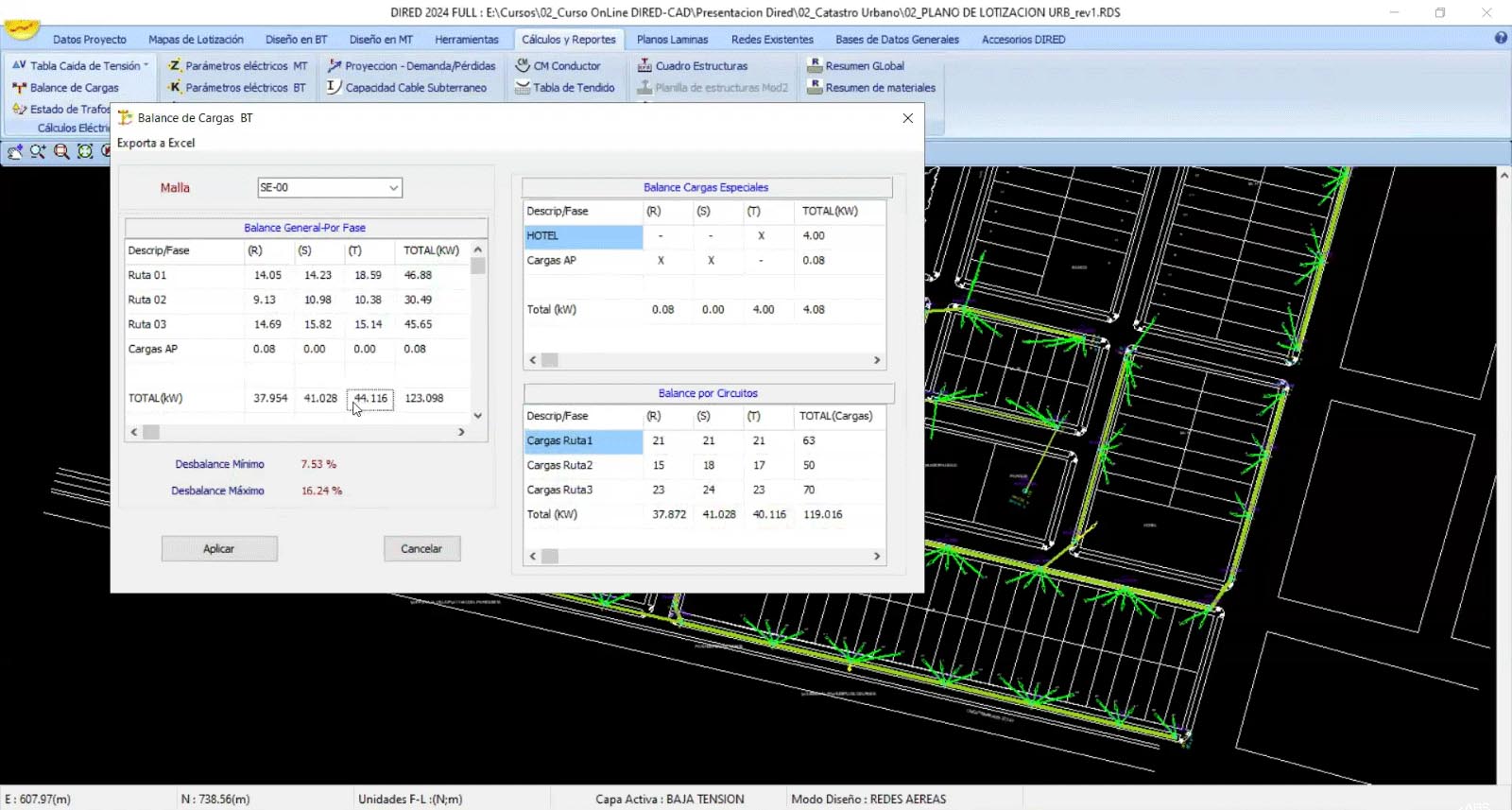
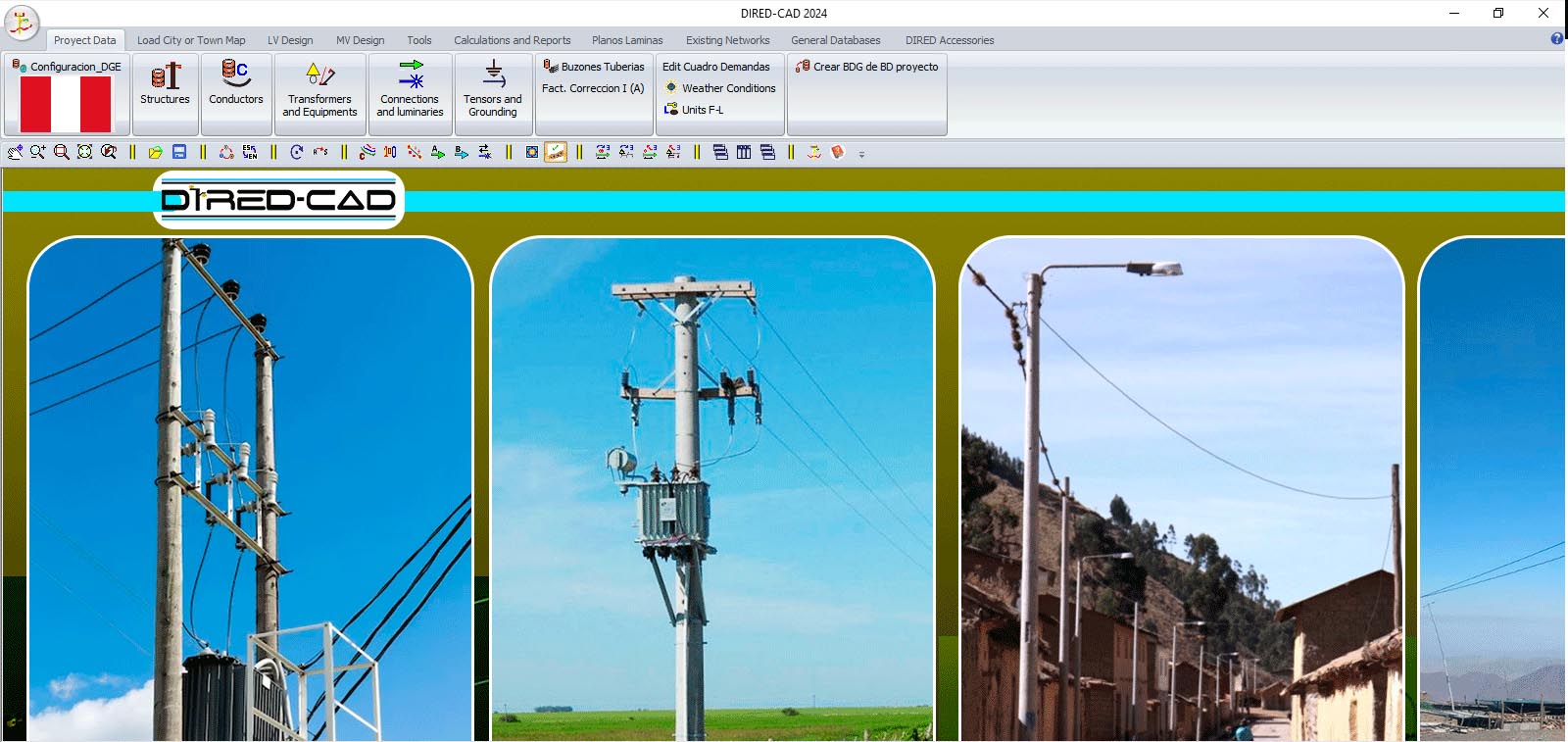
DIRED-CAD , developed by ABS Ingenieros, is a state-of-the-art technological tool that unifies all phases of overhead and underground electrical distribution network design (Medium Voltage and Low Voltage) – from preliminary layout to detailed engineering documentation. Unlike generic CAD software, DIRED-CAD automates the complete engineering workflow: network topology definition, phase-by-phase current and voltage profile calculations, automatic verification of voltage drops, power losses, load balancing, short-circuit analysis, and mechanical analysis of overhead lines. Version 2025 continues the software’s legacy of engineering excellence, offering enhanced calculation algorithms, an extensive editable component database, and seamless integration with GIS data. Finally, it generates comprehensive calculation reports, bills of materials, and fully detailed project plans ready for printing and construction.
????️ Primary Users
This professional electrical distribution design software is designed for:
-
Electrical Distribution Engineers & Utility Planners designing and analyzing overhead and underground medium-voltage (MV) and low-voltage (LV) distribution networks.
-
Consulting Electrical Engineers preparing detailed network designs for residential, commercial, and industrial developments.
-
Power Utility Companies & Municipalities planning network expansions, reliability improvements, and rural electrification projects.
-
EPC Contractors & Construction Firms generating detailed bill of materials (BOM), construction drawings, and project documentation.
-
Regulatory & Approval Bodies reviewing network designs for code compliance and safety standards.
⚡ Key Features & Capabilities
???? Network Layout & Topology
Supported Network Types:
-
Overhead distribution (MV and LV)
-
Underground distribution (MV and LV)
-
Mixed overhead/underground (urban and rural)
Network Configurations:
-
Radial, looped (ring), meshed, and hybrid
-
Normally open / normally closed points (reconfiguration)
-
Feeders (primary and secondary), branch lines, laterals, service drops
???? Node-by-Node & Phase-by-Phase Calculations
Load Flow Analysis:
-
Current and voltage profiles node-by-node and phase-by-phase (R, S, T)
-
Voltage drop per node (percent and absolute)
-
Power losses (kW, kvar) along each line segment
-
Support for unbalanced networks (single-phase, two-phase, three-phase)
Load Balancing:
-
Automatic load distribution across phases
-
Unbalance factor calculation (negative and zero sequence)
-
Phase rotation optimization for single-phase laterals
⚡ Short-Circuit Analysis
-
Bolted three-phase, line-to-ground, line-to-line, double line-to-ground faults
-
IEC 60909 and ANSI C37 methods
-
Short-circuit current calculation for protection device coordination (fuses, reclosers, breakers)
????️ Overhead Line Mechanical Analysis
Tension & Sag Calculation:
-
Conductor tension under different loading conditions (ice, wind, temperature)
-
Sag-tension tables for ruling span
-
Creep and initial/final tension
-
Pole loading: transverse, longitudinal, vertical forces
Clearance Verification:
-
Ground clearance at maximum sag
-
Crossing clearances (roads, railways, other power lines)
????️ Underground Network Design & Analysis
-
Cable ampacity (thermal rating) per IEC 60287 / NEC
-
Derating factors: soil thermal resistivity, grouping, ambient temperature
-
Direct burial, ductbank, concrete encasement
-
Thermal backfill design
???? Transformer & Equipment Analysis
Transformer Loading Analysis:
-
Peak load vs. nameplate kVA
-
Overload duration (emergency, cyclic)
-
Loss of life estimation (aging acceleration factor)
Automatic Tap Setting Calculation:
-
Off-load (DETC) and on-load (OLTC) tap positions
-
Maintain voltage within regulatory band (±5%, ±3%, etc.)
???? Voltage Stability & Power Quality
-
Voltage stability index (VSI) for weak feeders
-
Prevention of voltage collapse (long rural lines)
-
Power factor correction capacitor placement
???? Automatic Reporting & BOM
Calculation Reports:
-
Node-by-node voltage & current (phase angles, magnitude)
-
Loss summary (kW, kvar, kWh/year)
-
Short-circuit report (I”k, ip, Ik, Ith)
Bill of Materials (BOM):
-
Poles (wood, concrete, steel), cross‑arms, insulators, hardware
-
Conductors (ACSR, AAC, AAAC, XLPE, N2XH, aluminum, copper)
-
Underground cables (direct burial, ductbank)
-
Transformers, fuses, reclosers, sectionalizers, switches
-
Export to Excel for procurement
????️ CAD Drawing Generation
-
Single‑line diagram, key plan, detailed routing
-
Longitudinal profile (terrain / elevation)
-
Pole and foundation details, tension/clearance diagram
-
DXF / DWG (AutoCAD compatible) – ready for printing
???? GIS Data Integration
-
Import land topographic survey (DEM, contours)
-
Trace route on geo‑referenced background (satellite, street map)
-
Export network model to GIS (Shapefile)
???? What’s New in Version 2025
-
Load Flow (Newton‑Raphson for MV) – More accurate for looped / weakly meshed networks
-
Load Balancing Wizard – Auto‑phase rotation of single‑phase laterals to minimize unbalance (Phase Current Deviation < 10%)
-
Overhead Line Mechanical Module – Complete sag‑tension calculation with ice & wind load cases
-
Short‑Circuit (IEC 60909) – Complete with peak current (ip) & thermal equivalent (Ith)
-
Cost Estimator – Material + labor (overhead/underground) for budget-level project costing
-
Direct Print Ready – Tiling large drawings (A0, A1) for A3 paper output
-
Cloud Library – Manufacturer‑specific components (transformer, conductor, insulator) updated quarterly





Reviews
There are no reviews yet.