

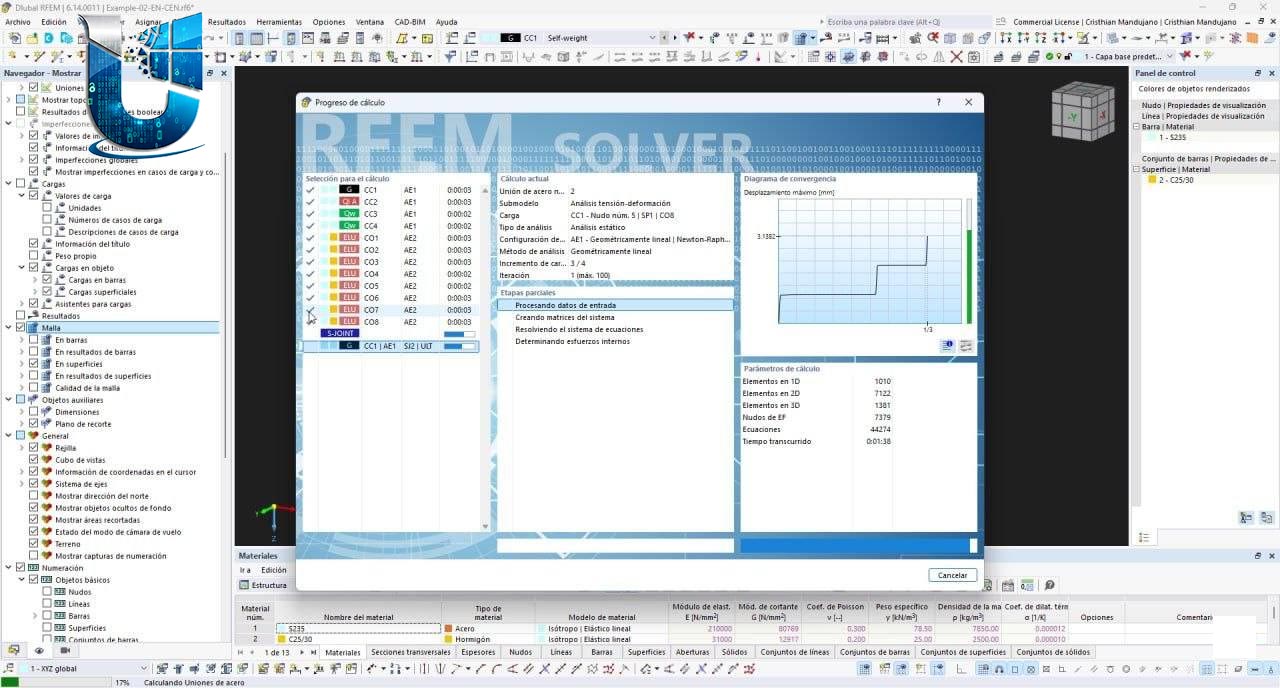
Download Dlubal RFEM 6.14.0011 – Advanced Finite Element Analysis Software
Dlubal RFEM 6.14 is an advanced structural analysis software developed by Dlubal Software. This powerful application is engineered for complex modeling and analysis tasks within structural and civil engineering, supporting a wide array of materials including steel, concrete, timber, and glass. Recognized globally, RFEM is utilized by thousands of professionals for its robust finite element method (FEM) capabilities and seamless integration into Building Information Modeling (BIM) workflows.
Introduction to Dlubal RFEM
Overview and Purpose
RFEM is a leading structural analysis and design software that leverages the finite element method for comprehensive three-dimensional modeling. It serves structural engineers and building professionals by providing tools for analyzing the behavior of structures under various conditions. The software supports multiple material types, making it a versatile solution for diverse engineering challenges in the construction industry.
Key Features and Capabilities
Comprehensive Material and Cross-Section Libraries
RFEM 6.14 includes extensive integrated libraries that provide engineers with a vast selection of materials and standard structural cross-sections. This feature significantly speeds up the modeling process by offering ready-to-use components for common structural elements, while also allowing for custom definitions to meet specific project requirements.
- Access to a wide range of materials, including steel, concrete, timber, and glass, each with their specific properties.
- A comprehensive database of standard cross-sections from international standards.
- Tools to define custom materials and cross-sections for unique applications.
Dynamic Analysis and Load Generation Tools
The software is equipped to handle complex structural analyses beyond static loads. It supports dynamic analysis, enabling users to simulate responses to time-varying forces and movements, crucial for seismic or wind load assessments. Furthermore, RFEM offers advanced tools for generating various types of loads, including gravitational, thermal, and environmental loads, simplifying the process of creating realistic loading scenarios.
BIM Integration and Compatibility
Interfacing with Other Design Software
RFEM is designed to be a collaborative tool within the broader design and construction process. It features numerous direct interfaces that facilitate effective data exchange with other CAD and analysis programs, a critical aspect of Building Information Modeling (BIM). This capability ensures seamless integration into existing project workflows, enhancing coordination and reducing data duplication between different software platforms.
- Support for various direct interfaces enabling data import and export for BIM coordination.
- Compatibility with numerous CAD and structural analysis software, promoting an interoperable design environment.
- Integration options that streamline the workflow from design to analysis and documentation.
Real-World Applications of RFEM
Case Studies and Success Stories
RFEM is employed across a broad spectrum of structural engineering projects, from high-rise buildings and bridges to specialized industrial structures. Its robust analysis capabilities and material support make it suitable for assessing the integrity and performance of complex designs. While specific project details vary, the software’s global adoption by over 13,000 companies underscores its reliability in addressing demanding real-world structural challenges.
Why Choose Dlubal RFEM?
Benefits Over Competitors
Dlubal RFEM distinguishes itself through its advanced finite element analysis capabilities, extensive material and cross-section libraries, and its strong emphasis on BIM integration. The software’s flexible architecture, supported by API technology, allows for customization through Python and C#, providing a significant advantage for users seeking to automate tasks or develop specialized design checks. This combination of power, flexibility, and interoperability makes RFEM a valuable asset for modern structural engineering practices.
Frequently Asked Questions
What is Dlubal RFEM used for?
Dlubal RFEM is primarily used for modeling and analyzing structures in three dimensions, including applications in civil engineering, structural analysis of various materials, and dynamic simulations. It supports a wide range of structures such as steel, concrete, and timber, ensuring comprehensive structural assessment.
How does RFEM facilitate BIM integration?
RFEM offers numerous interfaces for data exchange within the BIM process, allowing relevant building data to be coordinated and shared among various structural analysis and CAD programs. This enhances collaboration across different planning stages and ensures model consistency.
What programming languages are supported for customization in RFEM?
RFEM allows customization and application development using Python and C#, enabling users to create unique design checks and automate modeling processes. This support fosters flexibility in utilizing the software for specific project requirements and complex workflows.




Reviews
There are no reviews yet.