

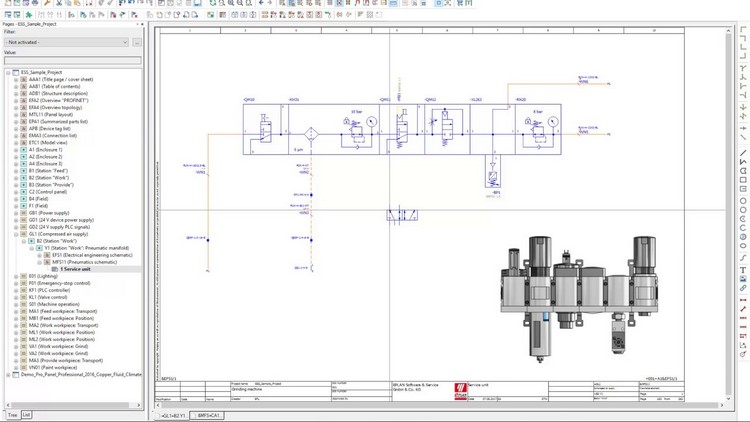
Download EPLAN Fluid 2023.0 – Essential Design Tool for Fluid Power Systems
EPLAN Fluid software is a specialized Computer-Aided Engineering (CAE) application developed by EPLAN, a part of the Friedhelm Loh Group. It is engineered for the precise design and documentation of fluid power systems, including hydraulics, pneumatics, and cooling circuits. This essential tool is integral to the EPLAN platform, supporting engineers in the mechanical and manufacturing sectors, particularly within mechanical engineering fields, to streamline complex fluid power project workflows.
Introduction to EPLAN Fluid
Overview and Purpose
EPLAN Fluid serves as a dedicated solution for the comprehensive engineering of fluid power systems. It automates many aspects of schematic design and project management, enabling engineers to create accurate and detailed documentation for hydraulic, pneumatic, and cooling applications. By centralizing the design process, EPLAN Fluid plays a vital role in optimizing the development of machinery and systems that rely on fluid power technologies.
Key Functionalities of EPLAN Fluid
Automated Design and Documentation
The software offers robust functionalities designed to accelerate the design cycle and enhance the quality of project documentation. These capabilities are fundamental for efficient fluid power engineering projects.
- Automatic Report Generation: EPLAN Fluid automatically generates crucial reports such as parts lists, connection lists, and cross-references, reducing manual effort and minimizing errors.
- Project Navigation: Integrated project navigation features allow for easy movement between different parts of a schematic, enhancing usability and understanding of complex circuit diagrams.
- Schematic Design Tools: It provides specialized components and symbols for fluid power applications, ensuring compliance and facilitating the creation of accurate hydraulic and pneumatic circuit diagrams.
Integration and Interdisciplinary Capabilities
Collaboration with Other Engineering Disciplines
EPLAN Fluid is built to integrate seamlessly within the broader EPLAN platform, fostering collaborative engineering environments. This interoperability is key to managing multidisciplinary projects efficiently.
- Data Exchange: Enables smooth data transfer between electrical, mechanical, and automation engineering disciplines, ensuring consistency across all project aspects.
- Parallel Engineering: Facilitates parallel execution of engineering tasks, allowing different teams to work concurrently on project components, thereby shortening overall project timelines.
- Platform Synergy: Links fluid engineering data directly with other modules in the EPLAN platform, such as EPLAN Electric P8, creating a unified project database.
Specialized Applications in Fluid Power Engineering
Use Cases and Industry Applications
EPLAN Fluid is applied across various industries that require sophisticated fluid power system design and management. Its specialized features make it invaluable for complex engineering challenges.
- Manufacturing Equipment: Designing hydraulic and pneumatic systems for machine tools, robotics, and assembly lines in the manufacturing sector.
- Mobile Machinery: Developing fluid power circuits for construction equipment, agricultural machinery, and other off-highway vehicles.
- Process Automation: Engineering pneumatic control systems for industrial automation and process industries where precise control is essential.
- Energy Systems: Designing hydraulic and cooling systems for power generation and distribution infrastructure.
Comparative Analysis with Other Engineering Software
EPLAN Fluid distinguishes itself through its deep integration within the EPLAN ecosystem and its specialized focus on fluid power documentation. While other CAE tools may offer broader functionalities, EPLAN Fluid excels in providing dedicated features for hydraulic and pneumatic circuit design that simplify complex project management and enhance interdisciplinary collaboration.
User Experience and Interface
Modern User Interface Design
EPLAN Fluid features an intuitive user interface designed to optimize the engineering workflow and enhance user productivity. The design emphasizes ease of use and efficient access to powerful tools.
- eTouch Technology: Incorporates EPLAN’s eTouch technology, providing context-sensitive assistance and intelligent guidance to users, simplifying complex operations.
- Customizable Environment: Offers a customizable user interface that allows engineers to tailor the workspace to their specific needs and preferences.
- Visual Clarity: Presents schematics and project data with high visual clarity, aiding in the comprehension and review of intricate fluid power designs.
Conclusion: Why Choose EPLAN Fluid?
EPLAN Fluid 2023.0 represents a significant advancement in CAE software for fluid power engineering. Its automated design capabilities, robust documentation tools, and seamless integration within the EPLAN platform make it an indispensable solution for engineers. By choosing EPLAN Fluid, professionals in hydraulics, pneumatics, and related fields can achieve greater design efficiency, improve project accuracy, and streamline interdisciplinary collaboration, ultimately leading to more robust and reliable fluid power systems.
Frequently Asked Questions
What industries can benefit from EPLAN Fluid?
EPLAN Fluid is particularly useful in industries dealing with fluid power systems, including hydraulic and pneumatic engineering, as well as cooling systems. It supports comprehensive circuit documentation which is critical in manufacturing and automation sectors.
How does EPLAN Fluid improve design efficiency?
EPLAN Fluid enhances design efficiency through automated processes that streamline project navigation and report generation. Its integration within multidisciplinary engineering environments also facilitates parallel task execution.
Can EPLAN Fluid integrate with other engineering tools?
Yes, EPLAN Fluid is designed to work seamlessly with other engineering tools, enabling users to share data and documentation across different disciplines efficiently, enhancing collaborative efforts.




Reviews
There are no reviews yet.