

Download Geometric DFMPro 2025 – Integrated CAD Solution for Design Efficiency
Geometric DFMPro 2025 is a specialized design for manufacturing (DFM) software developed by Geometric Limited, now part of Altair Engineering. It is engineered to integrate advanced DFM principles directly into the CAD environment, primarily serving professionals in mechanical engineering, manufacturing, and product design. This software aims to enhance the design process by enabling early detection of manufacturing and assembly issues, thereby improving overall product quality and reducing production costs.
Understanding Geometric DFMPro
Overview and Historical Context
Geometric DFMPro has evolved as a critical tool for bridging the gap between design and manufacturing. Its development stems from the need to embed design-for-manufacturability considerations directly into the 3D modeling workflow. By integrating comprehensive DFM checks within familiar CAD environments, DFMPro empowers designers to proactively address potential production challenges before they translate into costly downstream problems. This approach supports engineers in creating designs that are not only functional but also optimized for efficient and economical manufacturing.
Key Features and Capabilities of DFMPro 2025
Identifying Design Issues
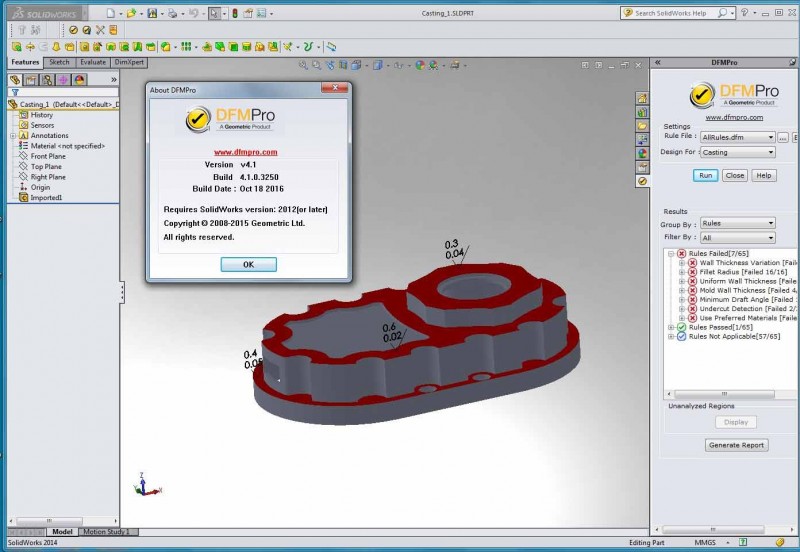
DFMPro 2025 excels at identifying potential problems within 3D CAD models that could hinder manufacturability or assembly. The software employs a suite of automated checks to flag design elements that may lead to production difficulties. These include, but are not limited to, issues with draft angles for molding, undercuts, wall thickness variations, and features that may be difficult or expensive to machine.
Seamless CAD Integration
A core strength of DFMPro lies in its ability to integrate seamlessly with leading CAD software platforms. This includes robust support for industry-standard systems like SOLIDWORKS, Creo, and NX. By operating within these native CAD environments, DFMPro ensures that designers can perform DFM analysis without needing to switch applications, maintaining workflow continuity and leveraging existing design data effectively. This integration facilitates an intuitive user experience for applying design optimization techniques.
Enhanced Collaboration Tools
Effective product development relies on smooth collaboration among cross-functional teams and external partners. DFMPro 2025 facilitates this by providing tools that enhance communication and shared understanding of design intent. The software allows for the clear reporting and visualization of DFM issues, enabling design engineers, manufacturing teams, and suppliers to review potential problems collectively. This shared insight promotes informed decision-making and accelerates the design review process.
Application in Mechanical and Manufacturing Industries
Use Cases in Product Design
In product design, Geometric DFMPro is instrumental in ensuring that new concepts translate into manufacturable products. For instance, engineers in the automotive sector can use DFMPro to verify that complex components are suitable for high-volume production methods. Similarly, designers of consumer electronics can leverage its capabilities to identify potential assembly challenges early, preventing rework and ensuring product reliability. The software supports the entire product lifecycle, from concept to production.
Support for Various Manufacturing Processes
DFMPro 2025 offers crucial analysis capabilities for a range of manufacturing processes. It can evaluate designs for machining operations, identifying features that may require specialized tooling or multi-axis machining, thereby helping to optimize tool paths and reduce machining time. For plastic injection molding, the software analyzes moldability issues such as draft, wall thickness, and cooling. This broad support allows for an integrated approach to design optimization across different production methodologies.
Comparative Analysis with Similar Software
Positioning DFMPro Against Competitors
Compared to general CAD tools, Geometric DFMPro specializes in providing in-depth design for manufacturing and assembly (DFMA) analysis. While many CAD packages offer basic checks, DFMPro delivers a more comprehensive suite of automated DFM rules and manufacturing process-specific evaluations. Its key differentiators include deep integration with multiple CAD platforms and the ability to analyze a wide array of manufacturing processes, facilitating design optimization earlier in the product development cycle.
Conclusion and Future of DFMPro
Geometric DFMPro 2025 continues to be a significant asset in modern engineering workflows, promoting design integrity and manufacturing efficiency. Its ability to integrate DFM principles directly into the CAD environment supports the evolving demands of mechanical design and product development. As manufacturing technologies advance, tools like DFMPro will remain essential for engineers striving to optimize designs for performance, cost, and production feasibility.
Frequently Asked Questions
What is Geometric DFMPro and how does it work?
Geometric DFMPro is a design for manufacturing software that integrates with various CAD systems, enabling designers to identify potential issues in their designs for construction and assembly early in the development process. It automates the analysis of 3D models against manufacturing constraints to highlight potential problems before production.
Which CAD tools is DFMPro compatible with?
DFMPro is compatible with several major CAD software platforms, including SOLIDWORKS, Creo, and NX, allowing for seamless integration into existing design workflows. This broad compatibility ensures that users can leverage DFMPro within their established design environments.
Can DFMPro help improve collaboration in design teams?
Yes, DFMPro enhances collaboration by providing tools that facilitate communication and design review among team members, suppliers, and stakeholders, streamlining the design process. Reports and highlighted issues can be easily shared, promoting a unified understanding of manufacturability requirements.





Reviews
There are no reviews yet.