

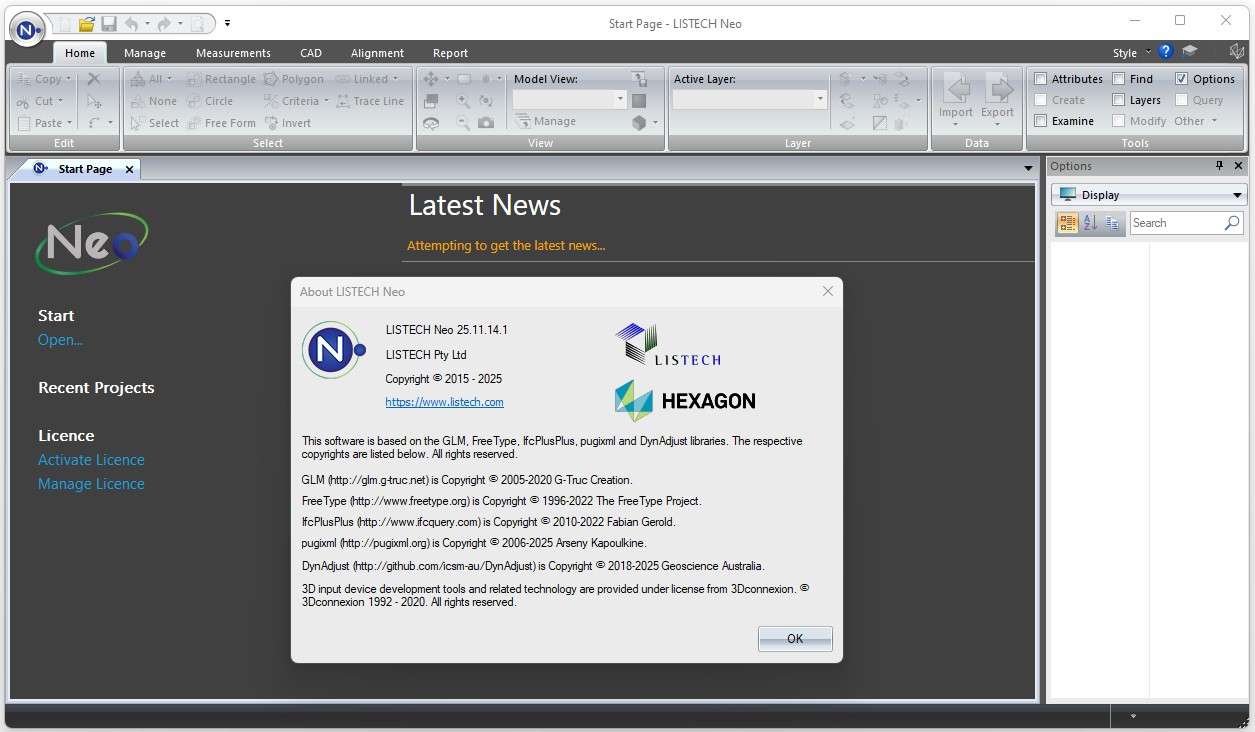
Download LISTECH Neo 25.11 – Advanced Surveying and Geospatial Data Processing Software
LISTECH Neo 25.11 is an advanced surveying and geospatial data processing software designed for professionals in surveying, civil engineering, GIS, and construction. Developed by LISTECH, a Leica Geosystems brand under Hexagon AB, it leverages Hexagon’s expertise in measurement and geospatial solutions to provide integrated tools for land surveying tasks. This software is essential for establishing precise maps, defining legal boundaries, creating detailed terrain models, and analyzing geospatial data in complex project environments.
An Integrated Platform for Surveying and Geospatial Engineering
LISTECH Neo 25.11 serves as a comprehensive platform for surveying and geospatial engineering workflows. It combines robust data processing capabilities with integrated 3D and 2D environments, facilitating seamless data exchange between field instruments and office software. As part of the Leica Geosystems portfolio, it enhances the connection between high-precision field measurements and subsequent analysis, visualization, and integration into larger digital project ecosystems. Typical users include surveyors, geospatial engineers, civil designers, land developers, and construction professionals who rely on accurate spatial data for project planning, execution, and management.
Comprehensive Geodetic and Coordinate Transformation Tools
Accurate data handling begins with precise geodetic transformations. LISTECH Neo 25.11 offers advanced functionality in this area, notably featuring robust support for Japanese coordinate systems, including JGD-1 through JGD-19. The software allows for the calculation and application of 2D and 3D transformation parameters, ensuring that survey data can be accurately referenced and integrated into various project standards. This capability is critical for ensuring data integrity and compatibility in projects requiring strict adherence to local geodetic datums, supporting both regional and international surveying requirements.
Advanced Modeling, Volume Calculations, and Terrain Analysis
LISTECH Neo 25.11 provides sophisticated tools for creating and analyzing terrain models. Professionals can generate 3D terrain models, height difference models, and identify no-cut/no-fill lines essential for earthwork calculations. The software facilitates detailed volume computations between different terrain models, offering precise assessments for excavation and fill volumes. Furthermore, it includes reporting capabilities that compare collected points against existing objects like lines, shapes, and terrain models, enabling detailed project analysis and quantity take-offs.
Seamless Data Exchange Across BIM, GIS, CAD, and Field Instruments
Interoperability is a cornerstone of LISTECH Neo 25.11’s functionality, supporting a wide array of data import and export formats. This includes compatibility with Cyclone Object Exchange (COE), Esri Grid ASCII, and MapInfo file types, ensuring smooth integration with GIS and CAD workflows. The software is designed to work seamlessly with data from Leica field instruments, such as the Leica FlexLine series and instruments utilizing DBX (Data Base Exchange) technology. A key feature is the integration of the Leica Survey Xchange module, which automates the processing of feature codes from total station data, significantly streamlining the conversion of field survey codes into smart line work and digital mapping elements.
Enhanced Geo-referenced Imagery and Online Mapping Support
LISTECH Neo 25.11 enhances geospatial analysis through support for dynamic mapping services and advanced image processing. The software integrates Web Map Service (WMS) and Web Map Tile Service (WMTS) protocols, allowing users to overlay and utilize online geo-referenced imagery and map tiles directly within their projects. Tools such as Image Xtract and Image GeoRef enable users to extract spatial data, create points, lines, and areas from images, and geo-reference these elements accurately. This functionality is crucial for providing precise background context, improving visualization, and supporting data analysis where aerial or satellite imagery is a key component.
Application Scenarios and Industry Use Cases
The capabilities of LISTECH Neo 25.11 are applied across a variety of real-world surveying and geospatial projects. In land boundary surveys, it ensures the accurate demarcation and record-keeping of property lines. For construction projects, it aids in site planning, earthwork estimation, and progress monitoring. Utility mapping benefits from its precision in locating and documenting infrastructure. Volume and cut/fill assessments are accurately calculated for earthmoving operations. Furthermore, its geospatial data management features are relevant in electrical engineering contexts, particularly for surveying and spatial data management related to power infrastructure development and maintenance.
Frequently Asked Questions
What coordinate systems does LISTECH Neo 25.11 support for geodetic transformation?
LISTECH Neo 25.11 supports a wide range of coordinate systems including the Japanese JGD-1 through JGD-19 systems. It enables precise 2D and 3D transformations vital for accurate geospatial data integration in regional and global surveying projects.
How does LISTECH Neo integrate with Leica total station instruments?
The software incorporates the Leica Survey Xchange module, which automates feature code processing from data collected by Leica FlexLine and DBX total stations like Nova, Viva, and Captivate. This streamlines field data workflows by converting codes into line work efficiently.
Can LISTECH Neo handle online geo-referenced imagery and mapping services?
Yes, LISTECH Neo 25.11 supports Web Map Service (WMS) and Web Map Tile Service (WMTS) for displaying dynamic geo-referenced images. Complementary tools like Image Xtract and Image GeoRef allow users to extract spatial data from images and use them as map backgrounds within the software.





Reviews
There are no reviews yet.