

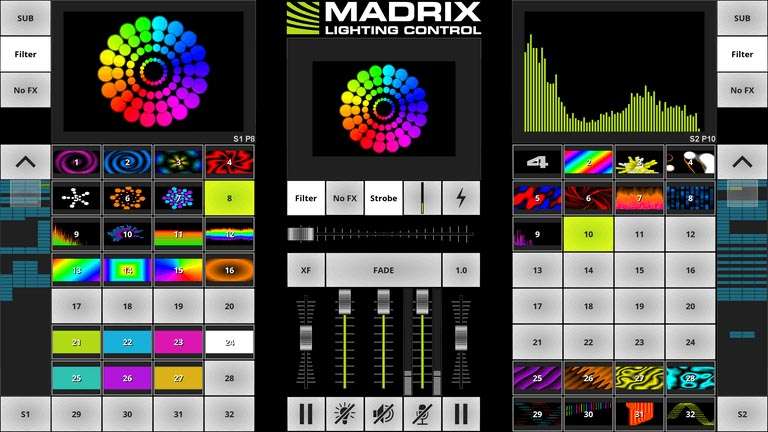
Download Madrix 3.6 – Advanced LED Lighting Control and Pixel Mapping Software
Madrix 3.6 is a specialized software solution developed by MADRIX for advanced real-time control and programming of LED lighting fixtures. It excels in pixel mapping, enabling independent animation of each LED pixel through a robust effects engine and timeline sequencer. This software is designed for professionals in lighting design, visual art installations, stage and event production, and architectural lighting who require precise control over complex LED grids.
Overview of Madrix and Its Role in LED Lighting Control
Madrix serves as a powerful bridge between creative vision and dynamic LED illumination. Its core strength lies in comprehensive pixel mapping, allowing for intricate visual designs across vast LED surfaces. The software is engineered for professionals who translate complex lighting concepts into reality, whether for a live concert stage, an immersive art installation, or the intricate façade of an architectural project. It offers granular control over individual LEDs, transforming simple fixtures into canvases for dynamic visual storytelling. The target user base includes lighting designers, visual artists, and technical directors in the entertainment and architectural sectors.
Pixel Mapping and Visual Effects Capabilities
The software’s pixel mapping technology is central to its functionality, enabling users to precisely control individual LED pixels or groups of pixels. Madrix features a sophisticated effects engine capable of generating a wide array of visual content, including gradients, plasma effects, static images, and video playback. The 3.6 update enhances this with next-generation generative effects, such as Aura and Fluid, which offer complex, evolving visual patterns. Users can define custom fixture shapes and map these effects onto intricate LED layouts, facilitating dynamic and engaging visual displays tailored to specific installation requirements.
Sequencer, Timeline, and Real-Time Interactive Control
Madrix offers a comprehensive timeline-based sequencer, empowering users to choreograph complex lighting sequences with precision. This includes keyframe animation, cue list management, and synchronization capabilities via timecode or MIDI. The software also excels in real-time interactive control, accepting inputs from MIDI controllers, DMX-in signals, and audio analysis tools. This allows for dynamic, responsive lighting that can be altered live during a performance or event, reacting to music, sound, or direct user manipulation for immediate creative adjustments.
Compatibility with Industry Protocols and Hardware Integration
Ensuring broad interoperability, Madrix supports a wide range of industry-standard lighting control protocols. These include DMX512, Art-Net, sACN, and KiNET, allowing seamless integration with most professional LED drivers and lighting fixtures. Additionally, the software supports its own proprietary NEBULA protocol for specific hardware interactions. This extensive compatibility ensures that Madrix can be integrated into diverse existing lighting systems and control infrastructures, providing flexibility for various production environments.
3D Visualization and Offline Programming Features
Version 3.6 of Madrix introduces significant advancements in its 3D visualization capabilities, including a new ‘Canvas’ workflow interface. This feature allows users to create detailed 3D previews of their lighting designs before implementation. The integrated 3D preview and material editor enable users to simulate lighting effects on virtual models of venues or architectural structures. This capability is invaluable for offline programming, allowing for precise planning, testing, and refinement of large-scale LED installations in a virtual environment, minimizing on-site adjustments.
Scripting and Automation for Custom Effects and Workflow Optimization
For advanced users requiring highly customized solutions, Madrix offers powerful Lua scripting support. This scripting capability allows professionals to create bespoke generative effects, build custom control interfaces, automate complex sequencing tasks, and extend the software’s core functionality. By enabling users to write their own scripts, Madrix empowers them to develop unique visual content and streamline their workflow for intricate projects, pushing the boundaries of LED lighting design.
Improvements and New Features in Madrix 3.6
Madrix 3.6 brings several key enhancements designed to improve workflow and performance, particularly for large-scale installations. The new ‘Canvas’ workflow streamlines the creation and management of pixel mapping projects. The real-time audio reactivity has been significantly enhanced with a more sensitive multi-band analysis engine for precise sound-to-light synchronization. Next-generation generative effects provide richer visual options, while performance optimizations and improved rendering contribute to lower latency and smoother operation, essential for high-density LED arrays.
Practical Applications of Madrix in Various Industries
Madrix finds extensive application across a variety of professional fields. In the entertainment sector, it is used for lighting concerts, music festivals, and theatre productions, creating dynamic visual backdrops and stunning stage effects. For architectural lighting, it enables intricate illumination designs on building façades, monuments, and interior spaces. Furthermore, Madrix is a popular choice for art installations and large-scale public displays where complex, animated LED visuals are required to create immersive and impactful experiences.
Frequently Asked Questions
How does Madrix 3.6 enhance audio-reactive LED lighting effects?
Madrix 3.6 introduces a more sophisticated multi-band audio analysis engine that allows precise and musical sound-to-light reactions. This enables lighting designers to create LED shows that synchronize tightly with live or pre-recorded audio for immersive experiences.
What lighting control protocols are supported by Madrix for hardware integration?
Madrix supports industry-standard protocols including DMX512, Art-Net, sACN, KiNET, as well as its proprietary NEBULA protocol, ensuring broad compatibility with LED drivers and lighting fixtures used in stage and architectural lighting.
Can I use Madrix for architectural LED lighting projects?
Yes, Madrix is widely used in architectural lighting design due to its powerful pixel mapping, flexible layout management, and 3D visualization features, which facilitate complex LED installations on buildings and large venues.





Reviews
There are no reviews yet.