


Download MSC CoSim 2025.1 – Multi-Physics Co-Simulation Platform for Mechanical Engineering
I will now generate the article content based on the provided brief.
MSC CoSim 2025.1 is a multi-physics co-simulation platform developed by Hexagon AB, designed to orchestrate and manage data exchange between multiple specialized engineering simulation solvers. This CAE co-simulation platform is critical for mechanical engineering, aerospace, automotive, and manufacturing industries, facilitating complex system-level simulations that involve interactions across different physical domains. It serves as a central hub, enabling seamless coupling of various simulation tools for advanced virtual prototyping and analysis.
Overview of MSC CoSim and Its Role in Engineering Simulation
MSC CoSim functions as a simulation orchestrator, managing the intricate relationships between different physics solvers rather than performing the computations itself. Its primary role is to enable engineers to couple disparate simulation codes, allowing them to analyze systems where multiple physical phenomena occur simultaneously. This capability is essential for modern Computer-Aided Engineering (CAE) workflows, especially in systems engineering, where understanding the combined effects of structural dynamics, fluid flow, thermal conditions, and control systems is paramount for product development.
Multi-Solver Integration and Supported Engineering Tools
A key strength of MSC CoSim 2025.1 lies in its extensive integration capabilities, supporting a wide array of simulation software essential for comprehensive mechanical engineering simulation. This includes native integration with Hexagon’s suite of advanced solvers such as Nastran for structural analysis, Adams for multibody dynamics, Marc for nonlinear finite element analysis, and Actran for acoustics. Beyond its own ecosystem, MSC CoSim provides robust compatibility with leading third-party simulation tools including Simcenter STAR-CCM+ for fluid dynamics, ANSYS solutions, Abaqus, and LS-DYNA. Furthermore, it offers support for custom solver links and integration with tools like MATLAB/Simulink via standard APIs, allowing for flexible and comprehensive co-simulation setups.
Advanced Workflow Management and Data Exchange Capabilities
MSC CoSim 2025.1 streamlines complex multi-physics workflows through an intuitive graphical interface. This platform features a visual workflow builder that allows users to define simulation processes using drag-and-drop functionality, significantly improving ease of use and setup efficiency for intricate simulations. It supports both explicit (loose) and implicit (tight) coupling schemes, providing flexibility based on the simulation’s requirements and numerical stability needs. Advanced data mapping capabilities ensure accurate transfer of simulation data, such as stresses, temperatures, and pressures, between solvers that may utilize non-matching computational meshes. Time synchronization between solvers is meticulously managed to maintain the physical integrity of the coupled simulation, while its tools adeptly handle signal and control data essential for mechatronic and system-level analyses.
Performance, Parallel Execution, and Stability Management
For computationally intensive multi-physics simulations, MSC CoSim 2025.1 offers robust performance through distributed parallel execution. The platform is designed to leverage high-performance computing (HPC) clusters, local machines, and networks to accelerate simulation runtimes, making complex analyses more accessible. It provides real-time monitoring of simulation progress and solver status, allowing engineers to track performance and identify potential issues. Crucially, MSC CoSim incorporates specialized tools to manage numerical stability and ensure convergence in tightly coupled simulations, which are often prone to divergence. This focus on stability is vital for reliable results in advanced system-level simulation software.
Industry Applications and Engineering Use Cases
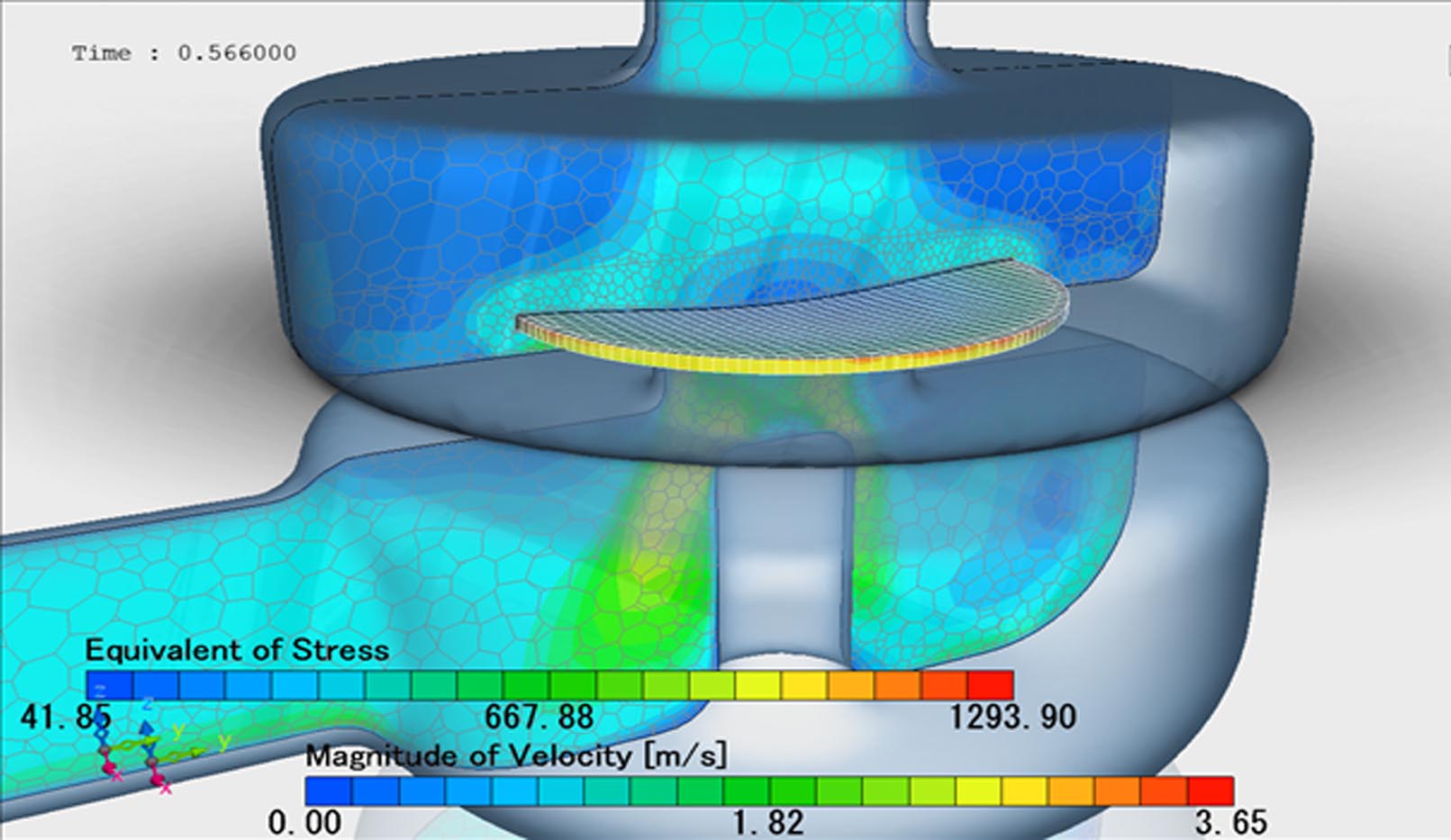
MSC CoSim 2025.1 is instrumental in addressing a wide range of challenging multi-physics problems across various engineering sectors. It is extensively used for analyzing phenomena such as fluid-structure interaction (FSI) in aerospace components, vibro-acoustics in automotive interiors, aerothermoelasticity in aircraft wings, and complex mechatronic systems involving electro-mechanical components. In the automotive industry, it aids in simulating vehicle dynamics and crashworthiness with coupled physics. For manufacturers, it enables the virtual testing and optimization of products where thermal management, structural integrity, and fluid dynamics interact. The platform is a cornerstone for virtual prototype testing, reducing the need for physical prototypes and accelerating development cycles.
Comparing MSC CoSim with Other Co-Simulation Platforms
MSC CoSim 2025.1 differentiates itself from other co-simulation platforms through its powerful graphical workflow builder and its exceptional scalability for HPC environments. While many platforms offer solver coupling, MSC CoSim provides an integrated approach that simplifies the setup and management of complex, multi-domain simulations. Its strength in handling non-matching meshes with advanced data mapping and its focus on ensuring numerical stability for tightly coupled implicit schemes offer a distinct advantage for engineers tackling challenging multi-physics problems. The broad native integration with Hexagon’s simulation portfolio, coupled with extensive support for third-party tools, further solidifies its position as a versatile system-level simulation software.
Getting Started with MSC CoSim 2025.1
To begin utilizing MSC CoSim 2025.1 for advanced engineering simulations, access to a valid license is required, as it is a commercial software. While specific system requirements should be confirmed with Hexagon AB, users can generally anticipate that effective operation, particularly for large-scale parallel computations, will benefit from multi-core processors, substantial RAM, and high-speed storage. Preparing by defining the specific physics domains to be coupled, identifying the appropriate solvers, and understanding the data exchange requirements will facilitate a smoother integration into professional simulation projects. Engaging with Hexagon’s technical support or documentation is recommended for detailed setup guidance.
Frequently Asked Questions
What types of simulations can MSC CoSim 2025.1 handle simultaneously?
MSC CoSim 2025.1 supports multi-physics simulations involving structural, fluid, acoustic, thermal, and control system interactions by coupling specialized solvers. It enables analysis of complex phenomena such as fluid-structure interaction, vibro-acoustics, and mechatronics in one integrated environment, providing a holistic view of system behavior.
How does MSC CoSim manage data exchange between different solvers with incompatible meshes?
MSC CoSim uses advanced data mapping and interpolation techniques to accurately transfer field data like pressures, temperatures, and forces between non-matching meshes of different solvers, ensuring consistent and physically correct coupling in multi-physics simulations. This capability is fundamental for achieving accurate results when integrating diverse simulation tools.
Can MSC CoSim integrate with third-party simulation software?
Yes, MSC CoSim supports integration with many third-party and open-source solvers, including Simcenter STAR-CCM+, ANSYS Fluent/Mechanical, Abaqus, LS-DYNA, as well as MATLAB/Simulink and custom tools via standard APIs such as FMI/FMU. This broad compatibility ensures users can leverage their existing software investments within a unified co-simulation framework.






Reviews
There are no reviews yet.