

Optum G2 & G3 2023: Advanced 2D & 3D Geotechnical Analysis Software
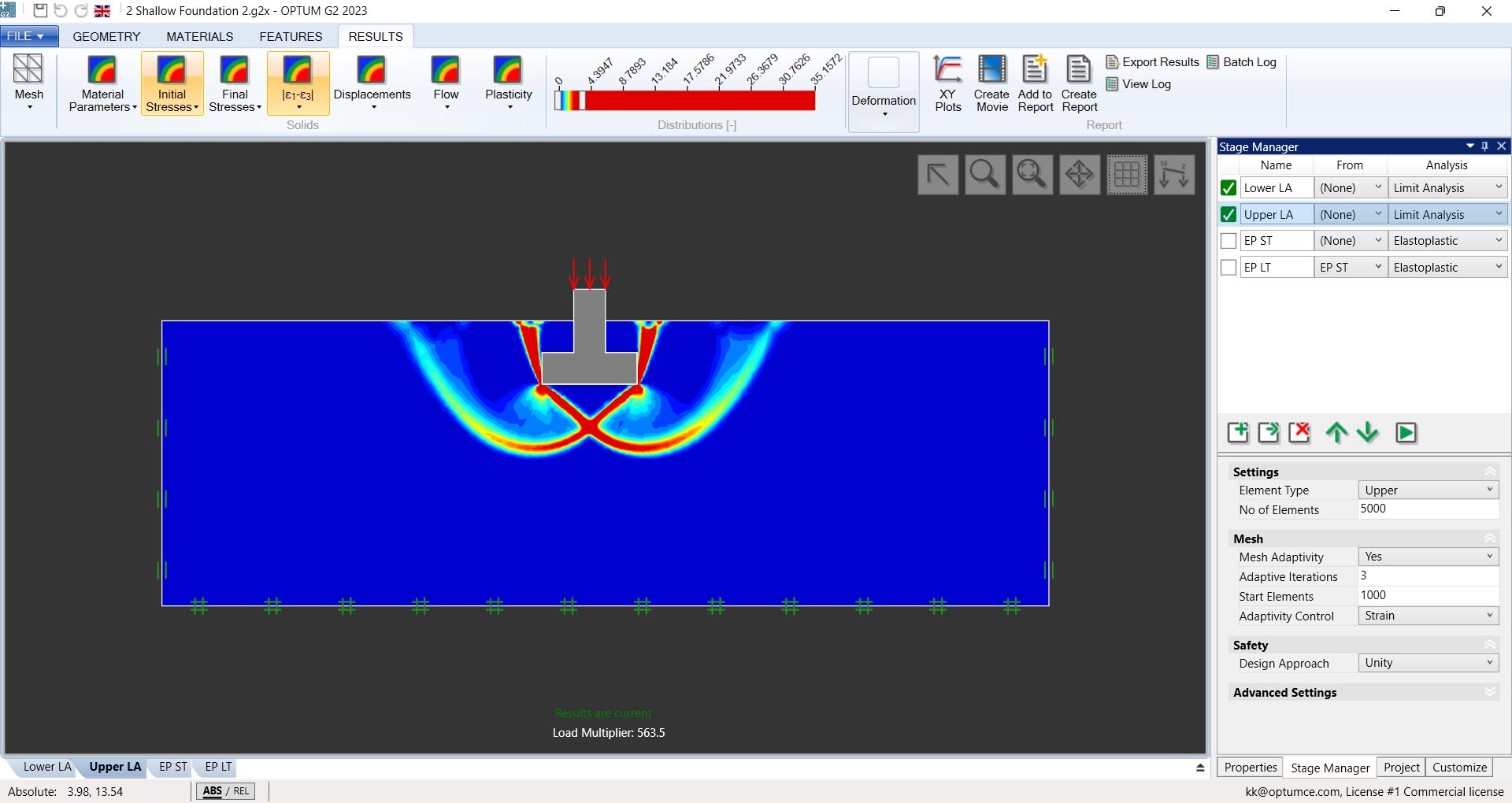
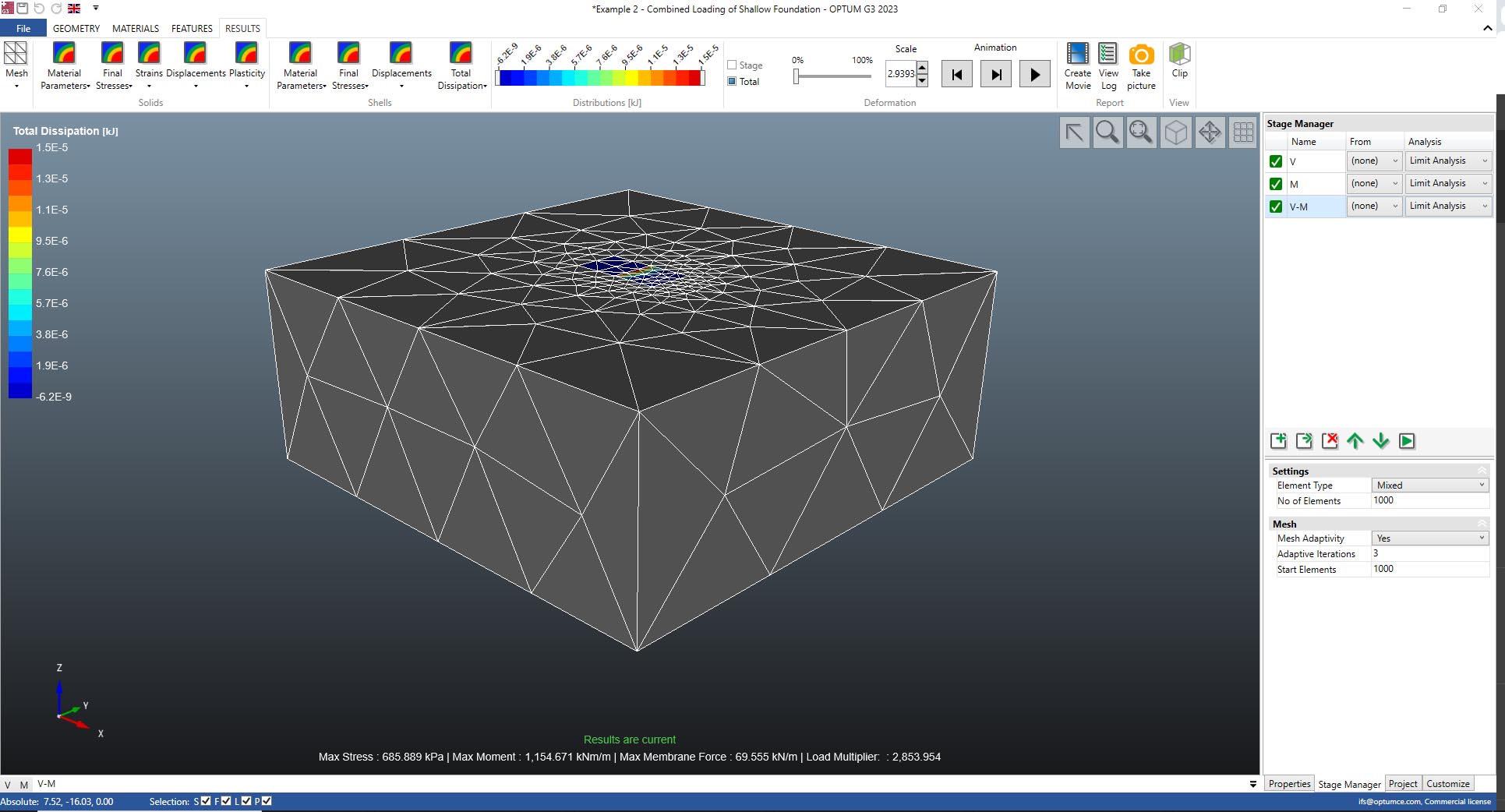
Optum G2 and Optum G3 are a powerful suite of finite element programs for geotechnical stability and deformation analysis in 2D (plane strain/axisymmetry) and full 3D . Developed by OptumCE (Denmark), the software is renowned for its unique Limit Analysis capability, which computes rigorous upper and lower bounds on true collapse loads and safety factors—providing built-in numerical verification absent in traditional finite element software . Version 2023 continues this legacy, offering fast elastoplastic consolidation analysis for settlement determination, CAD import/export, adaptive mesh refinement, stochastic reliability analysis, and an intuitive interface . Whether designing shallow foundations, assessing slope stability, analyzing retaining walls, or simulating complex 3D soil-structure interactions, Optum G2/G3 delivers unprecedented efficiency, robustness, and confidence in results.
???? Primary Users
This professional geotechnical software suite is designed for:
-
Geotechnical Engineers & Civil Engineers performing stability analysis, foundation design, and deformation calculations.
-
Mining & Tunnel Engineers assessing slope stability, excavation support, and underground structures.
-
Structural Engineers & Foundation Designers calculating bearing capacities and settlement for shallow and deep foundations.
-
Environmental & Coastal Engineers analyzing embankments, tailings dams, and offshore structures.
-
Academic Researchers & Students teaching and applying finite element limit analysis in geotechnical engineering.
⚡ Key Features & Capabilities
???? Core Analysis Types
Limit Analysis (Unique Optum Technology):
-
Computes rigorous upper and lower bounds on true collapse loads and factors of safety
-
Brackets the true solution from above and below, providing built-in numerical verification
-
Extremely fast – typically seconds for problems requiring minutes or hours in conventional FEM
Elastoplastic Analysis (FE):
-
Load-deformation analysis for settlement calculation
-
Nonlinear material behavior (Mohr-Coulomb, Tresca, Drucker-Prager, Hoek-Brown, Modified Cam Clay, Soft Soil Creep)
-
Consolidation analysis (time-dependent settlement) – available in G2
-
Stage construction (excavations, embankments, tunneling)
Strength Reduction (SR-FELA):
-
Determine factors of safety for slope stability with rigorous upper/lower bounds
-
Eliminates need for manual search of critical slip surfaces
Seepage & Groundwater:
-
Steady-state and transient groundwater flow
-
Fully coupled flow-deformation analysis (consolidation)
-
Phreatic surface definition
????️ Specialized Applications
| Application | G2 (2D) | G3 (3D) | Description |
|---|---|---|---|
| Shallow Foundations | ✅ | ✅ | Bearing capacity (upper/lower bounds), settlement (elastoplastic/consolidation) |
| Deep Foundations (Piles/Monopiles) | ✅ | ✅ | Axial/lateral capacity, p-y curves, monopile design for offshore wind |
| Slope Stability | ✅ | ✅ | Factor of safety via SR-FELA, failure mechanism visualization |
| Retaining Walls | ✅ | ✅ | Gravity walls, MSE walls, gabions, sheet piles; active/passive earth pressures |
| Excavations & Deep Excavations | ✅ | ✅ | Braced cuts, strutted systems, soil nails, ground anchors |
| Tunnels | ✅ | ✅ | Sequential excavation, lining forces, ground settlement |
| Embankments & Dams | ✅ | ✅ | Settlement, pore pressure dissipation, stability during construction |
| Mining & Tailings Dams | ✅ | ✅ | Waste rock dumps, tailings storage, foundation failure analysis |
| Anchors & Geosynthetics | ✅ | ✅ | Geogrids, rock bolts, ground anchors, tiebacks |
???? Material Models
-
Mohr-Coulomb, Tresca, Drucker-Prager
-
Hoek-Brown (rock masses)
-
Modified Cam Clay (soft clays)
-
Soft Soil & Soft Soil Creep (time-dependent behavior)
-
Hardening Soil with small-strain stiffness (HSSmall)
-
Anisotropic Undrained Shear (AUS)
-
Nonlinear Sand
???? Modeling & Workflow
Geometry Creation:
-
G2 (2D): Draw directly, import CAD (DXF, DWG), define soil layers via profiles
-
G3 (3D): Advanced built-in 3D modeling tools; import STEP, IGES, SAT; extrude 2D to 3D
Mesh Generation:
-
Adaptive mesh refinement (automatic or user-specified)
-
Local mesh refinement in areas of interest
-
Rapid, robust meshing without convergence issues
Stage Management:
-
Activate/deactivate regions (construction sequences, excavation stages)
-
G3 – modify earlier stage, automatically propagate to all subsequent stages (GX features, but indicative)
???? Output & Reporting
Graphical Results:
-
Displacement contours, stress/strain plots, failure mechanisms (upper/lower bound)
-
Load-displacement curves
-
Adaptive mesh refinement progression
-
3D visualization for G3 (rotation, slicing, point cloud viewing)
Reports:
-
Automatic generation of professional calculation reports (Word, Excel)
-
Customizable report content (plots, tables, model data, stage summaries)
-
Includes geometry sketches, material data, stage sequencing, collapse mechanisms
???? Advanced Features
Stochastic & Reliability Analysis:
-
Random field generation for soil property variability
-
Monte Carlo simulation for probability of failure
-
Input external parameter distributions
Parameter Variation:
-
Arbitrary variation of parameters in 2D and 3D domains
CAD Interoperability:
-
Import: DXF, DWG, STEP, IGES, SAT
-
Export: DXF, images
???? What’s New in Version 2023
-
Refined Limit Analysis Solver – Faster convergence for upper/lower bound solutions (as of 2023 release)
-
HSSmall Model – Hardening Soil with small-strain stiffness for improved nonlinear behavior simulation
-
Enhanced Stochastic Module – Expanded random field support, faster Monte Carlo (relative to previous versions)
-
Stage Management Improvements – Smoother activation/deactivation workflows
-
Updated CAD Import – Better handling of complex 3D geometries for G3 (STEP/IGES)
-
64‑bit Optimized – Handles larger models and faster computation
???? System Requirements
Minimum Requirements
-
OS: Windows 10/11 (64-bit)
-
CPU: Multi-core Intel Core i5 or equivalent
-
RAM: 8 GB (G2), 16 GB (G3 for moderate 3D models)
-
Storage: 2 GB free space
-
Display: 1280 × 1024 resolution
-
Graphics: OpenGL 3.3 compatible with 1 GB VRAM
???? Industry Applications
???? Shallow & Deep Foundations
Determine ultimate bearing capacity (upper/lower bound) and settlement (elastoplastic/consolidation) for footings, mats, piles, and monopiles .
⛰️ Slope Stability
Compute rigorous upper/lower bounds on factor of safety using SR-FELA; visualize critical failure surfaces; assess unreinforced and geosynthetic-reinforced slopes .
???? Retaining Walls & Excavations
Model gravity walls, MSE walls, sheet piles; simulate braced excavations, soil nails, ground anchors; compute earth pressures and wall deflections .
???? Tunnels & Underground Structures
Sequential excavation, lining forces, ground surface settlement, interaction with adjacent foundations.
???? Offshore & Marine Geotechnics
Monopiles for wind turbines, suction anchors, offshore rock berms, scour protection .
???? Mining & Tailings
Tailings dam stability, waste rock dumps, open pit slopes, heap leach pads.
???? Embankments & Levees
Settlement prediction, pore pressure dissipation during staged construction, overall stability .






Reviews
There are no reviews yet.