

Download Seequent GeoStudio 2025.2 – Comprehensive Geotechnical Modeling Software
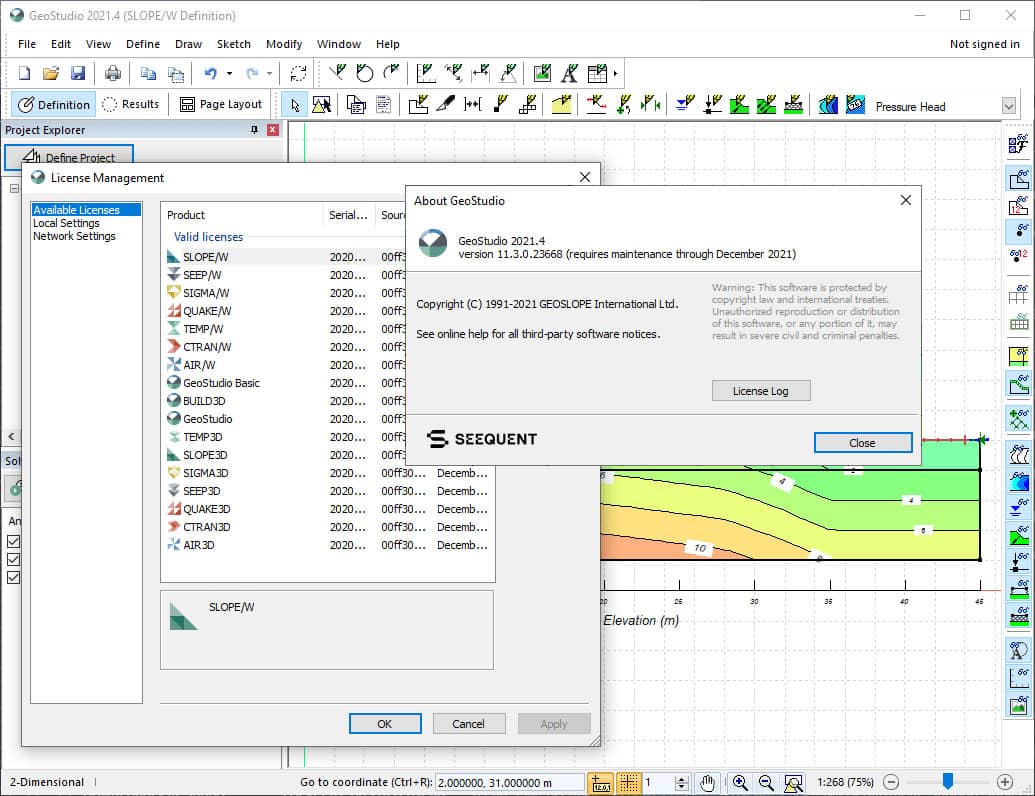
Seequent GeoStudio 2025.2 is a sophisticated suite of software designed for comprehensive geotechnical modeling, developed by Seequent. This application is specifically tailored for professionals in geotechnical engineering and geological modeling, offering advanced tools to analyze complex soil and rock mechanics. The GeoStudio suite consolidates multiple analytical components, enabling users to tackle a wide array of challenges in the civil and construction sectors.
Overview of Seequent GeoStudio
Seequent GeoStudio serves as an integrated platform for geotechnical analysis, providing engineers with the capability to model and understand the behavior of earth structures and natural formations. The suite’s design philosophy centers on delivering specialized analysis tools within a unified environment, streamlining workflows from initial data input to final result interpretation. This approach ensures that complex geotechnical problems can be addressed with greater efficiency and accuracy.
Historically, geotechnical modeling has relied on segmented software solutions. GeoStudio addresses this by bringing together distinct analytical modules, each addressing a specific facet of soil and rock mechanics. This integrated structure facilitates a more holistic understanding of project sites and potential geohazards.
Key Features and Analytical Capabilities
SLOPE/W: Advanced Slope Stability Analysis
SLOPE/W is a core component of the GeoStudio suite, dedicated to performing advanced slope stability analysis. It allows engineers to assess the stability of natural slopes, excavations, and engineered embankments under various conditions. The software supports multiple methods for limit equilibrium analysis, enabling detailed examinations of potential failure modes and the calculation of safety factors.
SEEP/W: Groundwater Analysis
This module focuses on groundwater analysis, modeling the flow of water through porous media and fractured rock. SEEP/W is essential for understanding seepage, pore-water pressure distributions, and the impact of hydrological conditions on ground stability. Its capabilities are critical for projects involving dams, levees, excavation dewatering, and contamination transport.
SIGMA/W: Deformation Pressure Analysis
SIGMA/W is utilized for deformation and stress analysis in geotechnical engineering. It employs finite element methods to simulate the stress-strain behavior of soil and rock, predicting how structures will deform under applied loads. This tool is vital for designing foundations, retaining walls, and tunnels where settlement and displacement are critical design considerations.
QUAKE/W: Dynamic Earthquake Analysis
QUAKE/W provides capabilities for dynamic analysis, specifically addressing the behavior of soil during seismic events. It enables engineers to simulate the effects of earthquakes on slopes, foundations, and other geotechnical structures, including liquefaction potential and seismic-induced deformations. This feature is paramount for infrastructure projects in earthquake-prone regions.
TEMP/W: Thermal Analysis in Geotechnical Contexts
The TEMP/W module conducts thermal analysis, simulating heat transfer processes in the ground. This is crucial for understanding the effects of temperature changes on soil properties, such as freezing and thawing cycles or the impact of buried infrastructure on ground temperatures. Applications include permafrost engineering, buried pipelines, and waste repository design.
Integration and Compatibility with Other Tools
Seequent GeoStudio is designed to integrate seamlessly with various other engineering and modeling tools, enhancing its utility in diverse project workflows. Its data formats are often compatible with CAD software and other specialized analysis packages, allowing for a smooth exchange of information. This interoperability ensures that GeoStudio can function effectively within a broader engineering software ecosystem, supporting complex design and analysis procedures across different disciplines.
Applications Across Industries
The comprehensive analytical capabilities of Seequent GeoStudio make it an indispensable tool across multiple sectors within civil and construction engineering. Its applications extend to major infrastructure projects, including the design and assessment of transportation networks, dams, and high-rise buildings.
- Civil Engineering: Used extensively for designing foundations, retaining structures, and earthworks, ensuring structural integrity and safety.
- Mining Engineering: Applied to analyze the stability of open-pit mines, tailings dams, and underground excavations, crucial for operational safety and resource extraction.
- Environmental Projects: Essential for modeling groundwater contamination pathways, landfill stability, and land reclamation efforts.
- Construction: Supports temporary excavations, tunneling projects, and the assessment of soil conditions for new developments.
Frequently Asked Questions
What types of analysis can I perform with Seequent GeoStudio?
Seequent GeoStudio offers a wide array of analyses, including advanced slope stability assessments with SLOPE/W, groundwater movement simulations using SEEP/W, and thermal changes with TEMP/W. Additionally, it provides dynamic earthquake analysis capabilities through QUAKE/W and deformation pressure analysis via SIGMA/W, covering broad challenges in geotechnical engineering.
Is Seequent GeoStudio suitable for new users in geotechnical engineering?
While GeoStudio is equipped with robust features designed for advanced analysis by experienced professionals, it also incorporates comprehensive documentation and resources. These elements can assist new users in becoming familiar with geotechnical modeling principles and the software’s functionalities. However, a foundational understanding of geotechnical engineering concepts is recommended for optimal utilization.
What industries can benefit from using Seequent GeoStudio?
GeoStudio provides significant benefits to a diverse range of industries, including civil engineering for infrastructure development, mining for managing site stability and resource extraction, and environmental consultancy for assessing and mitigating geohazards. The construction industry also leverages its tools for foundation design and excavation planning, owing to its comprehensive approach to soil and rock interactions.




Reviews
There are no reviews yet.