

Download SeismoArtif 2025.1 – Advanced Earthquake Motion Simulation Software
SeismoArtif 2025.1 is a specialized earthquake simulation software designed for generating artificial earthquake motions that precisely match predefined response spectra. This tool is essential for civil and structural engineers engaged in seismic analysis, particularly for evaluating the performance of buildings and infrastructure under dynamic seismic loading. The software serves the demanding needs of the earthquake engineering field, providing critical functionalities for accurate structural response prediction.
Overview of SeismoArtif for Earthquake Simulation in Civil Engineering
In civil engineering, understanding and predicting a structure’s behavior during seismic events is paramount. SeismoArtif 2025.1 addresses this by enabling engineers to synthesize realistic earthquake accelerograms that conform to specific spectral requirements. This capability is fundamental for performing detailed nonlinear dynamic analysis, ensuring that designs meet rigorous safety standards for earthquake-prone regions. The software is targeted at professionals in earthquake engineering, structural design, and construction, as well as academic researchers studying seismic motion modeling.
Comprehensive Earthquake Motion Generation and Spectrum Matching
SeismoArtif offers robust capabilities for creating artificial earthquake motions. The software supports the calculation of target response spectra according to Eurocode 8, a widely adopted European standard for seismic design. Additionally, it allows users to define custom response spectra, providing flexibility for various project specifications or research objectives. The core functionality involves spectrum matching, a process that refines synthetic accelerograms to closely match the chosen target spectrum. This process can leverage existing real accelerometer data as a reference, enhancing the fidelity of the generated seismic inputs.
- Generation of artificial earthquake motions with specific response characteristics.
- Calculation of target spectra compliant with Eurocode 8 standards.
- Capability to utilize user-defined response spectra for tailored seismic simulations.
- Spectrum matching algorithms to align synthetic ground motions with spectral targets.
- Potential integration of real accelerogram data for enhanced realism.
Data Input, Output, and Windows Ecosystem Integration
SeismoArtif is designed for seamless integration within the Windows operating system, facilitating efficient data management and reporting. The software supports various text-based file formats for importing acceleration and intensity time histories. This allows engineers to easily incorporate existing ground motion records into their analyses. Results generated by SeismoArtif, including numerical data and graphical representations of seismic inputs and simulated responses, can be exported directly into common Microsoft applications such as Excel and Word. This feature streamlines the reporting phase of seismic assessment projects and enhances collaboration among project stakeholders.
Customizable Analysis and Visualization Tools within SeismoArtif
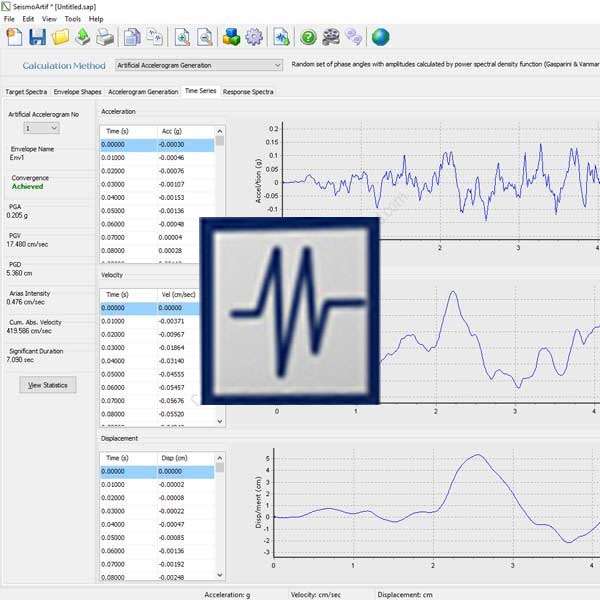
Within its interface, SeismoArtif provides users with tools to customize and visualize seismic data, supporting in-depth analysis. The software enables fine-tuning of simulation parameters and offers clear graphical representations of generated earthquake motions, response spectra, and other critical analysis outputs. These visualization capabilities are crucial for engineers to interpret complex seismic data, validate simulation results, and gain a comprehensive understanding of structural behavior under seismic excitation. By allowing direct manipulation and inspection of results within the program, SeismoArtif supports refined engineering judgment and decision-making.
Practical Use Cases and Industry Applications of SeismoArtif
SeismoArtif finds its primary application in advanced seismic performance evaluations for various structures, ranging from residential buildings to critical infrastructure like bridges and dams. Engineering firms use it to conduct nonlinear dynamic analyses, assessing the resilience of new designs and retrofitting strategies for existing structures against seismic hazards. In academic research, the software serves as a valuable tool for studying earthquake resilience, developing new analytical methods, and investigating the effects of different ground motion characteristics. Its compatibility with Windows-based workflows allows for integration into broader structural analysis and design pipelines, providing a comprehensive seismic assessment solution.
Frequently Asked Questions
How does SeismoArtif generate artificial earthquake motions?
SeismoArtif generates artificial earthquake motions by employing calculation methods that correspond to a specified response spectrum. It uses techniques such as spectrum matching and real accelerometer data to create synthetic seismic records tailored to engineering needs, ensuring the simulated ground shaking aligns with predefined seismic hazard criteria.
Can SeismoArtif work with Eurocode 8 seismic spectrum standards?
Yes, SeismoArtif can calculate target response spectra based on Eurocode 8 rules, enabling users to generate artificial earthquake records that meet European seismic design standards. This functionality is crucial for projects requiring compliance with these specific international codes.
What file formats does SeismoArtif support for input and output of seismic data?
SeismoArtif reads acceleration and intensity earthquake motion data stored in various text formats, and allows exporting numerical and graphical results compatible with programs like Microsoft Word and Excel on Windows. This ensures straightforward data handling and reporting within common engineering workflows.





Reviews
There are no reviews yet.