

Download SeismoSpect 2025.1 – Earthquake Spectrum Analysis Software for Civil Engineering
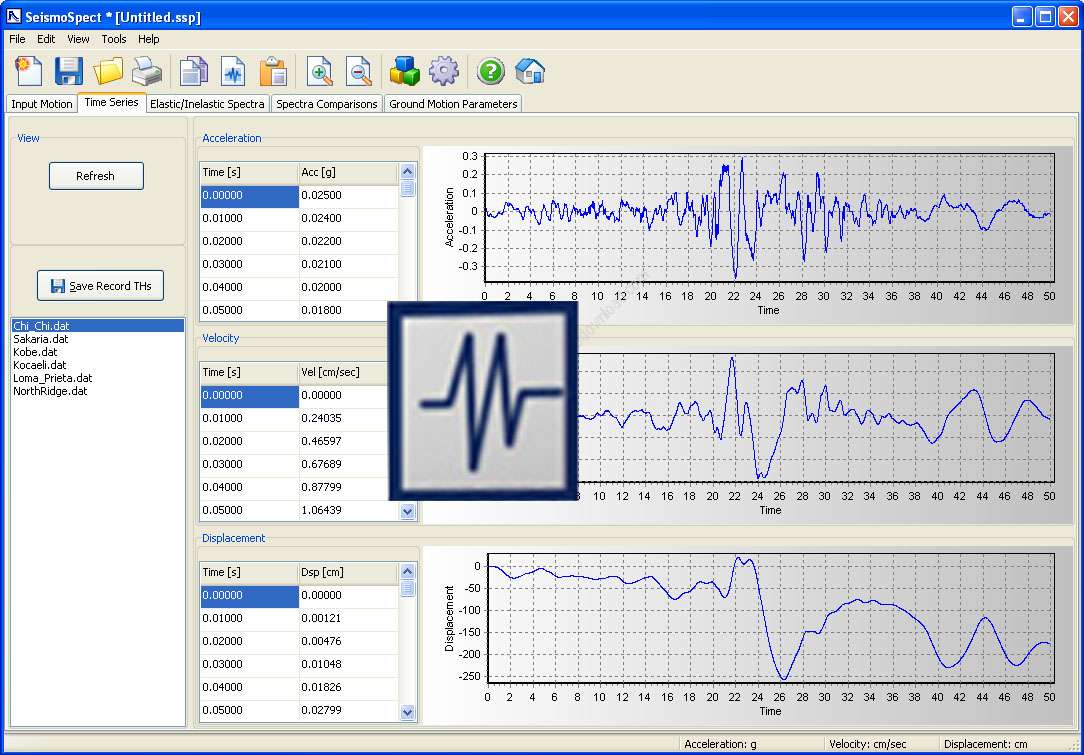
SeismoSpect 2025.1 is a specialized civil engineering software developed by SeismoSoft, designed for comprehensive seismic data analysis. It empowers professionals in earthquake and structural engineering to effectively manage earthquake records, perform advanced signal processing, and calculate detailed spectral responses. This tool is crucial for researchers and engineers involved in disaster management and seismic structural studies, offering robust capabilities for understanding earthquake motion parameters.
Overview of SeismoSpect and Its Role in Seismic Data Analysis
SeismoSpect serves as a foundational application for seismic engineers and researchers, providing specialized functionalities for processing and analyzing earthquake accelerograph data. Its primary role is to transform raw seismic records into meaningful engineering insights through detailed spectral analysis. The software facilitates the creation of a dedicated library for earthquake records, enabling organized storage, retrieval, and sharing of critical seismic event information for further study and application in structural design and safety assessments.
Comprehensive Earthquake Data Management and Record Library Features
The software provides robust tools for building and maintaining a systematic library of earthquake records. Users can import, save, and organize multiple earthquake datasets. This centralized management approach is essential for comparative studies and for ensuring that historical seismic event data is readily accessible for ongoing research and project requirements. Key features include:
- Creation and population of a dedicated earthquake record library.
- Saving and managing individual earthquake records with associated metadata.
- Facilitating data sharing among project team members for collaborative analysis.
- Efficient retrieval of specific seismic events for detailed examination.
Advanced Signal Processing: Filters, Corrections, and Spectral Response Calculations
SeismoSpect offers a sophisticated suite of signal processing tools crucial for refining raw accelerometer data and performing accurate spectral response analyses. These capabilities are vital for deriving reliable seismic motion parameters and for evaluating structural behavior under seismic loads. The process involves:
- Application of various digital filters to remove noise and enhance signal clarity.
- Performance of baseline corrections to eliminate drift and errors in recorded acceleration time histories.
- Calculation of spectral acceleration, velocity, and displacement responses.
- Averaging spectral responses from multiple records to obtain robust statistical insights.
- Comparison of calculated spectral responses against user-defined or normative target spectra.
Customization and Exporting Analytical Results for Engineering Reports
A core strength of SeismoSpect lies in its flexibility for customizing analytical outputs, making it easier to integrate results into professional engineering reports. Users can tailor graphical and numerical outputs to highlight specific findings crucial for their projects. The software supports exporting these results into widely compatible formats, thereby enhancing report generation efficiency and clarity. This includes:
- Customization of spectral plots and time-history graphs.
- Generation of numerical tables detailing key seismic parameters.
- Direct export of graphical figures to Microsoft Word documents.
- Export of numerical data to Microsoft Excel spreadsheets for further manipulation and reporting.
Use Cases in Structural and Seismic Engineering Projects
SeismoSpect is instrumental in a variety of civil and structural engineering applications, particularly those focused on seismic resilience and analysis. Its specialized functions are leveraged by engineers and researchers for critical tasks such as:
- Detailed analysis of accelerometer data from seismic events to understand ground motion characteristics.
- Assessing seismic hazard and risk for infrastructure projects in earthquake-prone regions.
- Calculating robust seismic motion parameters, including spectral acceleration peaks, essential for design codes.
- Conducting structural dynamics studies to predict building responses to specific earthquake scenarios.
- Research into earthquake engineering principles and the development of improved seismic design methodologies.
Integration with Other Civil Engineering Tools and Data Compatibility
Understanding the need for interoperability in complex engineering workflows, SeismoSpect supports compatibility with standard data formats, allowing for seamless integration with other civil engineering and seismic analysis tools. This ensures that data processed within SeismoSpect can be readily utilized in broader project contexts. The software is designed to handle common accelerometer data file types, facilitating data exchange and enabling engineers to incorporate seismic analysis results into comprehensive structural modeling and simulation processes.
Frequently Asked Questions
How does SeismoSpect improve the accuracy of earthquake spectral response analysis?
SeismoSpect applies several types of filters and baseline corrections to raw accelerometer data to reduce noise and bias. This processing enables more accurate average spectral response calculations and reliable comparisons with target spectra, crucial for precise seismic engineering assessments.
Can SeismoSpect handle data from multiple accelerometers for seismic studies?
Yes, SeismoSpect is designed to calculate the average spectral response from a set of accelerometers, facilitating comprehensive seismic data analysis from multiple sensors simultaneously. This capability is vital for understanding spatial variations in ground motion.
What data formats does SeismoSpect support for export and reporting?
SeismoSpect allows exporting numerical and graphical results directly into common formats such as Microsoft Word and Excel, streamlining report generation for engineering projects. This ensures that analytical findings can be easily incorporated into professional documentation.





Reviews
There are no reviews yet.