
Download SST Systems CAEPIPE 14.0 – Advanced Pipe Stress Analysis Software
SST Systems CAEPIPE 14.0 is a specialized mechanical engineering software developed by SST Systems, designed for comprehensive pipe stress analysis. It plays a vital role in industries such as piping, aerospace, and construction, ensuring that complex piping systems meet stringent international engineering codes and standards for safety and performance.
Introduction to SST Systems CAEPIPE
Overview and Importance in the Industry
SST Systems CAEPIPE is a sophisticated application dedicated to pipe stress analysis, a critical process in modern engineering. Developed by SST Systems, this software facilitates the precise evaluation of mechanical behavior in piping systems under various operational conditions. Its importance is underscored by its ability to ensure that designs comply with a wide array of international codes, including ASME, B31, and API, making it an indispensable tool for engineers aiming for safety, reliability, and regulatory adherence in their projects.
Key Features and Capabilities
Modeling Complex Piping Systems
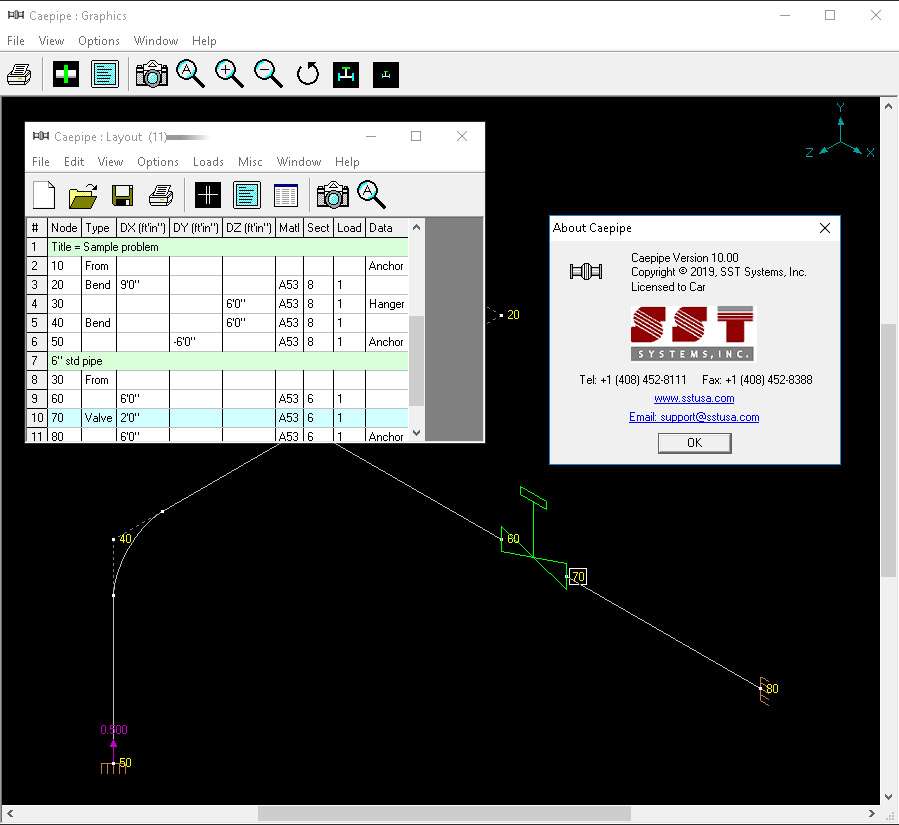
CAEPIPE offers robust capabilities for geometrically modeling intricate piping configurations. Its advanced features allow for the detailed representation of various pipe types and a comprehensive array of fittings, crucial for accurate stress analysis. The software supports the creation of dual-walled pipes and incorporates environmental factors for thorough thermal analysis, enabling engineers to simulate real-world operational stresses with high fidelity.
- Comprehensive modeling of standard and specialized pipe fittings.
- Support for dual-walled pipe configurations.
- Integration of thermal expansion and environmental factors into analysis models.
- Tools for defining and analyzing various pipe support structures.
Analysis and Compliance
The software is engineered to perform rigorous stress analysis, ensuring that all piping designs meet or exceed critical industry standards. CAEPIPE’s analytical engine verifies system integrity against codes such as ASME B31.1, B31.3, and API standards, among others. This focus on compliance is paramount for preventing structural failures, ensuring operational safety, and meeting regulatory requirements across different engineering disciplines.
- Automated verification against multiple international piping codes including ASME and API.
- Advanced stress analysis for various load cases such as pressure, thermal, and weight.
- Generation of detailed analysis reports to document compliance and safety margins.
- Tools to identify and analyze potential failure points in piping systems.
Applications in Various Industries
SST Systems CAEPIPE is a versatile tool applied across several demanding engineering sectors. Its precision in stress analysis and focus on code compliance make it particularly valuable in industries where system integrity is non-negotiable. Professionals leverage CAEPIPE to design and validate piping for critical applications, ensuring safety and operational efficiency.
- Aerospace: Used for analyzing complex fluid and environmental control piping systems within aircraft and spacecraft, ensuring reliability under extreme conditions.
- Construction: Essential for designing and verifying large-scale industrial piping networks in power plants, chemical facilities, and refineries, where safety and regulatory adherence are paramount.
- Plumbing and HVAC: Applied to analyze thermal expansion and stress in large commercial and industrial heating, ventilation, and air conditioning systems.
Integration and Compatibility
CAEPIPE is designed to integrate seamlessly within existing engineering workflows, enhancing productivity and data consistency. Its compatibility with other design systems allows for a smoother transition of design data, reducing the potential for errors and improving overall project efficiency. This interoperability ensures that stress analysis results are easily incorporated into broader project documentation and design reviews.
Case Studies and Success Stories
While specific detailed case studies are limited, the application of SST Systems CAEPIPE in projects within the aerospace and construction industries consistently demonstrates its value. For example, its use in validating designs for high-pressure fluid transfer lines in aerospace ensures adherence to strict safety protocols and performance requirements. Similarly, in large-scale construction projects, CAEPIPE’s role in analyzing thermal expansion and external loads on industrial piping networks helps prevent catastrophic failures and extends system lifespan.
Conclusion
SST Systems CAEPIPE 14.0 stands as a robust and essential piece of pipe stress analysis software for engineers and designers. Its comprehensive modeling features, strong emphasis on compliance with international codes like ASME and API, and applicability across critical industries like aerospace and construction highlight its significance. By providing accurate stress analysis and detailed compliance verification, CAEPIPE empowers professionals to design safer, more reliable, and efficient piping systems.
Frequently Asked Questions
What makes SST Systems CAEPIPE essential for pipe stress analysis?
SST Systems CAEPIPE is crucial for ensuring compliance with industry standards while providing advanced modeling capabilities, allowing engineers to analyze pipe systems under varying loads effectively. Its specialized functionality is key to validating the safety and integrity of complex piping designs in demanding environments.
Can CAEPIPE handle complex piping layouts and fittings?
Yes, CAEPIPE supports the modeling of complex fittings, dual-walled pipes, and can analyze various support structures, making it suitable for a wide range of industrial applications. Its detailed geometric modeling features allow for the accurate representation of even the most intricate piping configurations.
How does CAEPIPE ensure compliance with industry standards like ASME and API?
CAEPIPE rigorously verifies the mechanical behavior of piping systems against standards such as ASME B31 and API, ensuring that designs meet stringent regulatory requirements for safety and performance. The software’s analytical engine is built to flag any potential non-compliance issues, enabling engineers to make necessary design adjustments.





Reviews
There are no reviews yet.