
Download Synopsys LightTools 2025.03 – Advanced Illumination and Optical Simulation Software
Synopsys LightTools 2025.03 is a sophisticated 3D optical simulation software developed by Synopsys, Inc., specifically designed for illumination engineering and non-imaging optics. It serves optical engineers, R&D scientists, and lighting designers across demanding industries such as automotive lighting, consumer electronics, medical device design, and AR/VR systems, enabling the precise analysis and optimization of complex optical designs through advanced ray tracing.
Overview of Synopsys LightTools and Its Applications in Optical Engineering
Synopsys LightTools is a specialized 3D optical simulation tool that utilizes advanced Monte Carlo ray tracing techniques to model light propagation. This focus on illumination design and analysis makes it an indispensable software for professionals working in various fields requiring precise control and prediction of light. Its applicability spans from designing intricate LED lighting systems and sophisticated automotive headlights to developing optical components for AR/VR devices, crafting specialized lighting for medical instruments, and optimizing architectural and stage lighting solutions.
Core Optical Design and Simulation Capabilities
The software’s foundation lies in its robust Monte Carlo ray tracing engine, which accurately simulates the behavior of light as it travels through complex optical systems. This engine allows for detailed analysis of light distribution, intensity, and color fidelity. LightTools also incorporates powerful built-in optical optimization features. These tools enable engineers to refine the geometry of lenses, reflectors, and surface textures to achieve desired photometric performance targets. Furthermore, the software supports advanced material scattering models, including Bidirectional Scattering Distribution Function (BSDF) data, facilitating precise stray light analysis and the simulation of complex surface interactions to prevent unwanted glare and optimize optical efficiency.
Seamless Integration with Mechanical CAD and Source Modeling
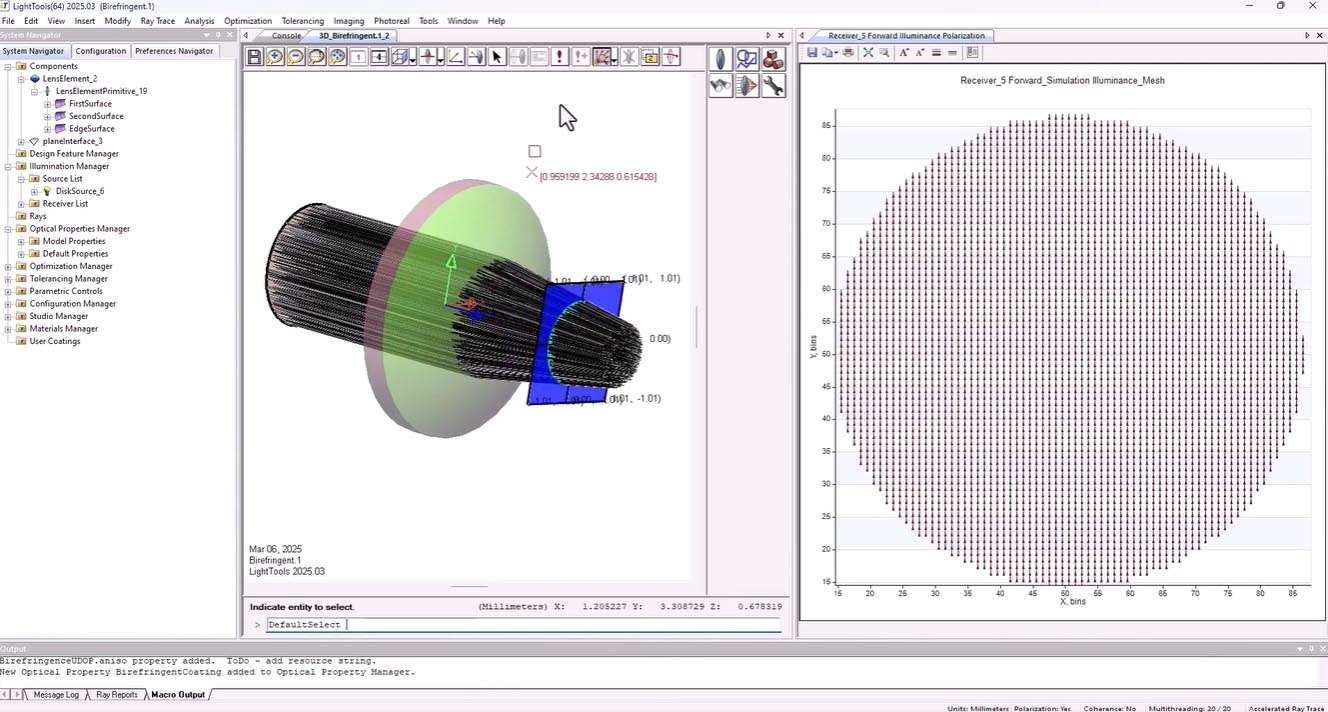
To streamline the development process, Synopsys LightTools offers seamless integration with leading mechanical CAD applications such as SolidWorks, Creo, and CATIA. This direct solid CAD integration allows optical and mechanical designs to be synchronized, ensuring that optical components fit precisely within their mechanical enclosures and that electromagnetic interference (EMI) shielding considerations are managed. The software also provides a comprehensive library of light sources, accurately modeling LEDs, lasers, and various lamp types using measured data from leading manufacturers. For visualization and diagnostic purposes, LightTools includes powerful tools like photometric analysis, enabling the generation of illuminance, luminance, and intensity plots, alongside ray trajectory mapping to visualize light paths and identify potential issues.
Key Enhancements in Version 2025.03 Beneficial to Advanced Optical Design
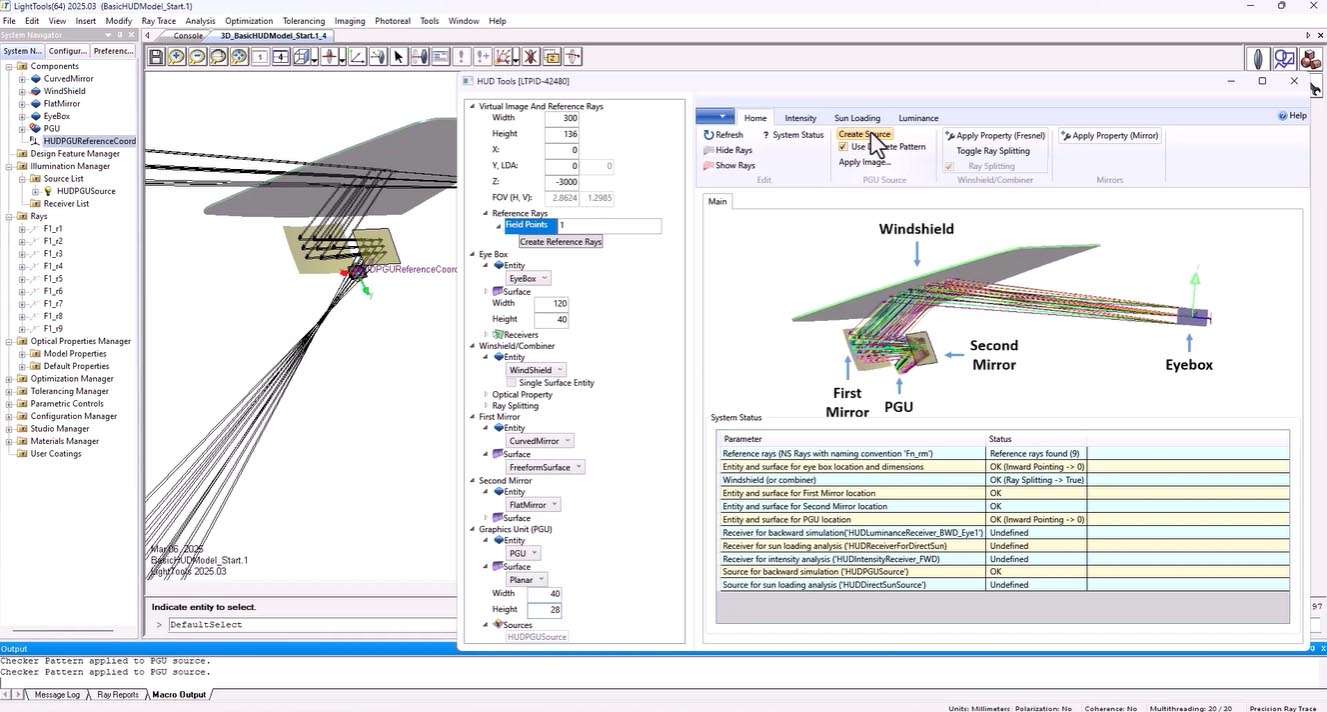
Synopsys LightTools 2025.03 introduces significant advancements, enhancing performance and expanding capabilities for modern optical design challenges. A major update is the improved GPU acceleration, which now supports NVIDIA RTX hardware, leading to substantially faster simulation times for complex optical models. For the rapidly growing AR/VR sector, the version includes new modeling tools specifically designed for optical components such as waveguide combiners and pancake lenses, critical for compact and efficient display systems. Automotive lighting engineers benefit from streamlined workflows tailored for adaptive driving beam (ADB) systems and pixelated LED headlight designs, allowing for more sophisticated and compliant lighting solutions. Additionally, the release features expanded API and scripting functionalities, empowering users to automate repetitive tasks and customize workflows for enhanced productivity.
Real-World Use Cases Demonstrating LightTools’ Effectiveness
Synopsys LightTools plays a crucial role in numerous real-world applications. In LED lighting product development, engineers use it to optimize luminaire designs for uniform light distribution and energy efficiency. Automotive headlamp engineering relies on LightTools for simulating beam patterns, ensuring compliance with regulations, and developing advanced features like adaptive driving beams. For AR/VR display systems, the software is employed to design optical engines that deliver bright, clear, and wide field-of-view images. In medical device lighting, it helps create specialized illumination for imaging and diagnostic equipment. Architectural lighting simulation uses LightTools to predict illumination levels and visual comfort in various spaces. By leveraging these simulation capabilities, professionals can significantly reduce physical prototyping costs, optimize light distribution, and ultimately improve overall product performance and user experience.
Frequently Asked Questions
What industries benefit most from using Synopsys LightTools?
Synopsys LightTools is widely used in industries such as automotive lighting, consumer electronics, AR/VR display design, medical device manufacturing, and architectural lighting simulations. Its advanced simulation capabilities support complex illumination and optical system design in these fields, offering precise control over light behavior for optimized product performance and compliance.
How does Monte Carlo ray tracing improve optical simulations in LightTools?
Monte Carlo ray tracing simulates the probabilistic paths of millions of light rays through optical systems, enabling highly accurate modeling of light behavior, including scattering, reflection, and absorption. This approach is particularly effective for complex geometries and materials, improving prediction fidelity for illumination designs that might be challenging for deterministic ray tracing methods.
What are the new features in Synopsys LightTools 2025.03?
The 2025.03 release includes enhanced GPU acceleration with NVIDIA RTX support for faster simulations, new AR/VR optical modeling tools like waveguide combiners and pancake lenses, improved material scattering models, dedicated automotive lighting workflows, and expanded API automation capabilities. These updates aim to boost productivity and address emerging optical design challenges.




Reviews
There are no reviews yet.