

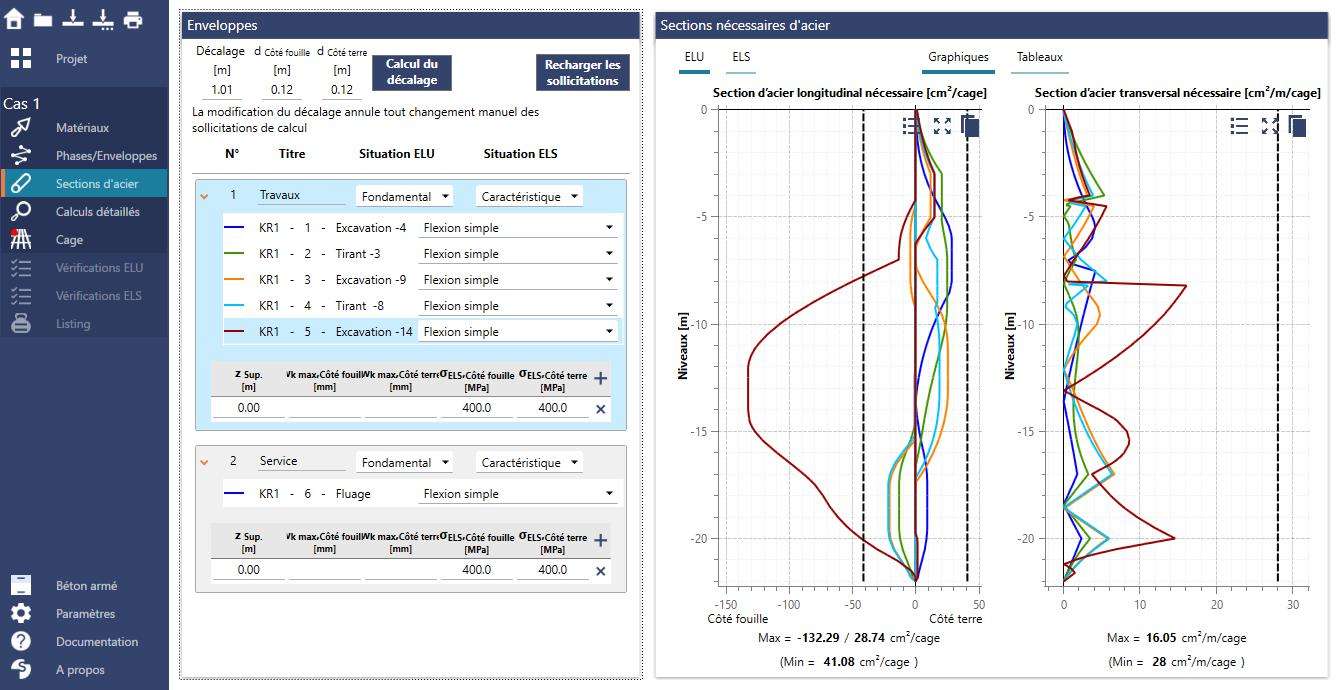
Download TERRASOL KRea 5.0.12 – Advanced Retaining Wall Design Software
TERRASOL KRea is a specialized Civil Engineering software developed by Terrasol, focusing on advanced retaining wall design and geotechnical analysis. This application is designed for civil and geotechnical engineers who require robust tools for simulating complex construction scenarios and ensuring structural integrity. The KRea software download provides access to sophisticated modeling and calculation engines essential for modern construction projects.
Introduction to KRea
An Overview of KRea Software
TERRASOL KRea is a comprehensive software solution tailored for the design and analysis of retaining walls. It leverages the subgrade reaction method to provide engineers with detailed insights into wall behavior under various conditions. Its relevance in civil engineering is underscored by its capability to handle complex modeling and interactive analysis, making it an indispensable tool for geotechnical engineering tasks.
Key Features and Capabilities
Innovative Design Tools
KRea incorporates modern features designed to enhance user efficiency and design precision. The software offers a user-friendly interface, default parameter handling for common scenarios, and powerful capabilities for defining and manipulating designs.
- Script Mode Interface: KRea v5 introduces a script mode that allows users to define or modify entire projects using a sequence of commands. This feature simplifies intricate project adjustments and facilitates the automation of repetitive tasks, significantly improving workflow efficiency for complex designs.
- Enhanced User Experience: The software prioritizes a streamlined user experience, employing default parameters where appropriate to speed up the initial setup process for standard retaining wall designs.
Modeling Phasing and Complex Scenarios
A significant advancement in KRea v5 is its phasing tree structure. This innovative feature enables engineers to simulate various loading situations and construction sequences within a single project file, offering a dynamic approach to structural analysis. This allows for a more realistic representation of how walls perform during and after construction.
- Phasing Tree Structure: This system allows for the creation of different project phases, each potentially with distinct loading conditions or stages of construction. Users can easily manage and switch between these phases to analyze the progressive impact on the retaining structure.
- Complex Construction Scenarios: The software supports the modeling of intricate interactions between different wall systems and stages of construction, providing a clearer understanding of overall project stability and performance under varied real-world conditions.
Calculation Engine and Analytical Tools
At its core, KRea is powered by a robust calculation engine that supports comprehensive geotechnical analysis and compliance with international standards. This engine ensures accurate and reliable results for critical design parameters, including seismic considerations and structural interactions.
- Seismic Checks: The software incorporates analytical tools to perform seismic checks, ensuring that retaining wall designs meet safety requirements in earthquake-prone regions.
- Eurocode Compliance: KRea supports compliance with Eurocode standards, a crucial aspect for engineers working on projects within nations that adhere to these European building regulations.
- Second-Order Moments: The calculation engine effectively treats second-order moments, which are critical for accurate analysis of structural behavior, particularly in flexible retaining structures.
Industry Applications and Real-World Use Cases
TERRASOL KRea finds extensive application within various civil engineering domains, particularly where substantial retaining structures are integral to project success. Its advanced capabilities are suited for demanding construction environments.
- Urban Construction Projects: KRea is used for designing retaining walls in confined urban areas, where space is limited and designs must carefully manage adjacent structures and utilities. This includes applications like diaphragm walls and secant pile walls for deep excavations.
- Geotechnical Assessments: The software assists geotechnical engineers in evaluating the stability of slopes and excavations, designing appropriate earth-retaining structures for infrastructure development such as highways, bridges, and tunnels.
- Sheet Pile and Soldier Pile Walls: It provides specialized tools for the design of sheet pile walls and soldier pile walls, common in temporary excavations and permanent retaining structures where water ingress is a concern.
Integration and Compatibility
KRea is designed to work within a broader engineering software ecosystem, enhancing its utility by allowing seamless data transfer and collaborative workflows with other specialized tools developed by Terrasol.
- Talren Integration: KRea can integrate with Terrasol’s Talren software, a tool for slope stability analysis. This connection allows for a more cohesive approach to geotechnical project design, linking slope stability assessments with detailed retaining wall designs.
- Scage Compatibility: Compatibility with Scage further extends KRea’s analytical reach, potentially enabling more comprehensive structural analysis and reinforcement design workflows for complex projects.
Frequently Asked Questions
What types of retaining walls can be designed using KRea?
KRea allows for the design of various types of retaining walls, including diaphragm walls, sheet pile walls, and soldier pile walls, using its subgrade reaction method. This broad capability ensures that engineers can address a wide range of project requirements with a single software solution.
How does the script mode enhance usability in KRea?
The script mode allows users to define or modify entire KRea projects with a series of commands, simplifying complex project adjustments and enabling users to automate repetitive tasks. This feature significantly boosts efficiency, especially for projects involving numerous similar elements or complex sequential analyses.
What industries typically use KRea software?
KRea is primarily used in civil engineering and geotechnical fields, focusing on projects requiring advanced retaining wall design and analysis. Its specialized functions make it particularly valuable for infrastructure development, deep excavations, and urban construction scenarios.




Reviews
There are no reviews yet.