

Download V-Ray 6.20 for Maya 2022-2025 – The Leading 3D Rendering Engine
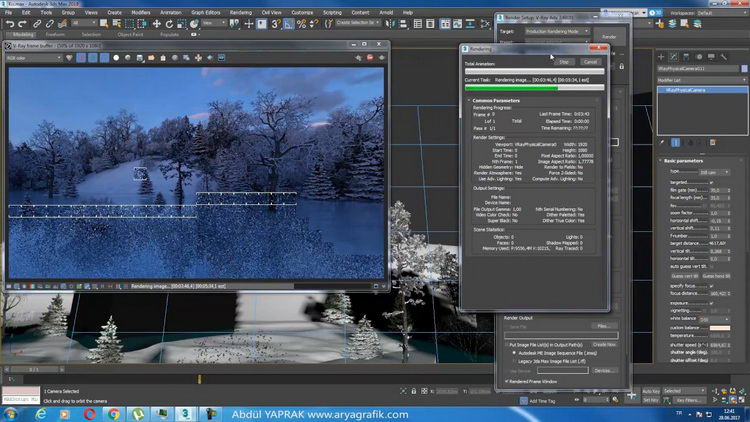
V-Ray 6.20 for Maya is a premier 3D rendering engine developed by Chaos Group, designed for professionals in animation, architecture, filmmaking, and game development. This powerful tool is essential for creating high-quality, photorealistic visuals by accurately simulating light and materials. Its integration with Maya allows artists and designers to produce complex scenes with remarkable efficiency and visual fidelity, solidifying its position as a leader in the computer graphics industry.
Introduction to V-Ray and Its Importance in 3D Rendering
V-Ray, a product of Chaos Group, has long been a benchmark in the field of computer-generated imagery (CGI). It is a versatile and robust rendering engine renowned for its ability to generate visually stunning and physically accurate imagery. This software plays a crucial role in the CGI pipeline, enabling artists to transform intricate 3D models and scenes into photorealistic final outputs that meet the demanding standards of modern media and design industries. The latest version, V-Ray 6.20 for Maya, continues this legacy by offering enhanced performance and sophisticated features tailored for Maya users.
Core Features That Set V-Ray Apart
Realistic Rendering Based on Physics
V-Ray excels in delivering unparalleled realism through its implementation of unbiased rendering principles. It accurately simulates light transport in the real world, employing advanced algorithms like Path Tracing to capture subtle light interactions, reflections, and refractions. This physically-based approach ensures that lighting and shading appear natural, contributing to the final image’s lifelike quality.
User-Friendly Interface
Despite its advanced capabilities, V-Ray features an intuitive user interface that balances power with accessibility. The settings are organized in a way that allows both novice users and seasoned professionals to navigate and control the rendering process effectively. This design philosophy enables users to achieve sophisticated results without an overly steep learning curve.
Fast Rendering with High Efficiency
Chaos Group has continuously optimized V-Ray for speed and efficiency. The rendering engine employs intelligent sampling techniques and multi-GPU rendering support to significantly reduce render times. This focus on performance allows users to iterate more quickly on designs and animations, accelerating project timelines without compromising the high quality that V-Ray is known for.
Compatibility with Maya and Integration with Other Software
V-Ray 6.20 for Maya offers deep integration with Autodesk Maya, providing a seamless workflow for 3D artists. The plugin connects directly into Maya’s rendering framework, allowing for intuitive scene setup, material adjustments, and render output management. Beyond Maya, V-Ray’s broad compatibility extends to numerous other 3D modeling and design applications, facilitating a unified rendering solution across diverse production pipelines.
Applications Across Industries Using V-Ray
The visual fidelity and efficiency of V-Ray make it an indispensable tool across a wide spectrum of industries. In architectural visualization, it is used to create compelling renderings of buildings and interiors, aiding design review and client presentations. The filmmaking industry relies on V-Ray for generating complex visual effects, character animations, and realistic scene elements. Furthermore, game development studios utilize V-Ray for creating high-quality assets and environments, enhancing the immersive experience for players.
Why Choose V-Ray Over Other Rendering Engines?
When compared to other 3D rendering engines, V-Ray distinguishes itself through a superior balance of rendering speed and photorealistic quality. Its physically-based approach ensures accuracy, while its efficient algorithms minimize waiting times. Key differentiators include its robust feature set, extensive compatibility with popular 3D software like Maya, and a long-standing reputation for reliability within the professional graphics community. This combination makes it a preferred choice for demanding visualization tasks.
Real-World Use Cases and Success Stories
Numerous acclaimed projects have leveraged V-Ray to achieve their visual goals. For instance, architectural firms have used V-Ray to bring groundbreaking designs to life, enabling clients to experience virtual walkthroughs of unbuilt spaces with stunning realism. In animation, short films and even feature-length productions have employed V-Ray for intricate effects and character rendering, demonstrating its capacity for high-end visual storytelling. Game development studios also benefit, using the software to create assets and environments that push the boundaries of graphical fidelity in interactive entertainment.
Frequently Asked Questions
What industries benefit from using V-Ray for Maya?
V-Ray for Maya is utilized across various sectors including architecture for visualization, filmmaking for realistic scenes, and gaming for immersive environments. Its flexibility makes it suitable for diverse projects requiring high-quality computer-generated imagery.
How does V-Ray ensure realistic lighting and shading in renders?
V-Ray simulates real-world lighting physics to create accurate lighting and shading effects, incorporating features like physically correct light sources and advanced material properties, which contribute to lifelike images.
Can V-Ray be integrated with other 3D software besides Maya?
Yes, V-Ray is compatible with numerous 3D applications including 3ds Max, Cinema 4D, SketchUp, and Blender, enabling users to leverage its rendering capabilities across different platforms.




Reviews
There are no reviews yet.